
















1. Overview of Cai Bau Pagoda
1.1. Geographical location and special significance of Cai Bau Pagoda
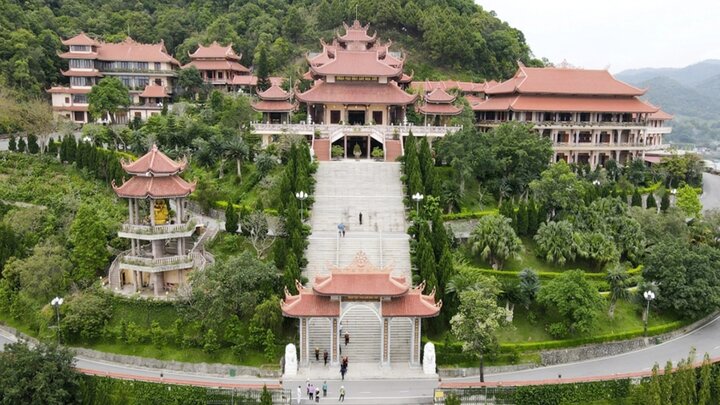
Cai Bau Pagoda is located in Van Don Special Economic Zone, Quang Ninh Province – an area famous for its island scenery and historical depth. The pagoda is situated on a special landform, with a range of rolling mountains behind it and a panoramic view of the turquoise Bai Tu Long Bay in front. This "back against the mountain, face towards the sea" formation creates a feeling of both stability and expansiveness, which many believe to be a landform that gathers spiritual energy.
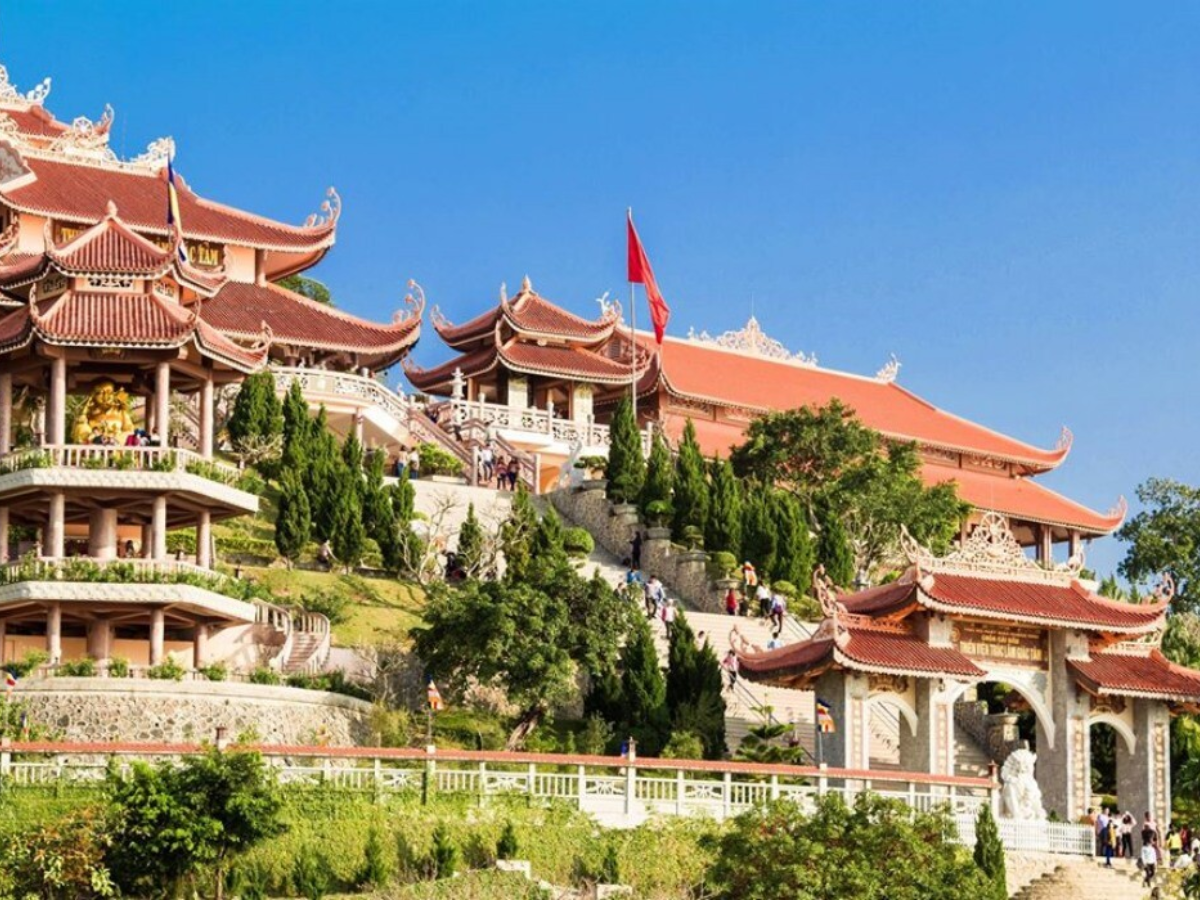
Cai Bau Pagoda is located in Van Don, Quang Ninh, notable for its island scenery and historical depth. (Source: Collected)
During Tet, when the Northern Vietnamese weather is cool and the sea breeze is gentle, the space at Cai Bau Pagoda becomes exceptionally fresh and pleasant. The harmonious combination of mountains – sea – pagoda makes this place not only a destination for New Year pilgrimages but also a spiritual tourism spot with special landscape value for Quang Ninh.
1.2. History of Cai Bau Pagoda: From Phuc Linh Tu to a Famous Spring Travel Destination
Few people know that before having its current magnificent appearance, Cai Bau Pagoda was once called Phuc Linh Tu. This ancient pagoda is associated with the Tran Dynasty – a dynasty that played a special role in Vietnamese Buddhist history. According to historical documents, the area of Cai Bau Pagoda was once a supply and troop gathering point during the resistance wars against the Yuan-Mongol invaders, especially the resounding Bach Dang victory.
Through many historical events, Phuc Linh Tu pagoda gradually deteriorated over time. In recent years, the pagoda has been renovated and rebuilt on a larger scale, becoming Truc Lam Giac Tam Monastery – commonly known by locals and tourists as Cai Bau Pagoda. Despite its new appearance, the pagoda retains the spirit of Truc Lam Buddhism and the long-standing cultural and spiritual values of the Northeastern region.
1.3. Why does Cai Bau Pagoda attract tourists during Tet?
It is not difficult to explain the attraction of Cai Bau Pagoda during Tet. Firstly, it is the fresh and peaceful atmosphere of early spring – something not all spring destinations can maintain during peak periods. Secondly, it is the rare natural scenery where the sea and mountains blend, creating a beautiful backdrop for a New Year pilgrimage.
More importantly, many people believe that visiting Cai Bau Pagoda during Tet brings a very clear sense of peace. Without needing to ask for anything grand, just standing before the vast sea, listening to the echoing temple bells, one's heart naturally calms down, feeling lighter as they enter the new year.
2. Guide to Traveling to Cai Bau Pagoda during Tet
2.1. How to get to Cai Bau Pagoda from Hanoi and Hai Phong
From Hanoi, the distance to Cai Bau Pagoda is about 220–230 km. Tourists can travel by private car or bus via the Hanoi – Hai Phong expressway, then continue on the Hai Phong – Ha Long – Van Don expressway. With the complete expressway system, travel time is only about 4.5–5.5 hours depending on traffic conditions.
If departing from Hai Phong, the distance is shortened to about 150 km. Tourists travel along the Hai Phong – Ha Long expressway, then turn towards Van Don. The average travel time is about 3–4 hours. During Tet, it is advisable to depart early to avoid traffic jams, especially from the morning of the first to the third day of the Lunar New Year.
2.2. Traveling from Ha Long, Cam Pha to Cai Bau Pagoda
From the center of Ha Long, tourists travel along National Highway 18 towards Van Don, a distance of about 70 km. If traveling from Cam Pha, the distance is just over 40 km, which is very convenient for a day trip. This route is quite easy to navigate, however, during Tet, it can be crowded in some sections near the pagoda, so attention should be paid to safety.
2.3. Intra-district travel in Van Don during Tet
Once you reach Van Don district, tourists can choose to travel by motorbike, taxi, or private car to the pagoda. The road leading to Cai Bau Pagoda is spacious and has a dedicated parking lot. However, during peak days from the first to the third day of Tet, the parking lot can fill up quickly. A small tip is to visit the pagoda early in the morning or early in the afternoon to avoid traffic jams and find parking more easily.
3. Exploring the Architecture and Special Features at Cai Bau Pagoda
3.1. Main Hall and Notable Structures during Tet
The main hall of Cai Bau Pagoda is built on a large scale, serving as the spiritual center for the entire complex. Upon entering the main hall, visitors can easily feel the solemnity through its simple yet refined arrangement. Elaborately carved bronze bas-reliefs and a majestic statue of Buddha Shakyamuni create a sacred space in line with Buddhist principles. During Tet, the main hall is decorated appropriately with fresh flowers and subtle lighting, not overly ornate, preserving its inherent tranquility.

The Main Hall of Cai Bau Pagoda is built grandly, serving as the spiritual center for the entire area. (Source: Collected)
3.2. Large Buddha Statue by Bai Tu Long Bay
One of the images that strongly impresses visitors when coming to Cai Bau Pagoda during Tet is the large Buddha statue facing Bai Tu Long Bay. The statue is about 50 meters high, located at the highest position, from where one can gaze out at the vast, immense sea.
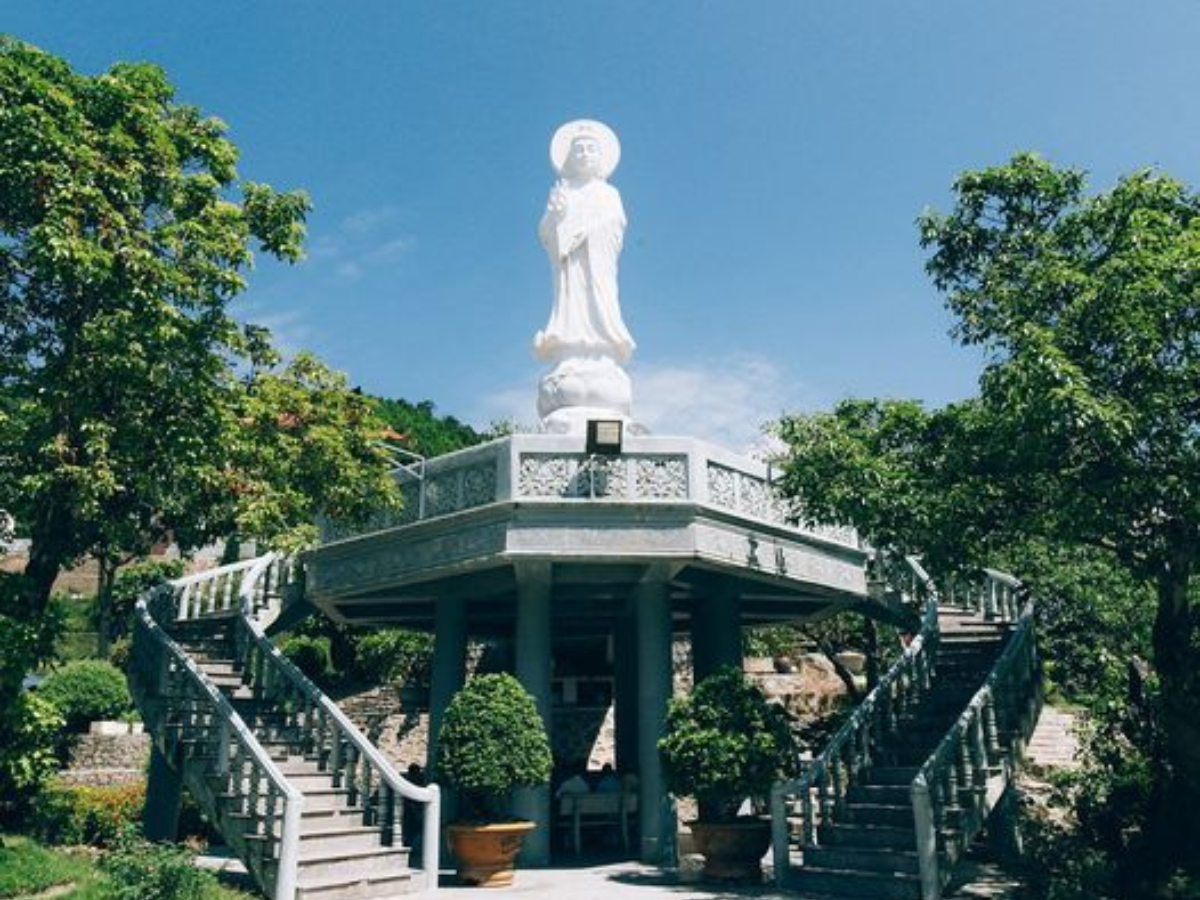
The large Buddha statue at Cai Bau Pagoda faces Bai Tu Long Bay, creating a strong impression during Tet. (Source: Collected)
Besides, the bronze Maitreya Buddha statue is also a popular check-in spot. In Buddhist belief, Maitreya Buddha symbolizes joy, luck, and peace – things everyone wishes for in the new year.
3.3. Rituals and activities for peace at the beginning of the year
Visiting Cai Bau Pagoda during Tet, visitors mainly participate in incense offering and peace-praying rituals at the beginning of spring. The rituals are gentle, not overly formal, suitable for both the elderly and the young. The ideal time to visit is early morning, when the air is fresh and the mind is most at peace.
4. Important notes when visiting Cai Bau Pagoda during Tet
4.1. Attire, offerings, and New Year customs
When visiting Cai Bau Pagoda during Tet, attire is the first factor to consider, as the space here is clearly solemn and pure. Visitors should choose polite, modest clothing, preferably long pants, sleeved shirts, and gentle colors.
Regarding offerings, visiting Cai Bau Pagoda during Tet does not require elaborate preparations or abundant feasts. Typically, a simple offering tray with incense, fresh flowers, and ripe fruits is sufficient. The most important aspect when making offerings is sincerity; one should not focus on formality or compare large vs. small offerings. Especially, visitors need to comply with the pagoda's regulations, avoiding bringing savory offerings or items unsuitable for a Buddhist space.
4.2. Dos and Don'ts when visiting at the beginning of the year
In the early days of the year, the number of visitors to Cai Bau Pagoda is quite large, so maintaining order and common consciousness is very necessary. When entering the main hall or worship areas, visitors should walk lightly, speak softly, avoid loud laughter or using phones to make noise. Maintaining a quiet space not only helps oneself find peace but also shows respect for others who are performing rituals.
Visitors should also avoid crowding and pushing, especially during peak hours from the 1st to the 3rd day of Tet. If the main hall area feels too crowded, you can choose to pray from a distance or wait until a less crowded time to offer incense. In addition, complying with the pagoda's regulations such as not touching Buddha statues without permission, not littering, and not bringing food or drinks into worship areas are basic but very important things.
Another note is to limit taking photos and videos in sensitive areas or during rituals. If you want to capture moments from the beginning of the year, you should choose outdoor areas, the pagoda courtyard, or corridors, which are both scenic and do not affect the overall solemnity.
5. Suggested 1-day itinerary for spring travel combining Cai Bau Pagoda – Cua Ong Temple
For visitors who do not have much time but still want a complete spiritual and experiential spring trip, a 1-day itinerary combining Cai Bau Pagoda and Cua Ong Temple is an ideal choice during Tet.
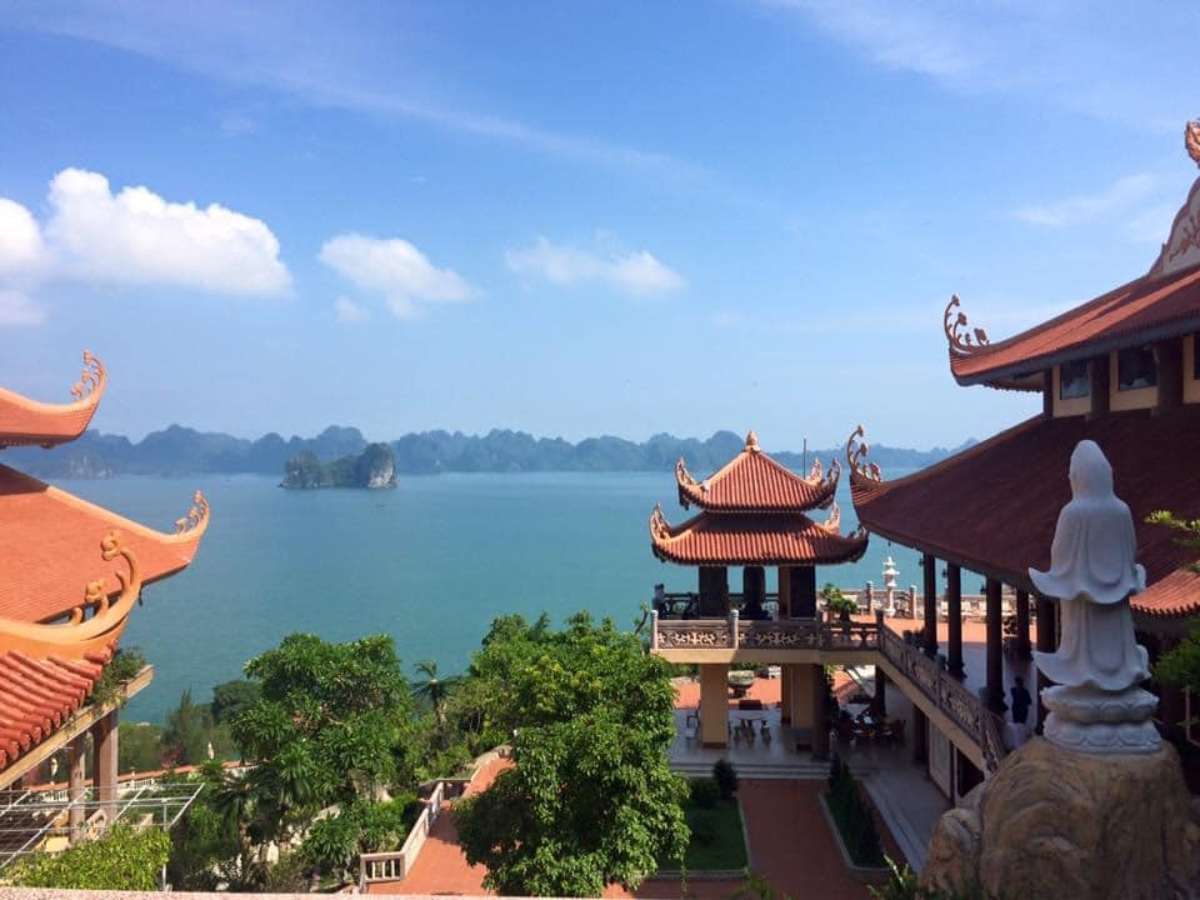
Early morning is the ideal time to visit Cai Bau Pagoda when the air is fresh and it's not crowded. (Source: Collected)
In the morning, you should dedicate your time entirely to Cai Bau Pagoda. The most beautiful time to visit the pagoda is from early morning, when the air is still cool, spring mist gently blankets the sea, and the number of visitors is not yet too large. At this time, offering incense, worshipping in the main hall, or strolling in the pagoda grounds all bring a very pleasant feeling. Standing from the area of the Buddha statue looking out towards Bai Tu Long Bay, casting your eyes over the vast, immense sea, many people believe that just a few minutes of such tranquility is enough to lighten the heart, starting the new year with a more peaceful state of mind.
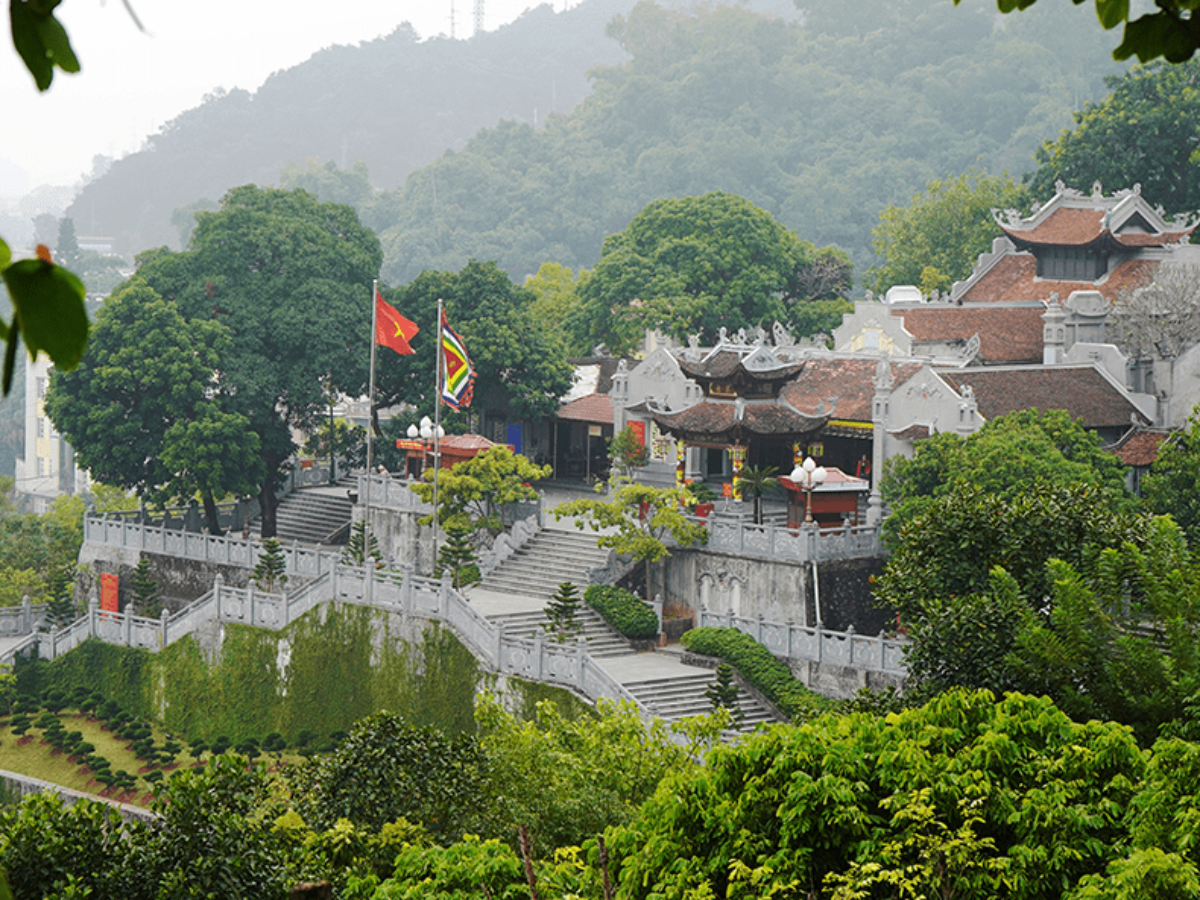
The distance from Cai Bau Pagoda to Cua Ong Temple is short, convenient for a day trip. (Source: Compilation)
After visiting Cai Bau Pagoda, tourists can take a short rest, have a drink, or take some souvenir photos before traveling to Cua Ong Temple. The distance from Cai Bau Pagoda to Cua Ong Temple is not too far, convenient for a day trip. Noon and afternoon are suitable times to visit the temple, both to continue the spiritual journey at the beginning of the year and to combine with visiting the surrounding scenic spots. Cua Ong Temple is located in a high position, facing the sea, exuding a sacred and solemn atmosphere, very suitable for praying for peace and prosperity for the whole year.
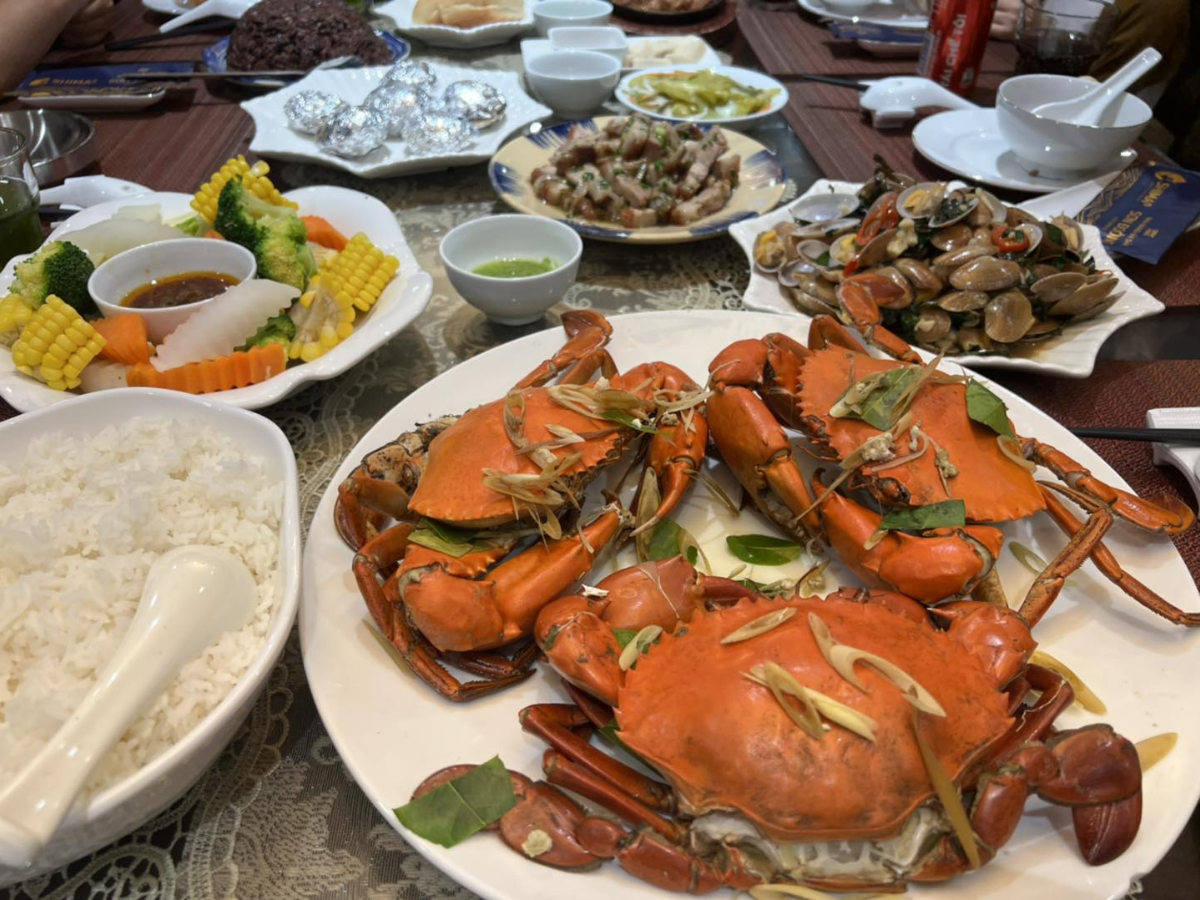
Fresh seafood from Quang Ninh is often chosen by tourists for a light lunch after visiting pagodas. (Source: Collected)
After visiting Cua Ong Temple, tourists can take time to rest and enjoy local cuisine. Fresh seafood dishes, simply prepared but full of the taste of the Quang Ninh sea, are often chosen by many for a light lunch or afternoon snack. A meal that is just enough, not too elaborate, is also a way for the spring trip to maintain a slow, relaxed rhythm, fitting the spirit of the new year.
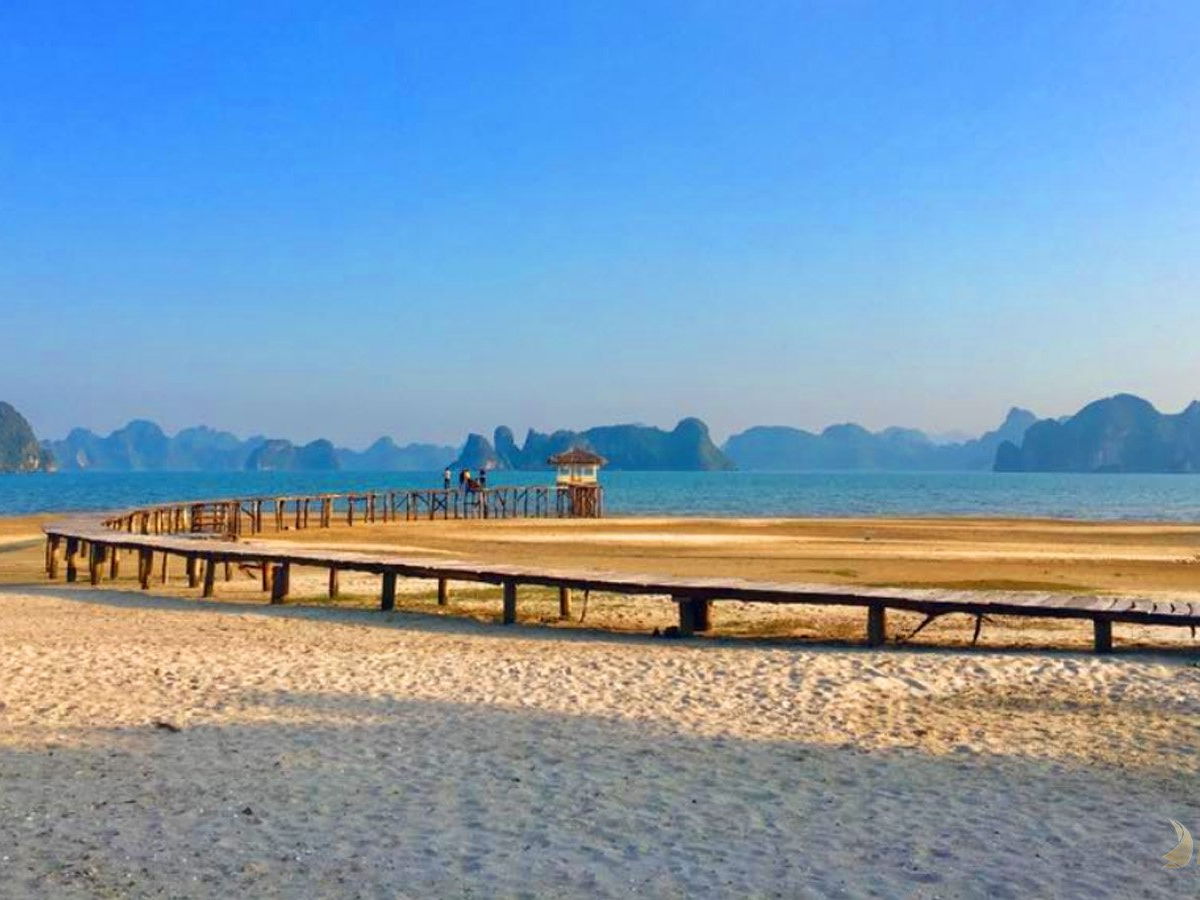
Bai Dai Van Don is suitable for walking along the beach and breathing in the fresh air during Tet. (Source: Collected)
If you have extra time during the day or can extend your itinerary into the late afternoon, visitors can combine visits to some nearby tourist attractions to enrich the trip. Bai Dai Van Don is quite an interesting suggestion. Although Tet is not suitable for swimming, walking on the long sandy beach, admiring the calm sea, and breathing in the fresh air is enough to bring a relaxing and comfortable feeling after the morning spiritual journey.
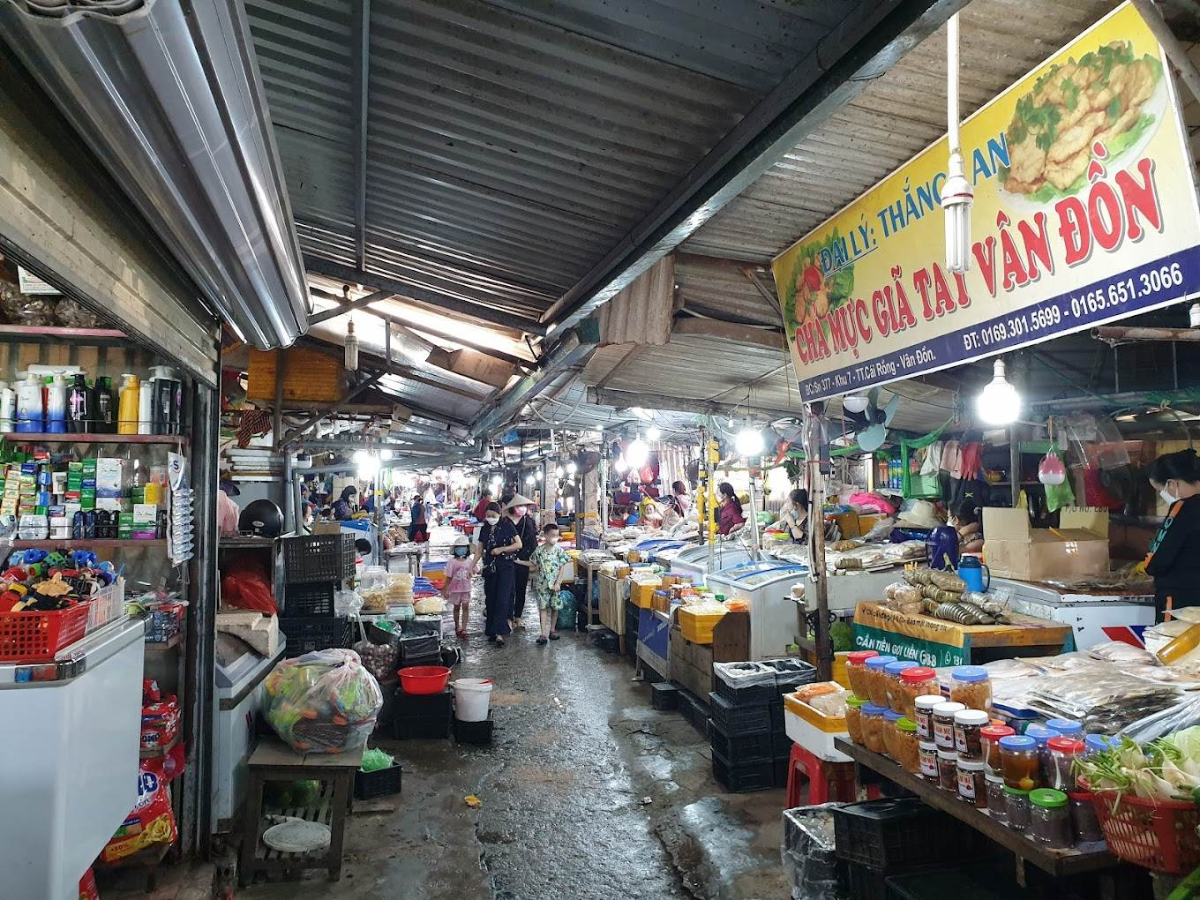
After visiting Cai Bau Pagoda, tourists can continue their journey to Ha Long for entertainment. (Source: Collected)
In addition, the local fish market in Van Don is also a destination with a very everyday character. In the early days of the year, the market is not too noisy, tourists can stop by to feel the rhythm of life of the coastal people, buy some fresh seafood, or simply admire the early spring trading atmosphere with its simple, authentic features.
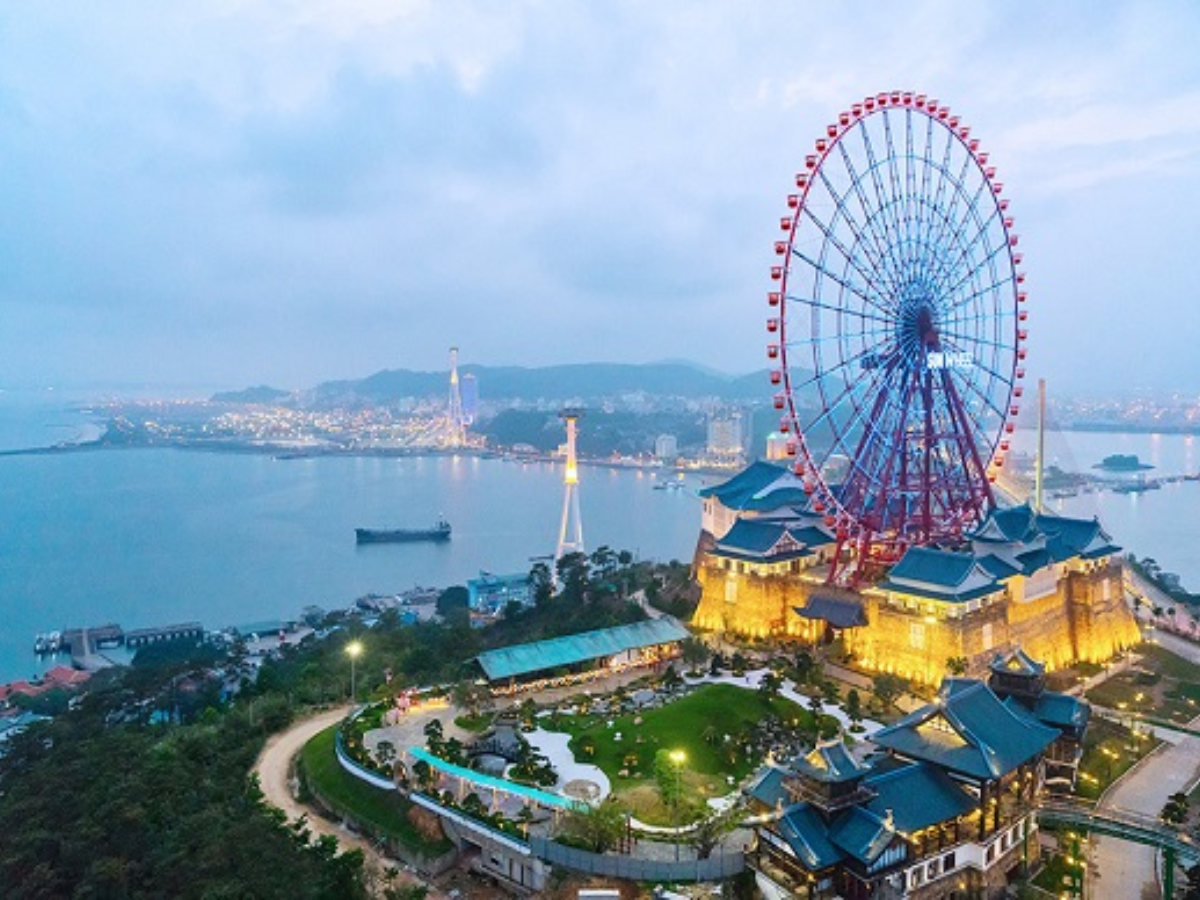
After visiting Cai Bau Pagoda, tourists can continue their journey to Ha Long for entertainment. (Source: Collected)
For those with more time or traveling with family and friends, combining a visit to other notable attractions in Quang Ninh is also a worthwhile option to consider. After the spiritual journey of Cai Bau Pagoda – Cua Ong Temple, tourists can travel to the Ha Long area to visit Sun World Ha Long . During Tet, the space here is usually vibrantly decorated, suitable for light entertainment and recreational activities, creating a balance between the "calm" aspect of visiting pagodas and the "active" aspect of experiential tourism.
Cai Bau Pagoda during Tet is not a destination for those who enjoy excitement and bustling festivals. It is more suitable for people who want to find a space to reflect and start the new year with peace and gentleness. Amidst the increasingly hurried pace of life, a spring trip to Cai Bau Pagoda, standing before the vast sea, listening to the distant chime of temple bells, may be a truly valuable spiritual gift for the early days of the new year.