















1. What is ecotourism in Ha Long Bay? Why should you explore it?
1.1. Definition of ecotourism in Ha Long
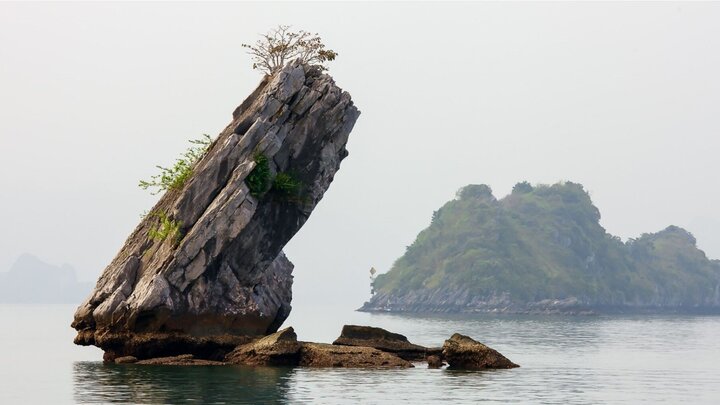
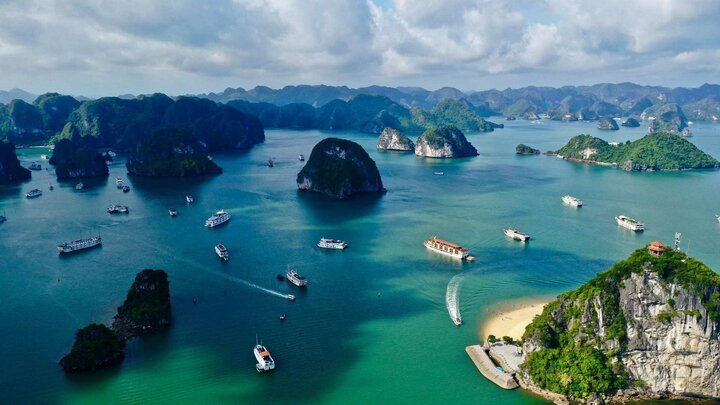
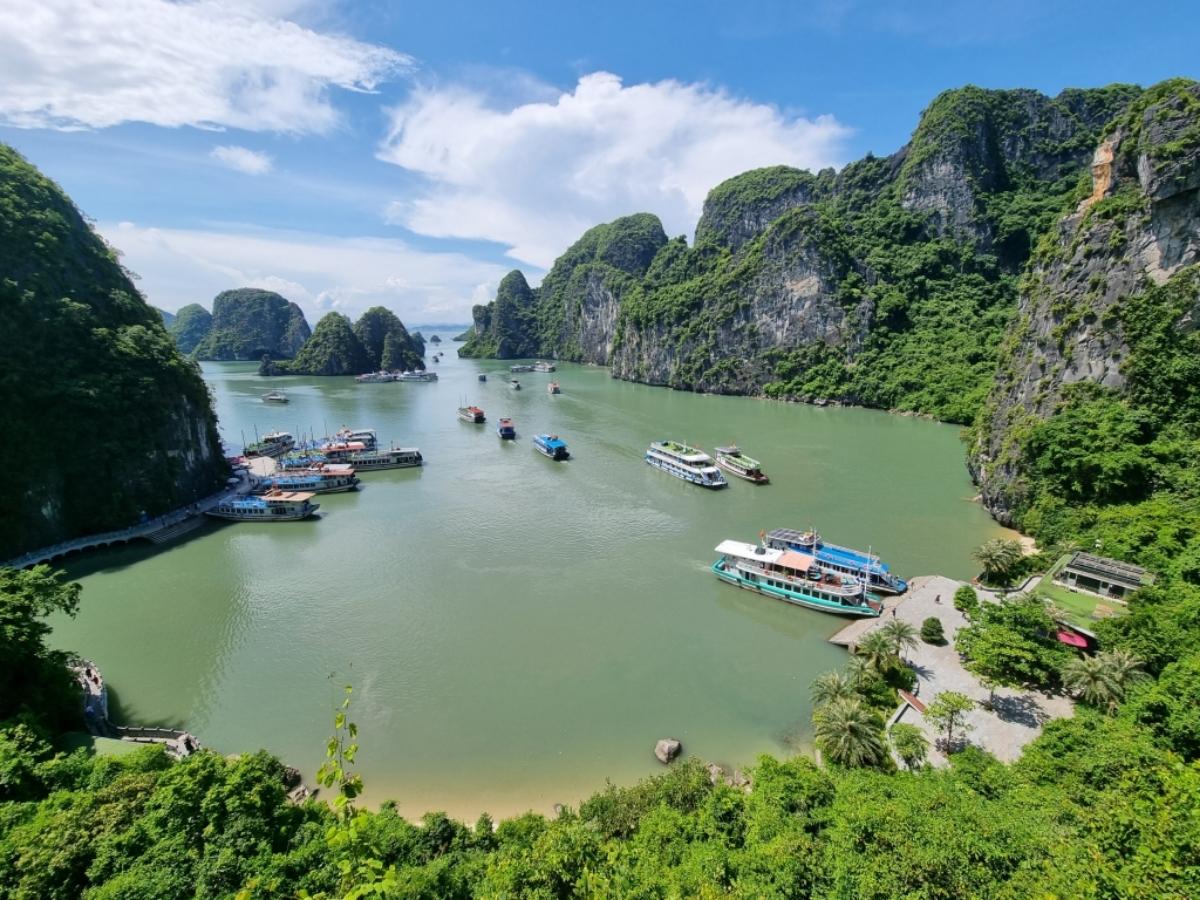
Ecotourism in Ha Long is a unique form of nature experience, allowing tourists not only to admire the beautiful scenery but also to directly participate in environmental protection activities. This form of experience focuses on maintaining ecological balance, creating a stable income for local residents, and raising awareness about resource conservation among tourists. What makes it unique is that the bay boasts a diverse marine ecosystem. It features over 1,600 limestone islands and 10 distinct ecosystem types, ranging from coniferous forests on karst basins to coastal mangrove forests. Many endemic plant species are found only in Ha Long, transforming it into a rare natural "laboratory" where hundreds of rare and endangered plant and animal species listed in the Vietnamese Red Book coexist. Indigenous cultural values further enrich the ecological experience here. Life in the traditional fishing village, with its handcrafted basket boats, natural aquaculture practices, and ancient religious festivals, has been preserved for generations. When participating in Ha Long ecotourism, visitors can experience squid fishing using flashlights.
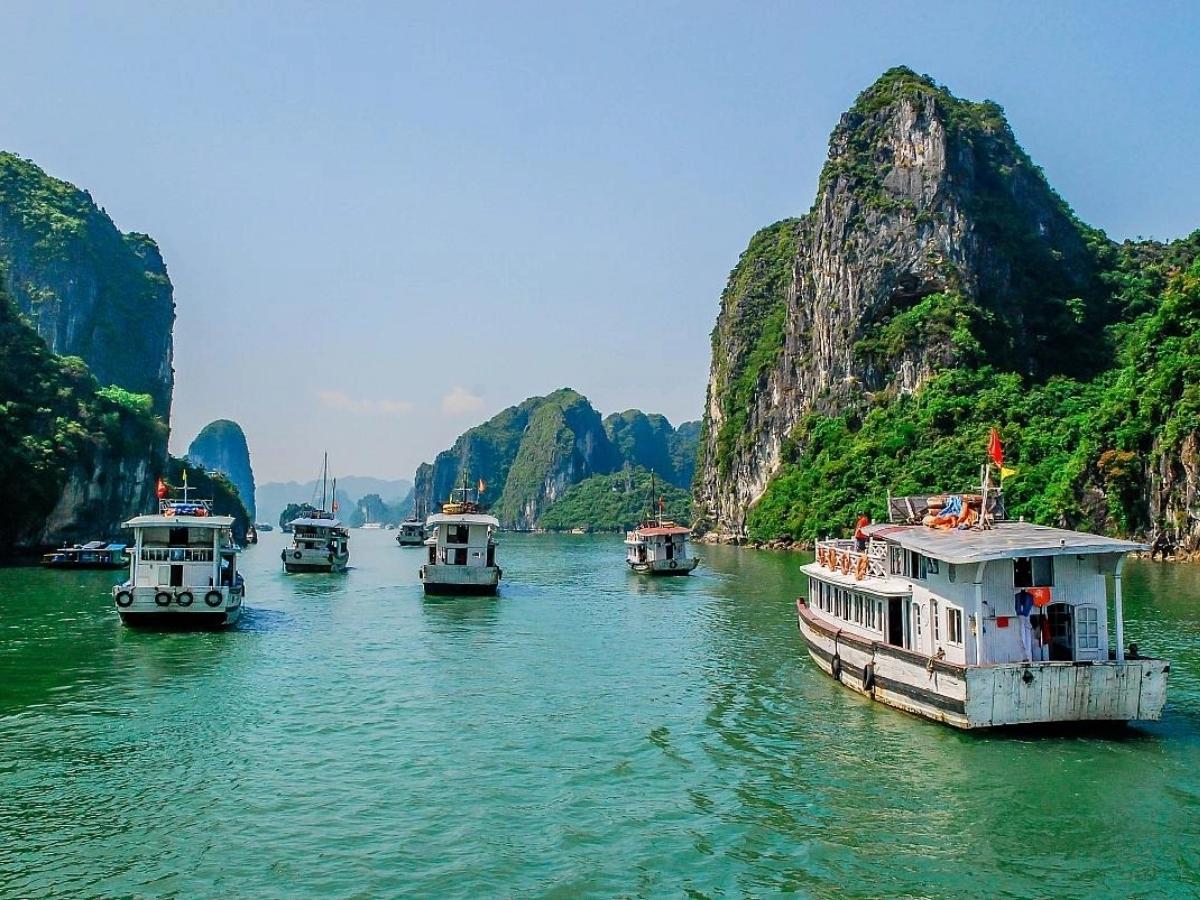
Ecotourism in Ha Long Bay is a unique way to experience nature. (Source: Compiled)
1.2. Green tourism trends and the unique characteristics of Ha Long
Today, the trend of seeking experiences that positively contribute to the environment is increasingly popular among modern travelers. Ha Long has quickly grasped this through the development of green tourism products that utilize new technologies. One of the distinguishing features of this region is the connection between Ha Long Bay and Bai Tu Long Bay, creating a continuous ecological experience. Visitors can begin their journey from the UNESCO-recognized heritage site and continue to the ASEAN Heritage Park in Bai Tu Long to explore the pristine landscape. The Quang Ninh provincial government is also focusing on developing green tourism routes to coastal villages such as Quang La and Ky Thuong, where visitors can participate in mangrove reforestation and learn about sustainable aquaculture techniques. The application of digital technology is also given priority in Ha Long ecotourism. Interactive 3D maps help visitors better understand the karst geological structure, while augmented reality technology allows for underwater observation of coral and seagrass. AI chatbots with native ecological knowledge can answer questions about plant and fish species, as well as provide their scientific names and conservation status.
2. Ecological value of Ha Long
2.1. The beauty of diverse ecosystems
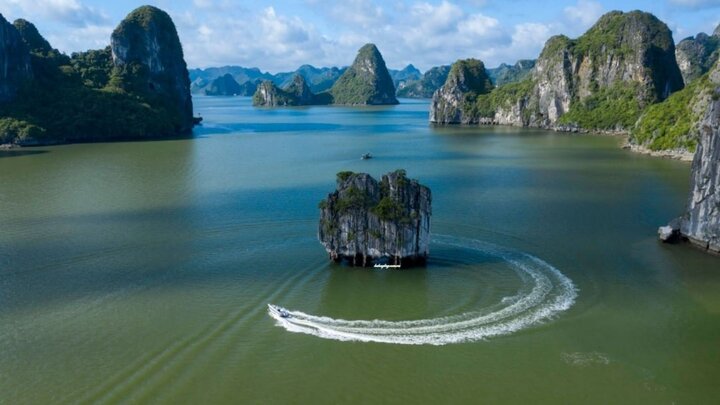
Ha Long Bay is considered an open-air ecological museum with its outstanding biodiversity. In the core of Ha Long Bay, numerous large islands are concentrated with ancient pine forests, where Podocarpus and other trees, some hundreds of years old, still cling to the crevices of limestone rocks. Remarkably, many of these species require very little soil to grow, creating the impressive spectacle of "hanging forests" on the sheer cliffs. Coastal mangrove forests possess a unique beauty. The mangrove trees, such as the Rhizophora apiculata and Avicennia marina, with their root systems acting as natural breathing tubes, help them adapt to the saltwater environment. They also serve as a refuge for dozens of rare waterbird species, some of which only appear during migration. Participating in eco-tours by traditional basket boats, visitors can directly observe how these trees filter seawater and create habitats for shrimp and crabs. The Dong Son - Ky Thuong area represents a mountainous forest ecosystem with clear waterfalls and streams. Here, rare wild orchids, ancient ferns, and diverse undergrowth thrive. Particularly noteworthy are the medicinal plants such as Panax pseudoginseng, Angelica sinensis, and Solanum nigrum, which grow naturally in the forest and are used by local people according to traditional folk remedies.
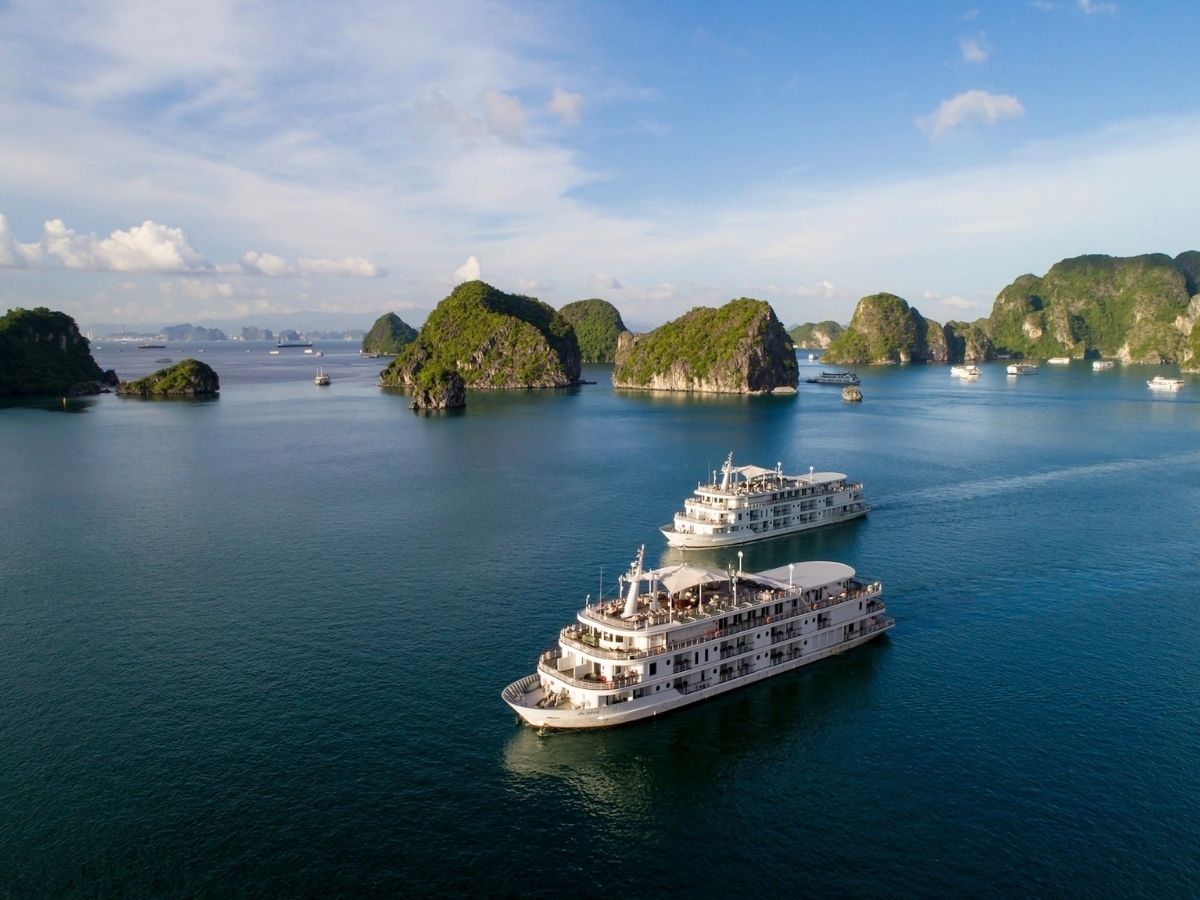
Ha Long is likened to an open-air ecological museum with its diverse and outstanding biological zones. (Source: VnExpress Newspaper)
2.2. Ha Long Bay and Bai Tu Long Bay
Not only is it prominent for its 1,969 limestone islands, Ha Long Bay is also home to many stunning caves formed over millions of years. These include Sung Sot Cave with its large stalactites, Dau Go Cave with its unique natural light, and other caves only accessible by kayak such as Luon Cave and Toi Cave. Kayaking through the caves offers visitors a sense of adventure as they crouch down to squeeze through narrow passages, unexpectedly entering vast, mysterious freshwater lakes. Some caves even feature "stalactite gardens" with shapes resembling vegetables and mushrooms, creating fascinating underground landscapes. The floating fishing villages of Cua Van and Vung Vieng are interesting stops where visitors can clearly observe the lives of fishermen through generations. Here, fish are still raised in bamboo cages, transported in small boats, and traditional seafood preservation methods such as drying anchovies and salting shrimp are continued. Bai Tu Long Bay, renowned as an ASEAN Heritage Park, offers a more pristine and tranquil experience. The seawater here is crystal clear due to minimal tourism activity, making it ideal for snorkeling and admiring coral reefs and seagrass. Visitors can participate in night fishing from traditional basket boats, learn to cook crab porridge, or join local fishermen in harvesting seaweed seasonally.
2.3. Potential for ecotourism development in Ha Long
According to statistics from the Quang Ninh Department of Tourism, the fastest-growing group of international tourists chooses tours that include nature experiences and conservation elements in Ha Long ecotourism. Many areas still have enormous development potential. Remote islands like Quan Lan and Minh Chau have pristine beaches and ancient casuarina forests. The Yen Tu - Dong Trieu mountain region boasts ancient temples and protected forests. In particular, the coastal area from Cam Pha to Mong Cai has many traditional craft villages such as Chu Dau pottery and Yen Thai dó paper, which could be developed into unique cultural and eco-tourism products. According to the plan for 2030, Quang Ninh aims for Ha Long ecotourism to account for 30% of the total number of tourists. To realize this, the province has been investing in infrastructure for green tourism routes connecting coastal and mountainous areas, building a new network of high-quality homestays, and focusing on training local human resources with professional eco-tourism guiding skills.
3. Top ecotourism destinations in Ha Long Bay that you shouldn't miss
3.1. Happy Land Ha Long
Located on an area of 4 hectares at Khe Khoai village, Thong Nhat commune, Quang Ninh province, it is designed as an open ecological park for children to play and learn about nature. Unlike typical playgrounds, this place focuses on experiences close to the environment, with an area for raising small animals and an educational organic farming farm. For families with young children, Happy Land offers picnic services with menus featuring organically grown produce from the local area. Parents can relax while their children participate in environmental education activities such as recycling paper, creating toys from natural materials, or learning about waste sorting.
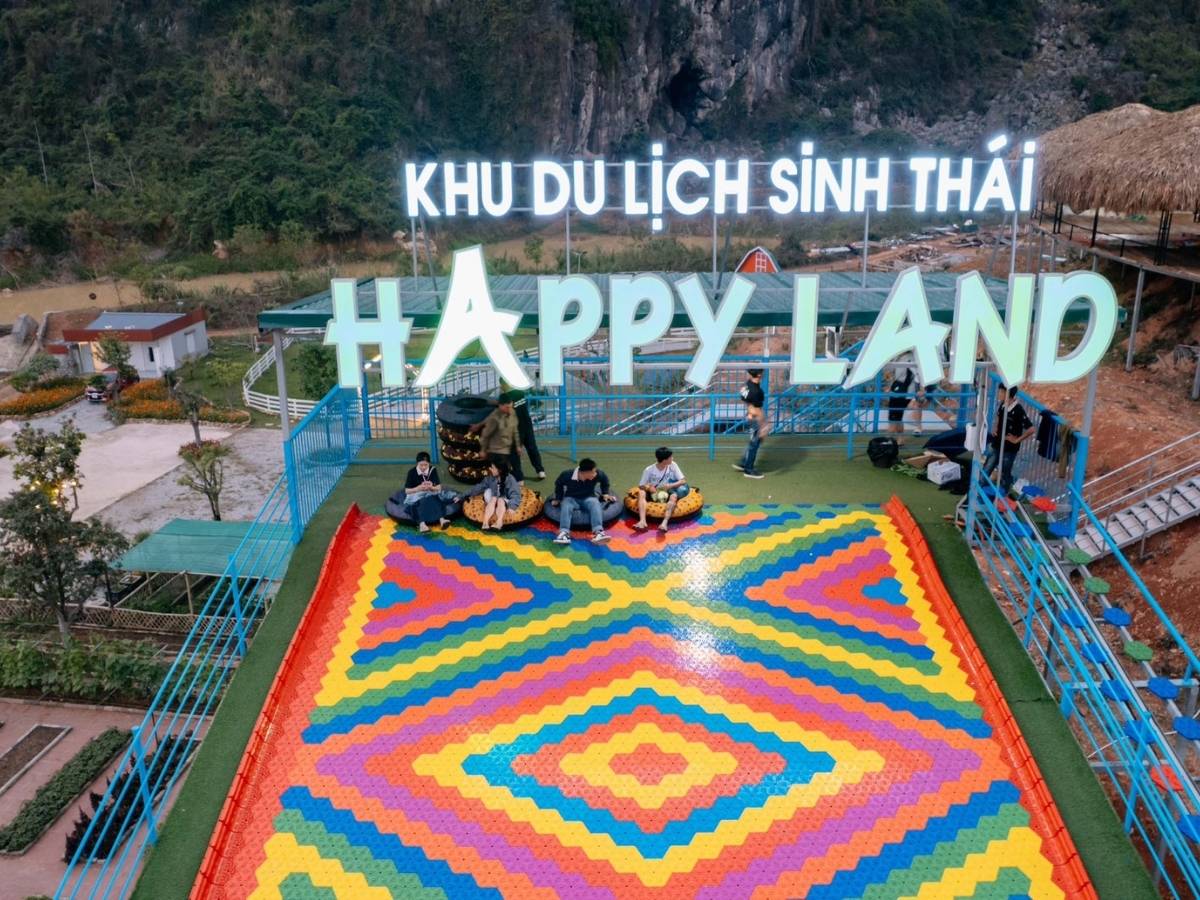
For families with young children, Happy Land offers picnic services with menus featuring organic dishes grown right in the area. (Source: Compiled)
3.2. Green tourism routes
The Quang La – Ky Thuong – Son Duong – Dong Lam green tourism route showcases an image of Ha Long Bay intertwined with mountains, forests, countryside, and traditional fishing villages. The journey begins in Quang La with its lush green terraced rice fields, where visitors can participate in rice planting, buffalo herding, and learn to weave household items from sedge grass. The highlight of this tour is the culinary experience using natural ingredients. Visitors will be guided in picking wild vegetables such as purslane, sweet potato leaves, and betel leaves to make the traditional "tai long ep" cake. Stream fish are grilled over charcoal, and wild shrimp are prepared into sour soup, all creating a rustic meal with the rich flavors of the Northeast mountains. Homestays in Son Duong and Dong Lam are built in the stilt house style, using local wood and thatched roofs made of palm leaves. Guests sleep on rush mats, waking up to the sound of birds singing and fresh air. In the morning, they can join the host family in picking Shan Tuyet tea, participate in traditional tea processing, or bathe in the stream, listening to the echoing sound of mountain waves.
3.3. Dong Son - Ky Thuong Nature Reserve
Dong Son - Ky Thuong is the "green lung" of Ha Long, with less than 3,000 hectares of special-use forest. This area is home to rare animals such as the red-faced langur, civet, and many species of forest birds. The main trekking route is 8 km long, crossing diverse terrain, from bamboo forests along streams to coniferous forests on mountaintops. Ky Thuong Waterfall, 30 meters high, is a prominent tourist attraction where clear water cascades down from the mountain, forming a series of smaller waterfalls. Visitors can swim in the natural pool at the foot of the falls, where the water remains clear and cool even in summer. Surrounding the waterfall are many species of wild orchids, creating a picturesque and dreamy scene. What makes this nature reserve special is the presence of the Dao ethnic community with their rich knowledge of traditional herbal medicine. Visitors can participate in classes to identify medicinal plants, learn how to prepare and use herbs such as honey locust, peach blossom, and cardamom to treat common ailments. In addition, visitors can learn how to cultivate wild mushrooms, harvest honey, and participate in traditional spiritual rituals.
3.4. Community-based tourism experiences
Ha Long ecotourism is closely linked to community-based tourism models that help create stable livelihoods for local residents. In Cua Van fishing village, tourists can not only observe but also directly participate in the daily work of fishermen such as casting nets, harvesting seafood, and repairing fish cages. Traditional craft classes such as basket weaving, textile weaving, and pottery making are also organized, allowing tourists to create their own products like straw bags, leaf hats, or ceramic bowls to take home as souvenirs. More importantly, 70% of the income from these activities is directly transferred to the local people, contributing to improving their lives and encouraging them to continue preserving their traditional culture.
4. Application of technology in the development of ecotourism in Ha Long
Ha Long is a pioneer in applying technology to ecotourism with a modern interactive 3D mapping system. Guests simply scan a QR code to access a digital map with information about each island, cave, and biological data of each area. Augmented reality technology is prominently applied at underwater attractions. While kayaking through seagrass beds, visitors use waterproof tablets to observe coral reef structures, tropical fish species, and learn about the underwater food chain. The system also automatically identifies marine life as the camera scans it, displaying its scientific name, biological characteristics, and level of danger. The system also creates an online community that connects guests with local people. After their trip, guests can continue to track the progress of conservation projects they contributed to, receive information about the growth of the plants they planted, or directly order organic produce from the families who stayed at their homestay.

Ha Long is a pioneer in applying technology to ecotourism with its 3D mapping system. (Source: Collected)
5. Development orientation and challenges of ecotourism in Ha Long
5.1. Sustainable Development Strategy
The development strategy for Ha Long ecotourism and green tourism by 2030 is based on three pillars: government, businesses, and the community. The Quang Ninh Provincial Government has issued Resolution No. 08/2024 with preferential policies for businesses investing in green tourism. Accordingly, businesses developing Ha Long ecotourism products are entitled to a preferential tax rate of 10% instead of 20%, can borrow capital at 0% interest for the first two years, and are exempt from land rent for the first five years. In return, businesses must commit to allocating at least 15% of their revenue to environmental conservation and community development projects. The local workforce training program has received special attention through the establishment of the Ha Long Ecotourism Training Center. The center collaborates with domestic and international universities to train ecotourists knowledgeable in geology, biology, and local culture. By the end of 2024, more than 500 local people had graduated from these courses and become professional guides.
5.2. Challenges to overcome
Despite its great potential for growth, many challenges remain for Ha Long ecotourism. Transportation infrastructure to remote ecological sites is still limited. Sections of the road from the center of Ha Long to areas like Dong Son – Ky Thuong are still unpaved, causing inconvenience when traveling by bus. Infrastructure development needs to be carefully considered to maintain the integrity of the natural environment. Controlling environmental impacts is becoming increasingly important as tourist numbers increase rapidly. Some sensitive areas, such as caves and coral reefs, are showing signs of degradation due to tourism pressure. This requires a robust environmental monitoring system and strict regulations to control visitor numbers.
5.3. Social Enterprise Model and Community Linkage
Social enterprise models are becoming increasingly widespread in the Ha Long ecotourism area. Ha Long Fishing Cooperative is a prime example, with many locals participating in providing services such as rowing boats, homestays, and fishing guidance. The long-term development solution focuses on building a "Ha Long Ecotourism Alliance" comprising travel agencies, accommodation establishments, local communities, and non-governmental organizations. This alliance will work together to establish common service standards, train personnel, monitor environmental impacts, and distribute benefits equitably among all parties.
The fishing village of Ha Long is a prime example, with the participation of many local people. (Source: Collected)
6. Suggested 3-day, 2-night eco-tourism itinerary for Ha Long Bay
Day 1: Exploring the bay Departing at 8:00 AM from Tuan Chau pier on an eco-friendly hybrid-powered tourist boat. Each passenger is equipped with a tablet with a 3D map application to track the journey. The first stop is Sung Sot Cave, where augmented reality technology allows observation of the formation of stalactites and stalagmites over millions of years. The afternoon is dedicated to kayaking through Luon Cave and exploring the floating fishing village of Vung Vieng. Here, visitors can learn to cook crab porridge with local fishermen and tour fish farms equipped with IoT sensors that automatically monitor water quality. Overnight stay at a solar-powered eco-resort on Titop Island.
Day 2: Experiencing the countryside and local cuisine Early in the morning, travel back to the shore by electric vehicle to the Dong Lam – Son Duong green tourism route. The 4km trekking trip through terraced rice fields and bamboo forests offers a relaxing feeling amidst nature. Visitors learn to identify edible mushrooms, pick wild vegetables, and prepare pressed "tai long" cakes according to a traditional recipe. In the afternoon, relax at the stilt house homestay, participate in activities such as weaving, tending the organic vegetable garden, and learning to brew Shan Tuyet tea. Enjoy an outdoor dinner with a BBQ of local specialties, ending with a folk music performance by the host family.
Day 3: Conservation and Community Engagement The final day is dedicated to community activities at the Dong Son nature reserve. Visitors participated in a program to plant 100 native tree saplings to help restore the special-use forest. Each tree was fitted with a QR code so visitors could track its growth via a mobile application. Conservation education activities are organized in the form of interactive games, helping visitors understand the role of each species in the ecosystem. The trip concludes with a community gathering where guests can share their opinions on sustainable development and commit to continuing to support conservation projects after returning home.
7. Tips and things to keep in mind when traveling to Ha Long Bay for ecotourism
7.1. Clothing and personal preparation
When participating in Ha Long ecotourism, preparing appropriate clothing is crucial due to the nature of outdoor activities and exposure to various terrains. Waterproof trekking shoes are essential as travelers will be moving across slippery limestone surfaces, muddy mangrove forests, and jungle trails. Choose lightweight, quick-drying, breathable clothing with UV protection. Thin, long-sleeved shirts are suitable for both sun protection and reducing the risk of insect bites when hiking in the forest. Wide-brimmed hats and sunglasses provide protection when participating in beach activities. Sunscreen with an SPF of 50+ and insect repellent should be reapplied frequently, especially when participating in water activities. Bring a waterproof bag to protect your phone and camera, as many activities involve water, such as kayaking and swimming. It's also advisable to bring some personal medications, as some areas may be far from medical facilities.
7.2. Protecting the environment and respecting local culture
The principle of "leaving no trace" is always emphasized in Ha Long ecotourism. All waste, including fruit peels, must be disposed of in designated areas. In mangrove forests and nature reserves, picking leaves, breaking branches, or disturbing animals is prohibited. When entering the cave, avoid touching the stalactites as the oils on your hands can alter their color and texture. Limit the use of flash when taking photos inside the cave to avoid disturbing the bats that live there. Regarding local culture, tourists should respect the customs of fishermen and local ethnic groups. When entering a home, remove your shoes and greet the host warmly. Do not take photos without permission, especially of the elderly and children. When participating in sea god worship ceremonies or other spiritual rituals, maintain a respectful attitude and follow the host's instructions.
7.3. Tips for booking quality services and tours
Choosing a reputable tour operator is a crucial factor in ensuring a great experience in Ha Long ecotourism. It is advisable to choose companies with international travel licenses and certifications for sustainable tourism. These companies usually make clear commitments to environmental protection and contribute to conservation projects. The best times to visit for Ha Long ecotourism are from March to May and from September to November because of the pleasant weather and fewer storms. Avoid traveling in the summer due to intense heat, and in the winter when fog is common. Booking at least two weeks in advance is recommended, especially if you want to stay in a high-quality homestay, as rooms are limited. Ecotourism services are typically 20% to 30% more expensive than regular services due to the investment in conservation and community development. However, the quality of the experience is entirely commensurate with the price. Unusually cheap tours should be avoided as they may not guarantee quality or ecological significance. Ha Long ecotourism not only offers unforgettable nature experiences but also provides opportunities for each visitor to contribute to the protection of the world natural heritage. The blend of traditional landscapes, unique local culture, and modern technology creates an unforgettable impression. Explore to fully appreciate the beauty of this heritage area and join hands in spreading the meaning of preserving a green Ha Long!