
















1. Overview of Dong Yen Tu Pagoda
1.1. Where is Dong Yen Tu Pagoda? Altitude and Special Geographical Location
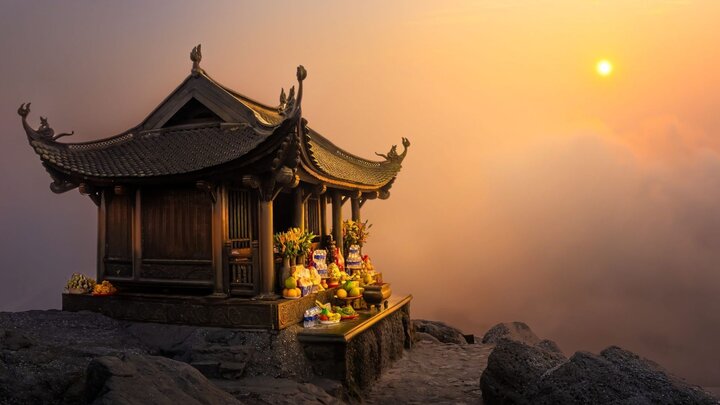
Dong Yen Tu Pagoda , also known by its Sino-Vietnamese name Thien Truc Tu, is located on the highest peak of the Yen Tu mountain range in Uong Bi, Quang Ninh province. The pagoda is located at an altitude of 1,068 m above sea level, the highest peak in Northern Vietnam, and also houses the highest-altitude bronze pagoda in the country.
With this special location, Dong Yen Tu Pagoda becomes a place where unique spiritual energy converges. From the pagoda's summit, visitors can gaze upon the panoramic view of the Northeast region, resembling a green silk ribbon on clear days. Around the pagoda, white clouds often shroud the area, accompanied by strong winds, creating a sense of ethereal floating in the space where heaven and earth meet.
Yen Tu is considered the "ancestral land of Truc Lam Buddhism", associated with the event of King Tran Nhan Tong renouncing secular life, practicing asceticism, and founding the Truc Lam Zen school. The summit of Dong Pagoda is therefore seen as a symbol of converging spiritual essence, a place where those seeking peace and enlightenment can feel a special sacred energy.
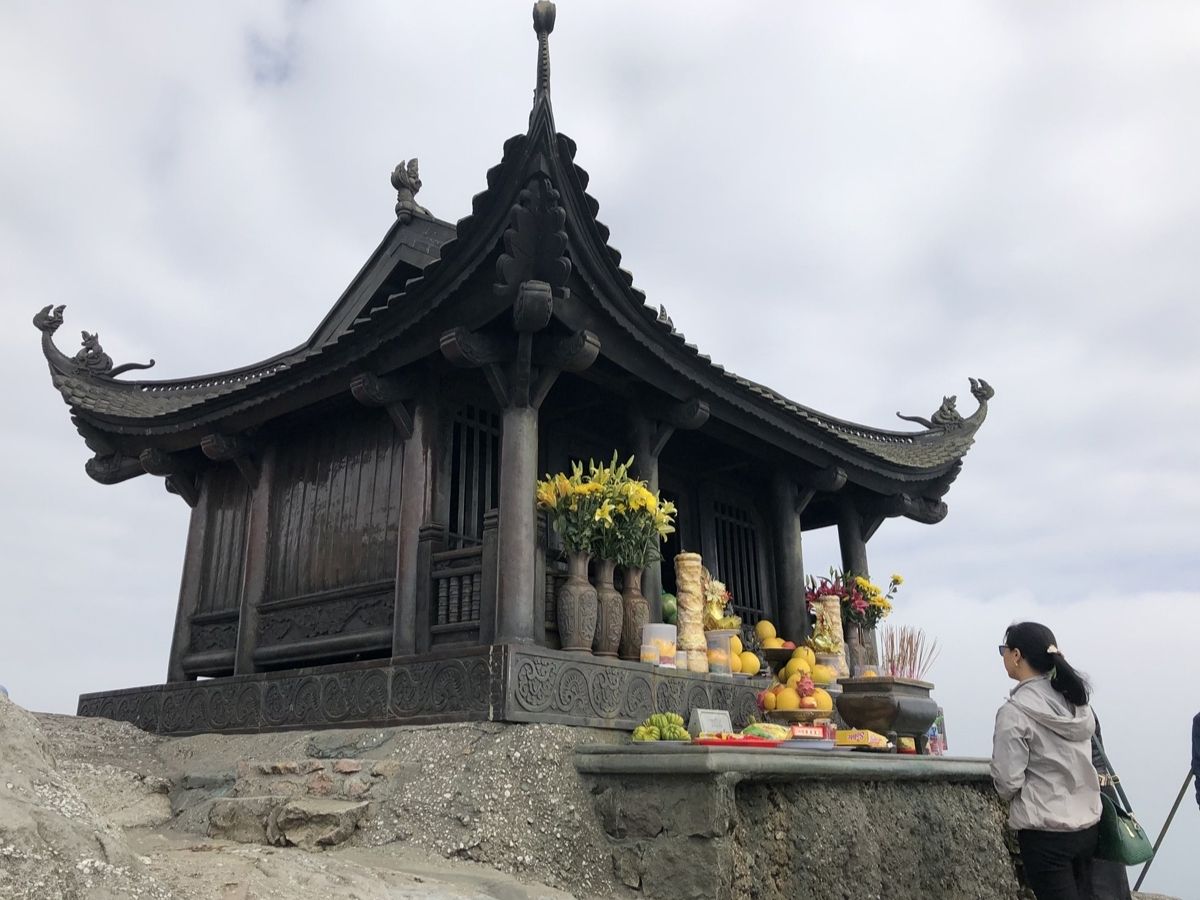
The Yen Tu Dong Pagoda, also known by its Sino-Vietnamese name Thien Truc Tu (Heavenly Bamboo Temple), is located on the highest peak of the Yen Tu mountain range. (Source: Collected)
1.2. The name "Dong Pagoda" and its spiritual cultural value
The Sino-Vietnamese name Thien Truc Tu signifies a direction towards the pure realm of Buddhism. However, among the people, this pagoda is commonly referred to by the name "Dong Pagoda" because since its construction, the main structures have been made from iron frames, bronze roofs, Buddha statues, bells, and chimes are all made of bronze.
Currently, the Yen Tu Dong Pagoda is cast entirely from pure bronze, weighing nearly 70 tons. This name has become even more familiar and intimate than ever before. The emphasis on material also demonstrates respect for the nation's traditional craftsmanship.
In terms of spiritual cultural value, Dong Pagoda has always gone hand in hand with the heritage of the Truc Lam Zen sect, founded by Emperor Tran Nhan Tong. This sect embodies the spirit of engagement with the world, compassion, and wisdom, connecting Buddhism with the national spirit of the Tran dynasty. The system of statues, bells, and patterns in the pagoda all reflect that spirit, helping the Yen Tu Dong Pagoda become a spiritual anchor that generations of Buddhists, kings, officials, and people turn to to pray for national peace and prosperity.
1.3. History of formation and important milestones
The history of Yen Tu Dong Pagoda bears the marks of many changes through different periods. In the 17th century, during the Later Le dynasty, a consort of Lord Trinh donated to build the first pagoda on the peak of Yen Tu. The original architecture was just a small shrine, with an iron frame, a bronze roof, housing bronze statues and ritual objects.
In 1993, an important milestone marked a new development for the pagoda, when Buddhists and overseas Vietnamese, including Mr. Nguyen Son Nam - an overseas Vietnamese from the US, joined hands to recast a small bronze pagoda in the 'Dinh' (丁) architectural style. The current pagoda structure was commenced in 2006, under the direction of Venerable Thich Thanh Quyet and the Project Management Board, with design by architect Tran Quoc Tuan. In 2007, the new pagoda was completed and became the largest bronze pagoda in Asia located on the mountaintop, as it stands today.
2. Guide to traveling to Yen Tu Dong Pagoda
2.1. Journey from Hanoi and Hai Phong to Yen Tu Dong Pagoda
To reach Yen Tu Dong Pagoda, visitors first travel to the Yen Tu Scenic Relic Site (Uong Bi City, Quang Ninh Province), then continue the journey to the pagoda's summit by road or cable car.
Starting from Hanoi, the distance to Yen Tu ranges from about 120-130 km. Visitors can choose intercity buses on the Hanoi - Uong Bi or Hanoi - Ha Long routes, then take a taxi or motorbike taxi to the Yen Tu central area. If traveling by private car or motorbike, one can choose the Hanoi - Hai Phong - Quang Ninh expressway or National Highway 18. This route usually takes about 2.5 to 3 hours by car, convenient for combining with visits to other attractions in the region.
From Hai Phong, the route to Yen Tu Dong Pagoda is shorter, about 70-80 km, depending on the starting point. Visitors can choose intercity buses from Hai Phong - Uong Bi or Hai Phong - Ha Long, then continue by taxi to Yen Tu. If using personal transport and choosing National Highway 10, National Highway 18, or the Hai Phong - Ha Long expressway, the journey takes only about 1.5 to 2 hours. For large groups or families, renting a private car is a suitable option for convenience in carrying luggage and flexible stops.
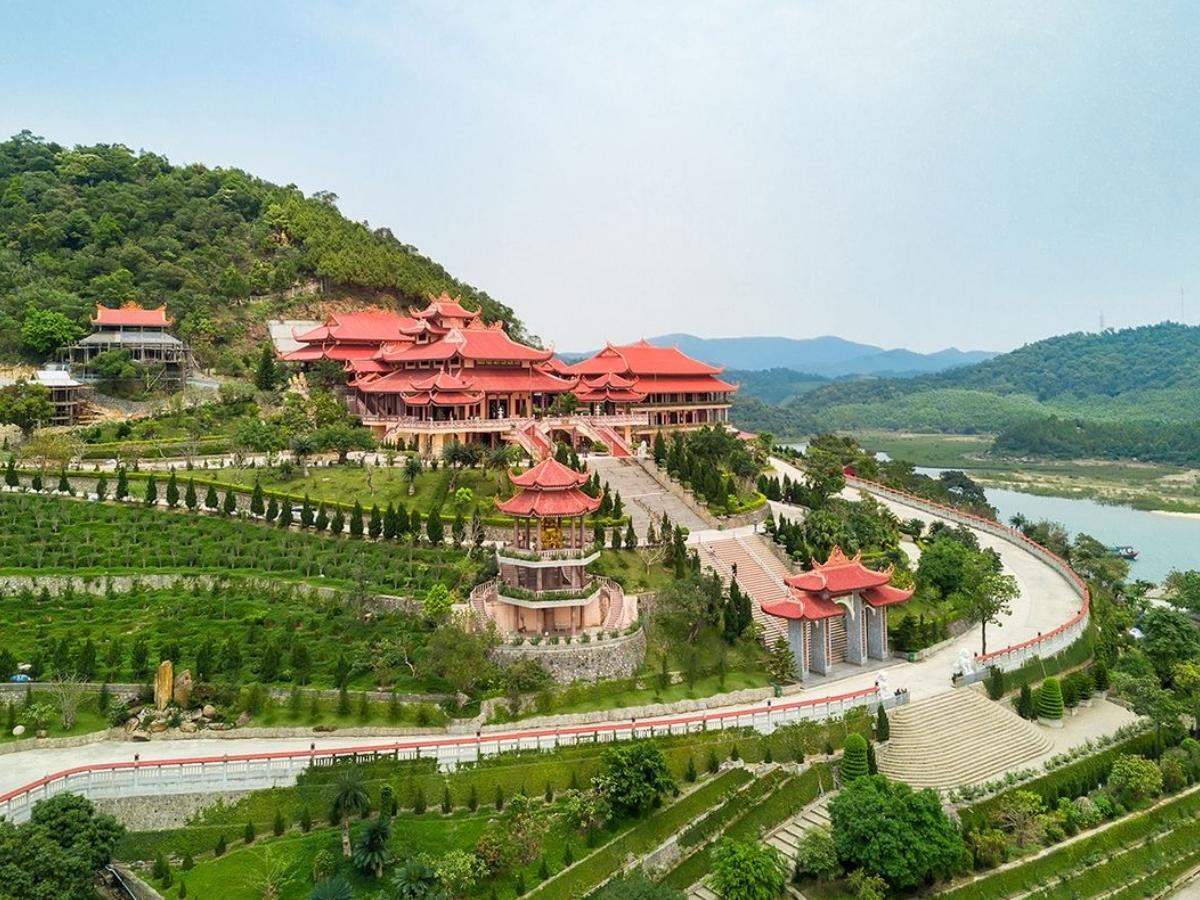
To reach Chua Dong Yen Tu, visitors must first travel to the Khu di tích danh thắng Yen Tu. (Source: Collected)
2.2. Moving within Yen Tu area to Chua Dong
From the Yen Tu main reception area, there are two main options to reach Chua Dong: walking along the traditional pilgrimage route or using the cable car system.
The walking route to Chua Dong Yen Tu is over 6 km long, with thousands of stone steps winding around the mountainside. This route leads visitors through many important spiritual sites such as Suoi Giai Oan, Chua Hoa Yen, Chua Mot Mai, Chua Bao Sai, and Khu Van Tieu before reaching the summit. It is suitable for those who enjoy experiencing the traditional pilgrimage journey and wish to feel the sacred atmosphere with every step.
If using Yen Tu's modern cable car system, visitors save a lot of time and effort, which is very convenient for the elderly, children, and families. Typically, visitors take cable car section 1 to the Hoa Yen area, continue walking or take cable car section 2 to near the Van Tieu area, and then walk the remaining distance to Chua Dong. To avoid long waits, it is advisable to buy tickets early, especially during the festival season. The least crowded times are usually in the early afternoon and on mid-week days, except for peak days in the first two lunar months.
2.3. Notes on climate and necessary preparations for the trip
The summit of Chua Dong Yen Tu is located at an altitude of over 1,000 m, so it has a very distinct climate. The temperature here is often much lower than at the foot of the mountain, with mist, fog, and strong winds appearing frequently. In winter and early spring, the weather is cold and humid, sometimes with thick fog and drizzle, making the stone steps slippery.
Regarding attire, proactively bring a light or thick jacket depending on the time, a scarf, and a warm hat, especially when approaching the summit in the morning or late afternoon. Attire should be lightweight and easy to move in, with quick-drying material if encountering drizzle. Sports shoes or hiking boots with good grip soles are suitable choices, avoid wearing high heels or slippery sandals.
Essential items include sufficient drinking water (can be bought along the way but it's advisable to bring some), a thin raincoat or a hooded windbreaker for the spring rainy season. If walking long distances, prepare light snacks such as cakes, candies, and fruits to replenish energy. Thorough preparation will help make the visit to Chua Dong Yen Tu safer and more complete.
3. Discover the unique architecture of Chua Dong Yen Tu
3.1. Overview of Chua Dong
Chua Dong Yen Tu is currently cast entirely from pure copper, making it the largest bronze pagoda in Asia with a total weight of nearly 70 tons. The pagoda's structure has an area of about 20 m², a length of 4.6 m, a width of 3.6 m, and a height of 3.35 m. All components, from the pagoda itself, Buddha statues, to the bell, are made of copper, comprising over 4,000 intricately assembled copper components.
The biggest difficulty during construction was assembling the components on the treacherous high mountain peak. The details of Chua Dong were hand-cast using traditional methods, then transported in multiple batches to the summit and assembled directly on the narrow rocky outcrop over 1,000 m above sea level. The structure is placed on a copper base with kneeling elephant feet for increased stability, while the stone foundation was treated to form a sturdy lotus shape.
When viewed from afar, Chua Dong Yen Tu stands out like a golden lotus flower amidst white clouds. The large stones at the base of the pagoda resemble stone lotus petals, creating the impression that the pagoda is situated on a giant lotus pedestal at the top of the sky. The harmony between the golden copper material and the majestic natural scenery has created a truly impressive spiritual architectural masterpiece.
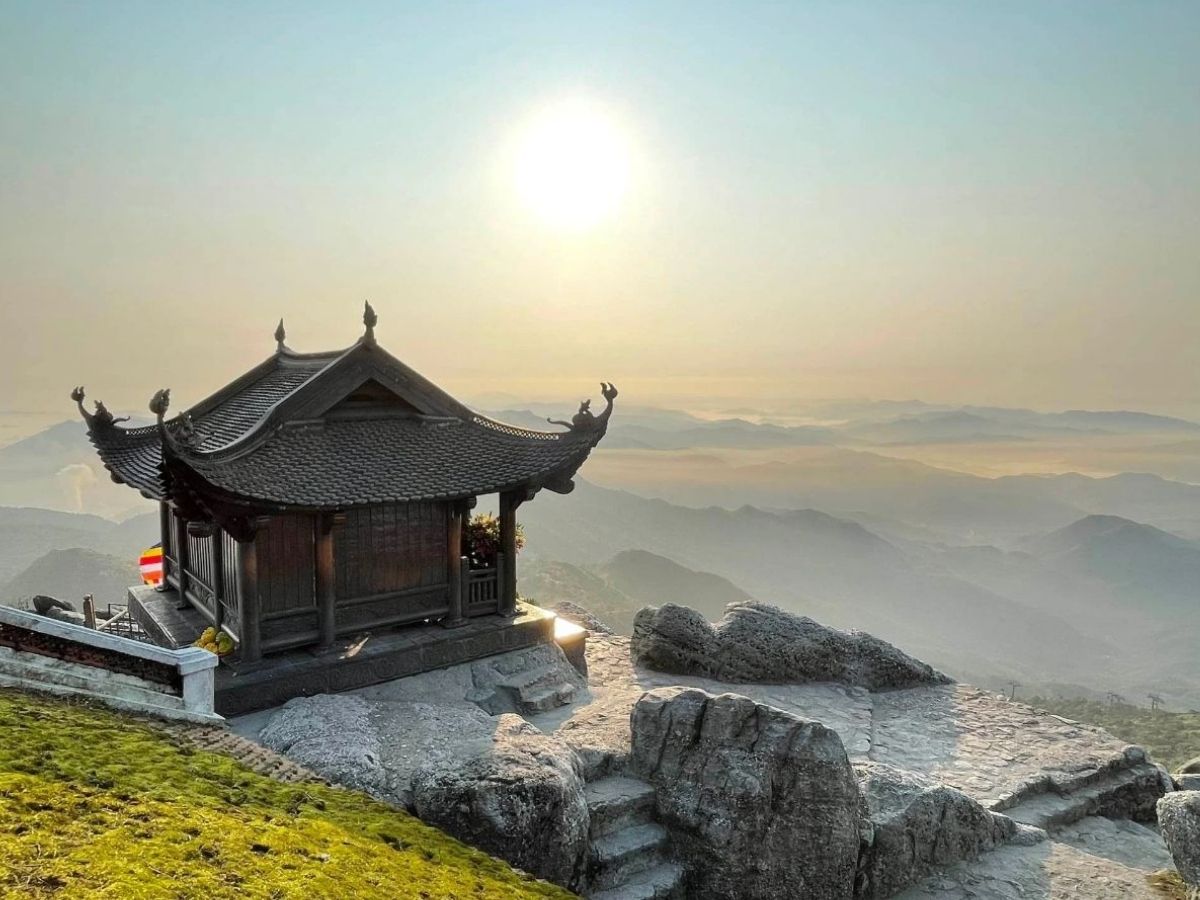
The Yen Tu Copper Pagoda is currently cast entirely from pure copper, making it the largest copper pagoda in Asia. (Source: Collected)
3.2. Architectural Style and Meaning of Motifs
The architecture of Yen Tu Copper Pagoda features the traditional Vietnamese 'chu nhat' (one-character) style, with a structure of one main room and two side rooms, placed on a sturdy copper base. The overall pagoda shape is reminiscent of the architecture of Dau Pagoda's Upper Shrine (Bac Ninh), carrying the strong imprint of traditional Northern Vietnamese Buddhism, which has been simplified and modernized.
The decorative patterns on the roof, eaves, pedestal, and walls of the pagoda use motifs characteristic of the Tran Dynasty, such as lotus, chrysanthemum, turning leaves, water waves, and bamboo stalks. These motifs create both an ancient and soft appearance, demonstrating the sophistication of sculptural art. The band of turning leaf patterns at the bottom of the copper walls and the pagoda's porch railings with bamboo stalk-shaped bars create a clear connection with the Truc Lam Zen sect.
The sacred space within the Copper Pagoda houses statues of Sakyamuni Buddha and the Three Buddhas, symbolizing the past, present, and future – implying the eternal nature of Buddhist teachings. Additionally, there are statues of the Three Patriarchs of Truc Lam (Tran Nhan Tong, Phap Loa, Huyen Quang) seated in the lotus position on lotus pedestals, with hands in meditation mudras. A bronze bell is hung in front of the porch, creating a sacred resonance amidst the mountainous, cloud-filled landscape.
3.3. Notable Recognitions and Records of Yen Tu Copper Pagoda
Yen Tu Copper Pagoda has been recognized by the Vietnam Book of Records Center (VietKings) with two significant records: as the largest copper pagoda and the copper pagoda at the highest altitude in Vietnam. Many international newspapers also identify it as the largest copper pagoda in Asia, a unique structure in terms of material and location worldwide.
The position of the Copper Pagoda within the Yen Tu Monument Complex becomes even more significant as Yen Tu - the origin of the Truc Lam Zen sect - is being jointly prepared by the provinces of Quang Ninh, Hai Duong, and Bac Giang for submission to UNESCO. The goal is to have the Yen Tu - Vinh Nghiem - Con Son, Kiep Bac Monument and Scenic Complex recognized as a World Heritage site under the mixed or cultural heritage category.
Within this complex, Yen Tu Copper Pagoda plays a symbolic highlight role, contributing to honoring the global values of religion, architecture, and sacred mountain landscapes. This recognition not only affirms its spiritual value but also expands opportunities for the Copper Pagoda to be known by more international tourists.
4. Experiences, Festivals, and Activities at Yen Tu Copper Pagoda
4.1. New Year Pilgrimage and Peak Yen Tu Festival Season
The traditional Yen Tu Festival takes place on the 10th day of the first lunar month and lasts from the first lunar month until the end of the third lunar month. The opening ceremony includes many activities such as processions, incense offerings, prayers for peace, and requiem services for sentient beings, along with many Buddhist cultural programs and folk games.
During the festival season, the number of visitors to Yen Tu Copper Pagoda is very large. The space is filled with colorful banners and flags, the resounding sound of bells and wooden fish, incense smoke spreads, along with streams of pilgrims extending up the mountain, creating a solemn atmosphere and deep emotions. This is also an ideal time to fully experience the spiritual atmosphere at the sacred peak.
Those who wish to visit the Copper Pagoda when it is not too crowded can choose to visit on weekdays or mid-to-late month, avoiding the 10th day, the full moon day early in the month, or weekends of the first and second lunar months. The most suitable times of the day are early morning (before 8 AM) or early afternoon to enjoy the quiet atmosphere.
4.2. Unmissable Experiences at the Summit of the Copper Pagoda
The moment of watching the sunrise from Yen Tu Copper Pagoda is an experience worth waking up early for. At an altitude of over 1,000 meters, this place becomes an ideal spot to welcome the sun rising from the northeastern sea of clouds on clear days. Especially in spring and autumn, the full sea of clouds creates a unique and poetic scene of the Copper Pagoda floating on the clouds.
Yen Tu peak has long been considered a place where spiritual energy converges, so visitors often go to Yen Tu Copper Pagoda to pray for blessings, peace, ward off misfortune, and wish for good luck at the beginning of the year. The feeling of immersing oneself 'walking in the clouds' between heaven and earth, without clear boundaries between sky, earth, and people, brings an unforgettable spiritual experience. Moments of meditation amidst the vast space of clouds and mountains further calm and deepen the soul.
To capture beautiful photos at the Copper Pagoda, visitors should choose the small courtyard in front of the pagoda, with the Copper Pagoda, flagpole, and white sea of clouds as the background. The rocks around the area are also ideal spots to capture the lotus-shaped terrain and the special altitude. The path leading up to the pagoda, when standing with your back to the pagoda and mountains and clouds behind, also creates a very artistic frame. If you want photos without crowds, go early or choose a weekday. When the weather is foggy, focus on details such as the pagoda roof, patterns, and close-ups of Buddha statues.
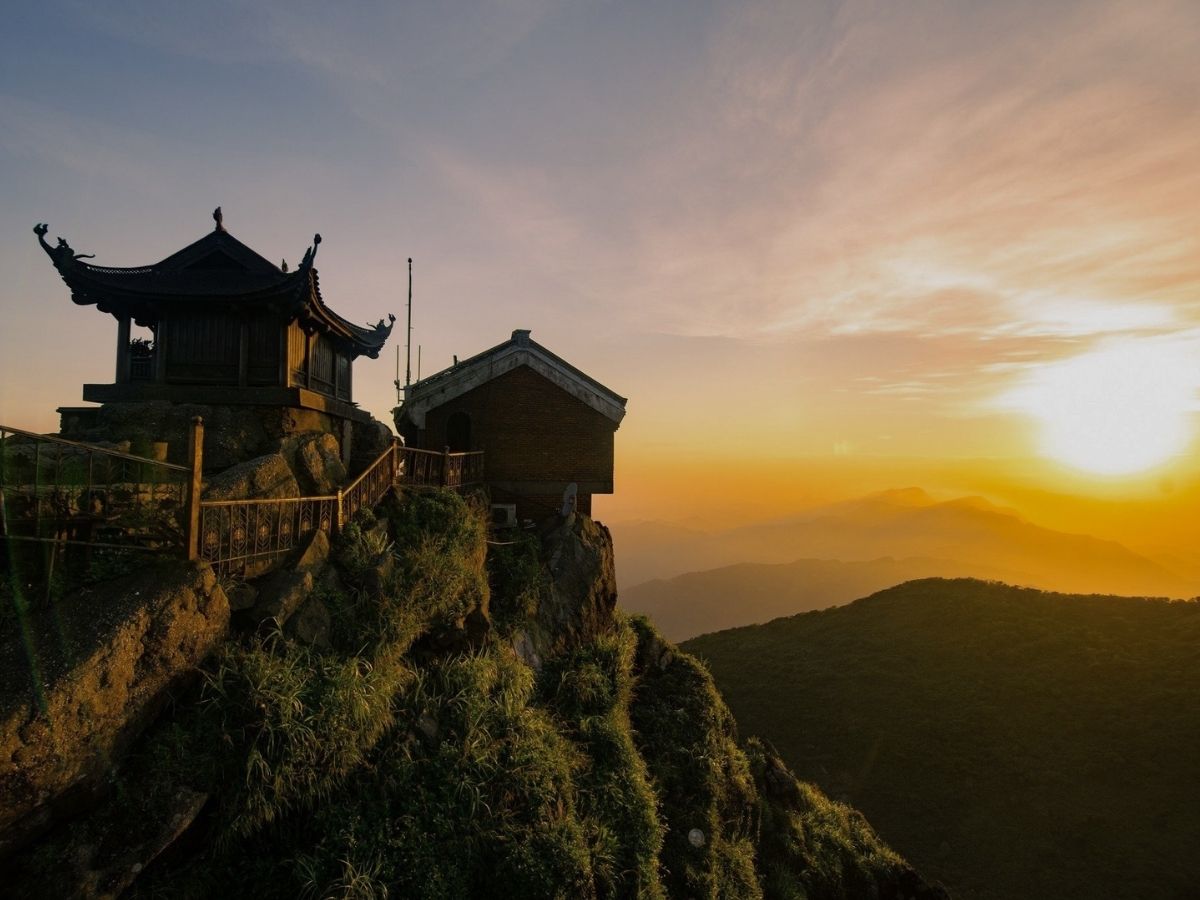
The moment of watching the sunrise from Dong Yen Tu Pagoda is an experience worth waking up early for. (Source: Collected)
4.3. Vegetarian Cuisine, Souvenir Stalls, and Tourist Support Services
Yen Tu area has many eateries and restaurants serving vegetarian dishes such as vegetarian rice, vermicelli, vegetarian pho... especially lively during festival seasons, meeting the needs for light and simple meals of pilgrims. Many groups choose to eat vegetarian on the day of visiting Dong Yen Tu Pagoda with dishes like rice, vegetable soup, tofu, and simple local preparations, fitting the spiritual atmosphere.
On the way up and around Yen Tu center, there are many stalls selling Buddhist souvenirs: small Buddha statues, bracelets, prayer beads, agarwood, paintings, sutra books, and other ritual objects. When buying, it is advisable to compare prices at a few stalls, focusing on products made from good quality materials like wood, stone, or copper, and avoiding overly cheap items that may lack refinement.
Within the relic site, tourist support services are fully arranged, including parking, restrooms, restaurants, information counters, tour guides, cable car services, and internal electric vehicles. Many travel agencies also organize package tours to Yen Tu, including transportation, entrance tickets, cable car tickets, guides, and vegetarian meals or local cuisine, making the pilgrimage to Dong Pagoda convenient and complete.
5. Important Notes and Valuable Experiences When Visiting Dong Yen Tu Pagoda
5.1. Rules for Worship, Dress Code, and Etiquette When Visiting Pagodas
When visiting Dong Yen Tu Pagoda, choosing appropriate attire shows respect for the sacred space. Visitors should dress modestly and politely, opting for tops with sleeves that are not too short, and long pants or skirts that cover the knees. Avoid overly tight, thin, or outdoor clothing that is unsuitable for the pagoda atmosphere. Sports shoes or hiking boots with good grip are a safe choice; avoid slippers or high heels that can easily slip on damp stone steps.
During worship, maintain order and speak softly within the pagoda grounds, giving priority to the elderly and children when ascending or descending steps. Upon entering Dong Pagoda, remove hats and sunglasses, light incense at designated areas, and do not stick incense into rock walls or statue bases.
It is important not to litter, always dispose of trash in designated bins, limit the use of plastic bags, and refrain from throwing money or votive paper into rock crevices or mountain ledges. Avoid jostling and pushing, do not carve or draw on surfaces, break branches, or climb on railings or pagoda roofs for photos. Adhering to these rules not only demonstrates culture but also contributes to preserving the sacred landscape of Dong Yen Tu Pagoda.
5.2. Advice and Tips for Families, the Elderly, and Children Visiting Dong Pagoda
For the elderly, those with weak health, or young children, it is recommended to prioritize using the cable car combined with short walks to conserve energy, rather than trekking the entire route of over 6 km. Families with young children should prepare warm clothes, hats, and gloves for them when approaching the summit of Dong Pagoda, and always pay attention to holding children's hands on narrow stone steps with steep drops on either side.
It is necessary to bring some essential medicines such as motion sickness medication, cold medicine, essential oil, and bandages. Light snacks should only be brought in sufficient quantities to avoid carrying heavy loads. For groups with the elderly and children, it is advisable to plan visits for the middle or end of the festival season, avoiding the opening day or weekends in January to reduce cable car waiting times and enjoy a less crowded atmosphere.
Choosing to visit during the middle or end of the festival season, or on weekdays, will make the pilgrimage to Dong Yen Tu Pagoda more relaxed and comfortable for all members. Thorough preparation contributes to a complete and meaningful pilgrimage experience.
5.3. Combined Attractions Around Yen Tu
After visiting Dong Yen Tu Pagoda, visitors can combine their trip with exploring other relics along the Yen Tu route to gain a deeper understanding of the area's history and spiritual significance. Giai Oan Stream, associated with the legend of Trần Dynasty's concubines, is an ideal first stop. Giai Oan Pagoda and Hoa Yen Pagoda are large pagodas situated on the mountainside, where King Tran Nhan Tong once practiced Buddhism.
Sites such as Mot Mai Pagoda, Van Tieu Pagoda, and Bao Sai Pagoda are all ancient hermitages and pagodas with unique historical and architectural values within the Truc Lam Zen Buddhism system. Each place holds its own story, relics, and sacred atmosphere, contributing to a complete journey of exploring Vietnamese Buddhist culture.
Visitors can also combine their trip with exploring the tourism ecosystem of Quang Ninh province, connecting to Ha Long, Bai Chay, Sun World Ha Long, and modern resorts. A 2-3 day itinerary can be reasonably arranged: the first day for pilgrimage to Dong Yen Tu Pagoda, the next day for visiting Ha Long, entertainment, and relaxing on the beaches. This combination creates a trip rich in spiritual, resort, and diverse entertainment elements, making it attractive.
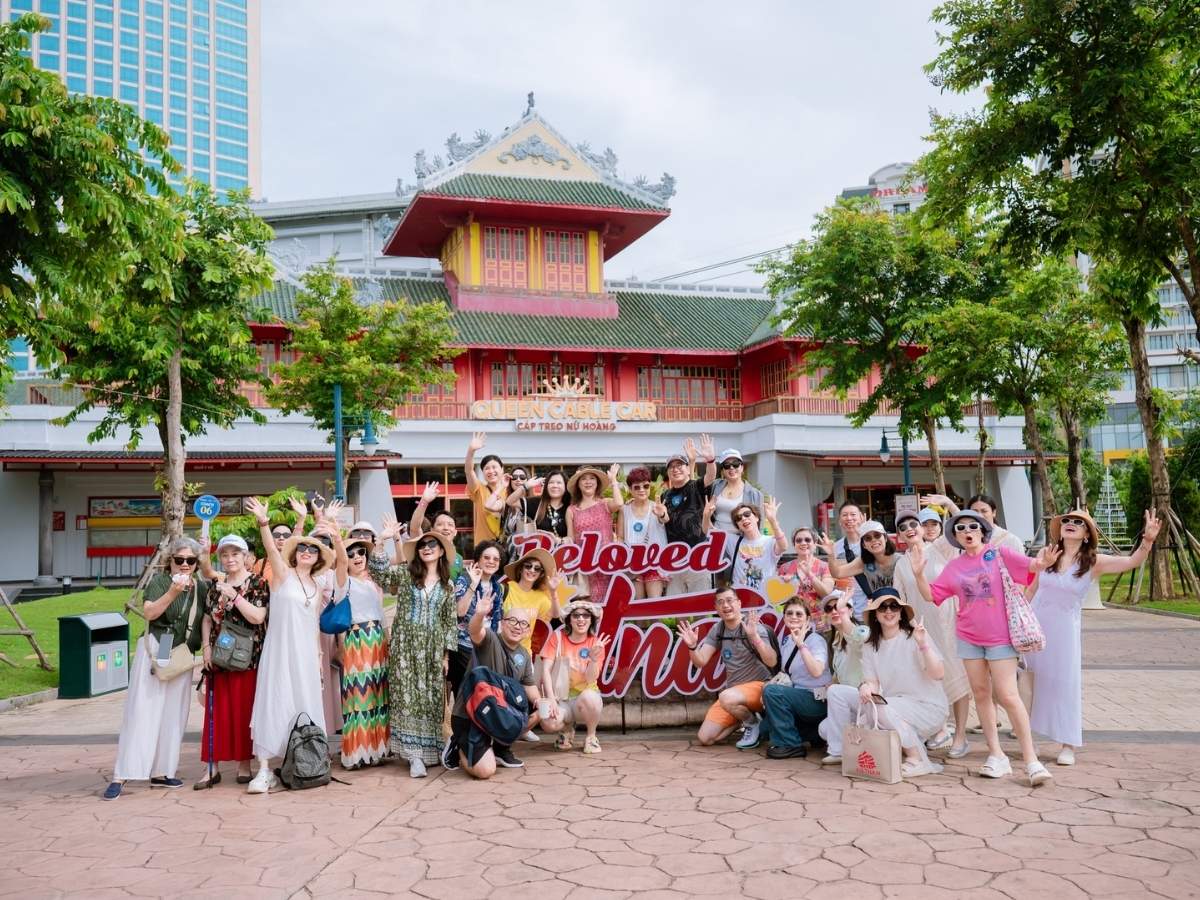
Visitors can also combine a visit to Sun World Ha Long.
Yen Tu Bronze Pagoda converges spiritual, historical, architectural, and unique landscape values with the symbol of the Truc Lam Zen school, record-breaking monolithic bronze pagoda architecture, and the "walking in the clouds" experience on the sacred mountain peak. Take time to pilgrimage once to the peak of Yen Tu to feel the peace and share memorable experiences, contributing to spreading the cultural values of Vietnamese Buddhism!