















1. Where is Po Hen Memorial? Location and historical value
A place marking the history of defending the nation's border. (Source: Collected)
Po Hen Memorial is one of the typical historical sites of Quang Ninh province, associated with the history of defending the nation's northern border. Understanding the location, context of origin, and historical value of the monument not only helps visitors better understand the Po Hen region but also evokes pride and deep gratitude for the heroic sacrifices of previous generations.
1.1. Location of Po Hen Memorial on the Quang Ninh map
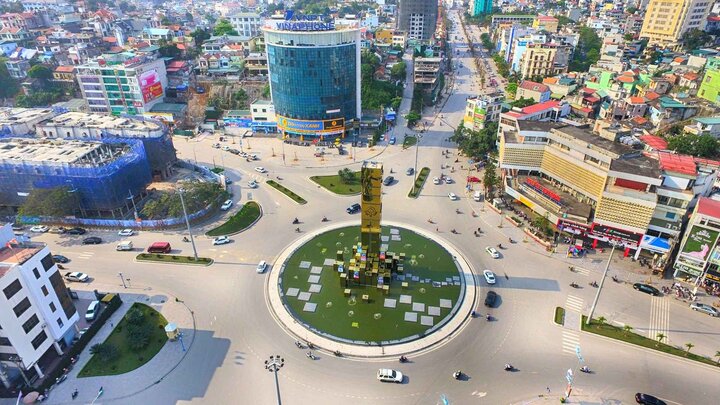
On the border patrol route starting from Bac Phong Sinh Border Gate, the Northeast mountains and forests appear majestic and solemn. Amidst this space, the Po Hen Memorial stands out as a sacred landmark, located in Po Hen village, Hai Son commune, Mong Cai city, Quang Ninh province. The monument was built on the old site of Po Hen Border Post 209, which witnessed many important historical events.
From the center of Mong Cai city, visitors can reach the relic site by traveling about 30 km. Due to its location bordering Vietnam – China, the Po Hen Memorial is not only convenient for visits but also holds special significance in the journey to explore the history, culture, and sovereignty of the northeastern border region.
1.2. History and Significance of Po Hen Memorial
The Po Hen Memorial is associated with the 1979 war to defend the northern border – a tragic milestone in modern Vietnamese history. On the morning of February 17, 1979, in this area, 45 officers and soldiers of Po Hen Border Post 209 heroically sacrificed their lives while on duty, along with 28 other martyrs, including the only female martyr Hoang Thi Hong Chiem and 27 workers from the Hai Son forestry.
Not only that, during the period from 1980 to 1991, an additional 13 border guards continued to fall while defending national border sovereignty. A total of 86 martyrs are honored at this site, becoming a sacred symbol of patriotism, indomitable will, and solidarity among the Kinh, Dao, and San Chi ethnic groups along with the national defense forces.
Today, the Po Hen Memorial is considered a typical "historical site," playing an important role in educating traditions, fostering patriotism, and national pride for the younger generation.
1.3. Construction and Upgrade Process of Po Hen Memorial
In the early years after the war, the memorial site for the Po Hen martyrs consisted only of small stone markers erected by border guards to commemorate their comrades. By 1996, a more solid structure was built, marking a significant step in preserving historical memory.
On May 19, 2010, on the occasion of the 110th anniversary of President Ho Chi Minh's birthday, the Po Hen Memorial relic site officially began its large-scale renovation, using socialized capital invested by the Quang Ninh Border Guard Command. The project was completed and inaugurated on January 10, 2011, with a total area of 86,000 m².
By 2018, the relic site was further upgraded with new facilities such as an entrance gate, reception house, ceremonial ground, and green spaces, creating a solemn and sustainable landscape. Its recognition as a provincial-level historical site in 2014 and a national relic in 2022 affirms the immense value of the Po Hen Memorial within Vietnam's historical and cultural heritage system.
2. Discover the Unique Architecture of Po Hen Memorial
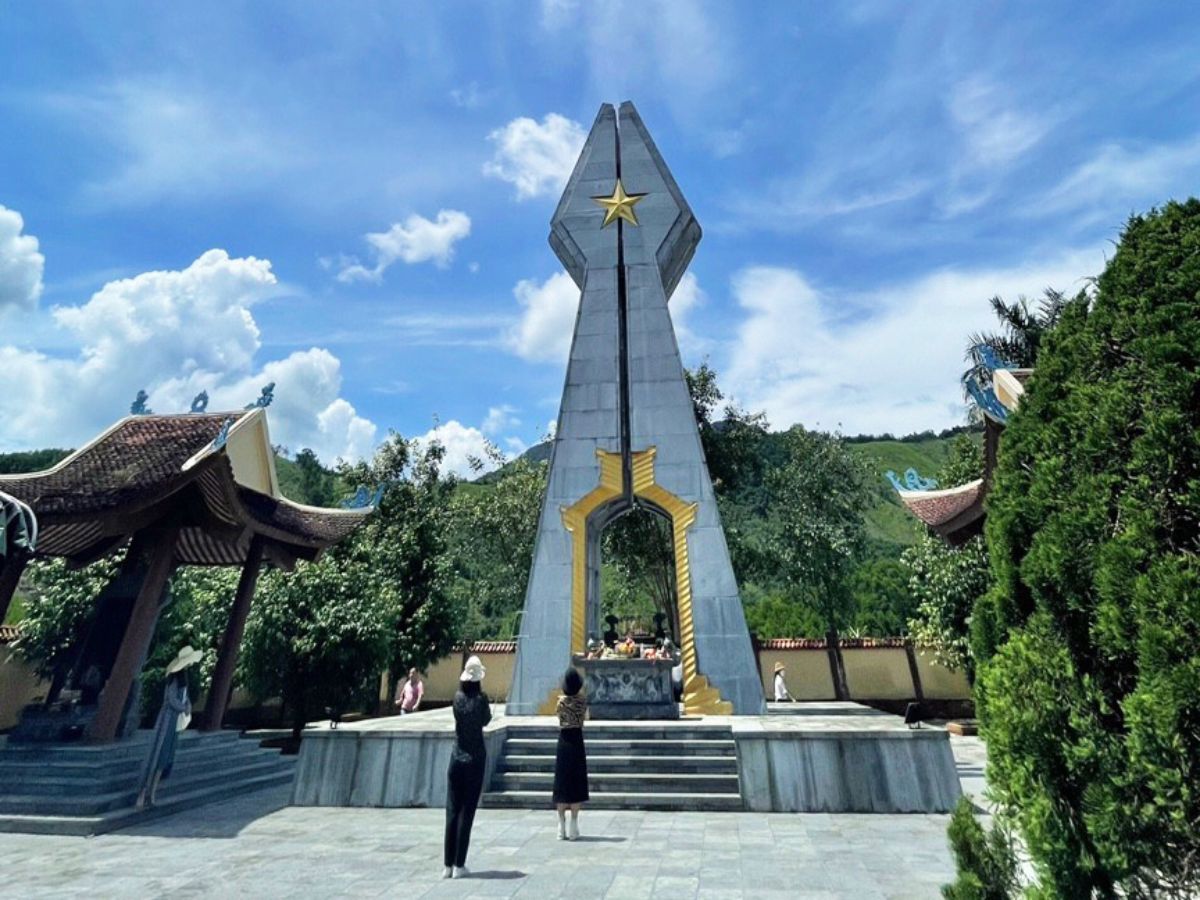
A destination that reminds us of the sacrifices at the front lines. (Source: Collected)
Not only possessing profound historical value, Po Hen Memorial also makes a strong impression with its symbolic architectural language and solemn spatial layout. Every detail in the overall structure is intentionally designed, both honoring the heroic sacrifices of the martyrs, and conveying a message about solidarity and the sacred sovereignty of the Fatherland.
2.1. Design of the Three Hands and Golden Star Symbol
Upon arriving at the Po Hen Memorial, visitors easily notice the central structure, 16 meters high, with a solid reinforced concrete construction, clad in solemn white stone externally, facing North. The most prominent architectural feature is the three large hands reaching upwards, supporting the five-pointed golden star at the apex of the monument – a symbol rich in historical significance and national spirit.
The three hands symbolize the strong bond of the Kinh, Dao, and San Chi ethnic groups, communities that together defended every inch of the border. At the same time, this image evokes camaraderie, fellowship, and the protection of the Fatherland for those who fell. The golden star at the apex of the monument is like an eternal flame, spreading the light of revolutionary ideals, affirming the resilient will and indomitable spirit of the heroes and martyrs of Po Hen.
2.2. Memorial Steles and Heroic Martyrs' Inscriptions
In front of the main monument are two memorial steles, symmetrically arranged, creating a solemn and tranquil space. Each stele is erected from solid bluestone, simply yet durably carved, expressing reverence for those who sacrificed for the Fatherland.
The first stele inscribes the names of 45 officers and soldiers of Border Guard Post 209 Po Hen who bravely fell on February 17, 1979. The remaining stele lists 13 soldiers who died between 1980 and 1991, along with 28 other martyrs, including female martyr Hoang Thi Hong Chiem and workers from the Hai Son forestry enterprise. A total of 86 heroes and martyrs are inscribed, each line of text a vivid testament to loyalty, the spirit of sacrifice, and the aspiration to protect the sacred sovereignty of the nation.
2.3. Landscape Space, Memorial Courtyard, and Green Gardens
Spanning an area of over 86,000 m², the Po Hen Memorial is scientifically planned with many harmonious functional spaces. The center features the main monument, surrounded by a large ceremonial courtyard where memorial and gratitude rituals take place on important occasions. The green garden system is arranged alternately, bringing a cool feeling, making the space more serene and solemn.
Inside the relic site, there is also a traditional memorial house, displaying images and artifacts related to the history of fighting and border defense. The welcome gate and reception house are designed in a modern yet restrained style, ensuring harmony with the overall sacred atmosphere. The internal road system is clear and convenient for visitors to tour, pay respects, and fully appreciate the value of the memorial space at the nation's frontier.
3. Memorable Experiences at Po Hen Memorial
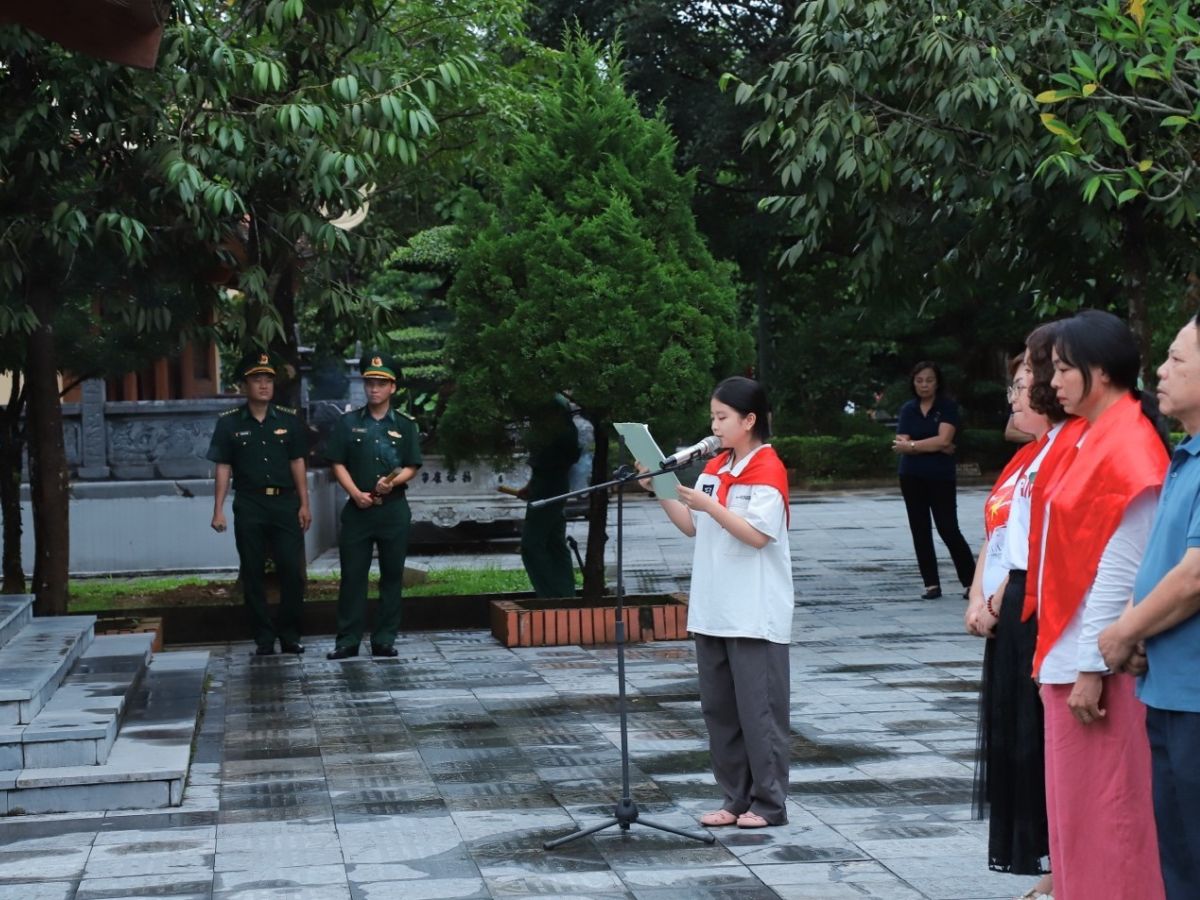
A solemn and contemplative memorial space. (Source: Collected)
More than just a historical landmark, the Po Hen Memorial also offers visitors profound and emotional experiences. Every activity here helps the visit become an occasion to remember, reflect, and better understand the value of peace on the nation's border.
3.1. Incense Offering and Traditional Commemoration Ceremony on February 17th
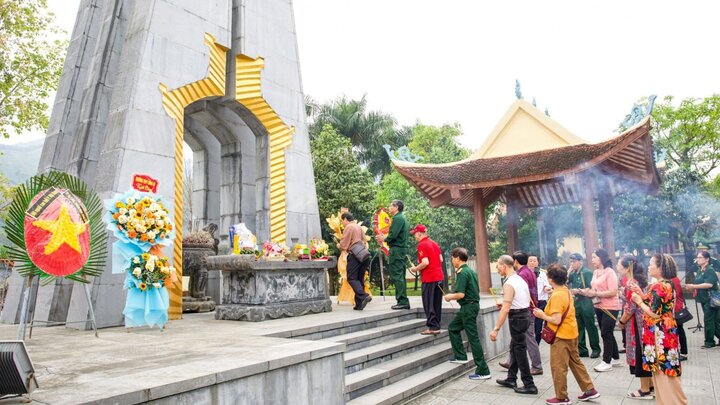
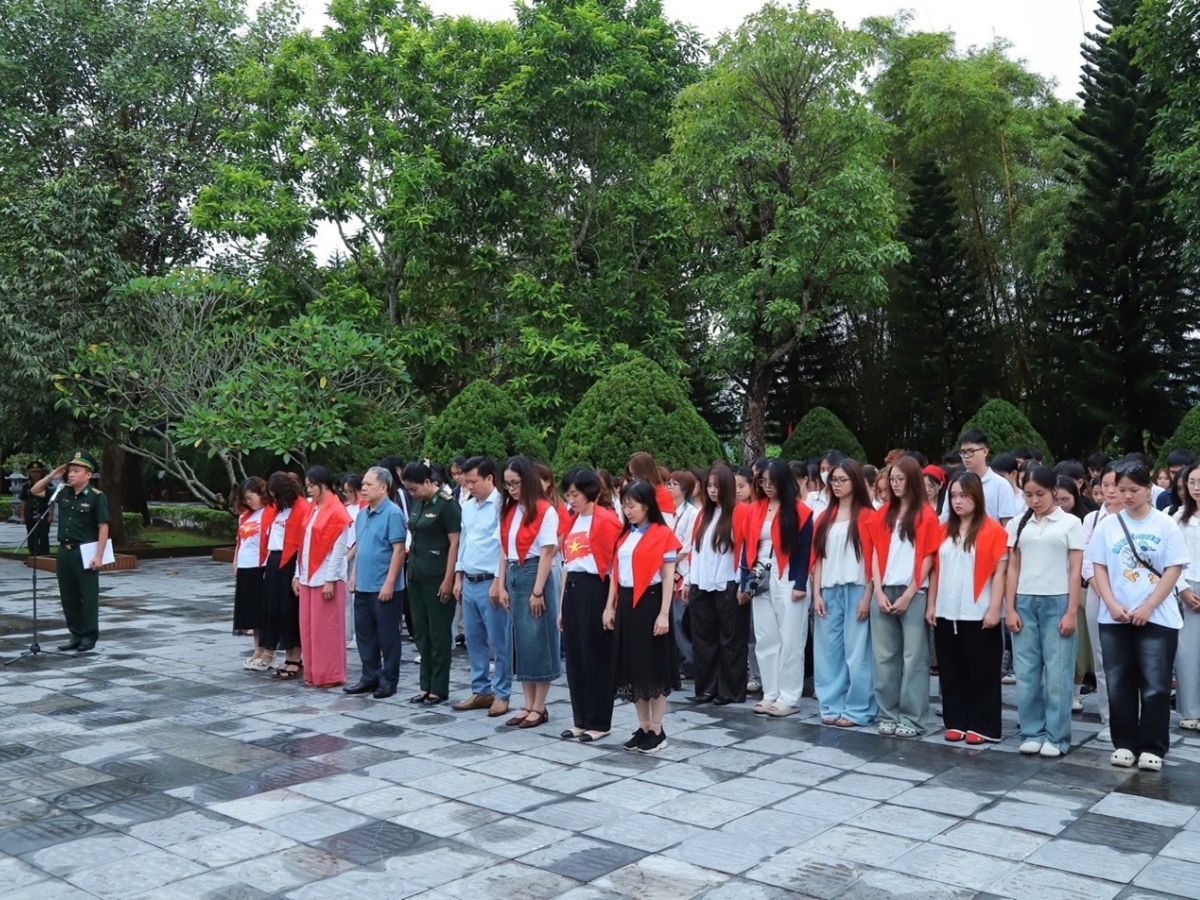
Each year, especially on February 17th, the Po Hen Memorial becomes a sacred space where incense offering ceremonies are held to commemorate the heroes and martyrs who sacrificed their lives for the nation's border. On this day, the relic site welcomes numerous delegations, veterans, students, officials, and local residents to light incense in gratitude.
Not limited to the February 17th anniversary, commemoration rituals are also held on many major holidays, political events, and local traditional days. The solemn and contemplative atmosphere at the Po Hen Memorial helps everyone pause, deeply feel the value of sacrifice and peace. This is also an important occasion to educate patriotism, and foster a sense of responsibility towards the homeland for today's youth.
3.2. Visiting Prominent Sites within the Po Hen Relic Site
The Po Hen Memorial relic site is planned into four main attractions, each location carrying its own historical story, contributing to a vivid recreation of the period of defending the northern border. The most prominent is the Po Hen Martyrs' Memorial, with the symbol of three hands holding a golden star and two steles inscribed with the names of 86 heroes and martyrs.
Besides that, the Que Hill outpost is where traces of the fierce battle on the morning of February 17, 1979, are preserved, helping visitors better imagine the fierce combat conditions of the soldiers in the past. The Po Hen border gate checkpoint demonstrates the key role in maintaining security and border sovereignty. Finally, the Tay Hill observation post offers a panoramic view of the majestic border mountains and forests, possessing both historical value and serving as an emotionally rich check-in spot for nature and photography lovers.
4. Directions to Po Hen Memorial
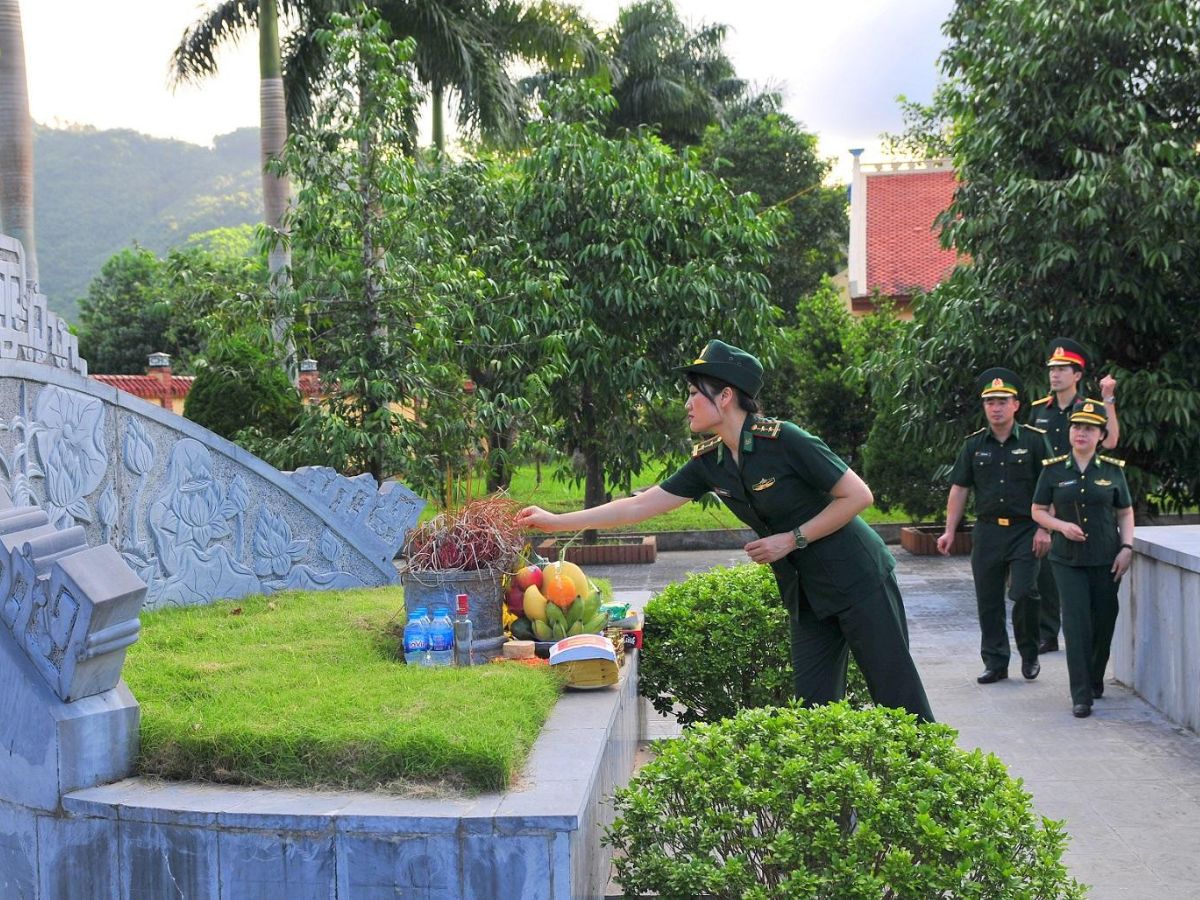
Sacred historical mark in the border region. (Source: Collected)
Po Hen Memorial is located in the Northeast border area, quite far from the urban center, so knowing the travel route will help the trip be more convenient and safe. Below is a detailed guide on how to travel from major cities to Mong Cai and continue the journey to the Po Hen relic site.
4.1. How to travel from Hanoi, Hai Phong to Mong Cai
To visit the Po Hen Memorial, visitors need to travel to Mong Cai city (Quang Ninh) – an important transportation hub of the Northeast border area. Departing from Hanoi, visitors can choose many means of transport such as traditional buses, luxury limousines, or trains combined with shuttle cars. Thanks to the modern Van Don – Mong Cai expressway system, travel time is now only about 4–6 hours, significantly shorter than before.
Ticket prices range from 300,000 – 600,000 VND, depending on the type of service and amenities. During holidays, Tet, or peak tourist seasons, visitors should book tickets early to plan their itinerary and choose a suitable time slot. For visitors traveling from Hai Phong, traveling by private car or bus along the Quang Ninh coastal route is also very convenient, saving time and cost.
4.2. Moving from Mong Cai center to Po Hen Memorial
From the center of Mong Cai city, the Po Hen Memorial is located about 30 km away, in Po Hen village, Hai Son commune. This journey usually takes 45 minutes to 1 hour, depending on the vehicle and traffic conditions. Visitors can choose motorcycles, taxis, or tourist cars for flexible travel and to stop for sightseeing.
The journey to Po Hen is a memorable experience, passing through the Bac Phong Sinh Border Gate and winding border patrol roads through mountains and forests. The natural scenery appears wild with rolling mountains, small streams, and bridges spanning the mountainsides, creating a sense of both grandeur and peace. This is also an ideal route for visitors to clearly feel the beauty of the land at the northernmost point of the Fatherland.
5. Itinerary for visiting Po Hen Memorial and famous tourist attractions

Colorful entertainment experience at Sun World Ha Long.
(Source: Compiled)
Combining a visit to the Po Hen Memorial with famous tourist attractions in the province will make the journey to explore Quang Ninh complete and emotionally rich. The suggested itinerary below is suitable for a 2-day trip, harmonizing between ancestral experience, historical contemplation, and modern entertainment and relaxation.
Day 1: Visitors spend a full day visiting the Po Hen Memorial – a sacred historical site of Quang Ninh, where the heroic sacrifice of soldiers protecting the nation's border is commemorated. Here, visitors can offer incense in remembrance, learn about the history of the Northeast border region, and feel the solemn, peaceful atmosphere amidst the mountains and forests.
Day 2: After an emotional ancestral journey, visitors continue to move to Sun World Ha Long – a leading modern entertainment complex in the North. Featuring the Queen Cable Car, the Sun Wheel, and many attractive games, Sun World Ha Long offers a relaxing and vibrant entertainment experience, helping to balance historical sightseeing with relaxation.
6. Useful tips when exploring Po Hen Memorial
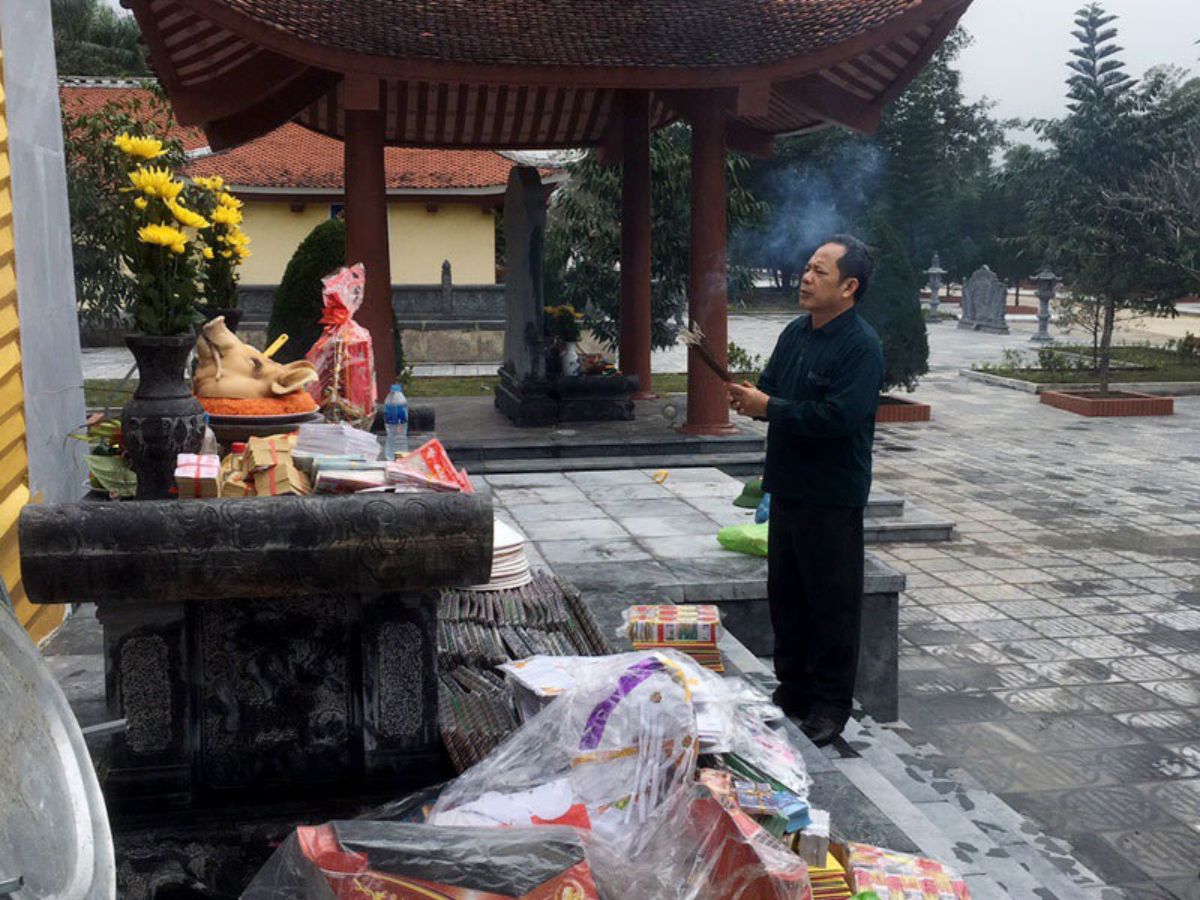
A place to remember the patriotic spirit and valiant sacrifice. (Source: Collected)
Po Hen Memorial is not only a historically significant destination but also a sacred space that evokes the patriotic spirit and sacrifice of heroes and martyrs on the border front. To ensure the visit is solemn, complete, and emotionally resonant, visitors should be aware of some useful tips before setting off.
The ideal time to visit Po Hen Memorial is in spring, especially around February, when the weather in the border area is cool, pleasant, and conducive to outdoor travel and sightseeing. Notably, February 17th annually holds deep historical significance with solemn memorial activities, helping visitors better understand the great sacrifices of heroes and martyrs. Besides this occasion, other traditional holidays are also suitable times as the relic site is tidied up, the landscape is green and beautiful, creating a solemn and emotionally rich atmosphere.
Regarding the time of day, visitors should choose early morning or late afternoon for their visit. The gentle light combined with the fresh border mountain scenery not only brings a sense of peace but is also ideal for taking souvenir photos at the memorial and surrounding areas.
When visiting Po Hen Memorial, it is necessary to prepare polite and neat attire. It is advisable to prioritize subdued or neutral colors such as white, beige, gray; shirts, long pants, or modest long skirts are suitable for the sacred memorial space. Offerings for incense should be simple yet elegant, most commonly white or yellow fresh flowers, clean fruits, neatly arranged to show reverence. Visitors can also prepare incense sticks for use during the ceremony.
Besides, everyone visiting the relic site should actively maintain order, limit loud talking, and avoid actions that disturb the common space. Not littering, following the management's instructions, and behaving civilly will contribute to preserving the historical and cultural values of Po Hen Memorial. Each visit is not only a journey of discovery but also an opportunity for each visitor to express gratitude and spread positive values about patriotic traditions and responsibility towards national heritage.
Po Hen Memorial holds extremely profound historical and educational values, symbolizing the spirit of protecting the sacred border of the Fatherland. Come and experience it in 2025 to cherish heroic historical pages and explore this special destination, which preserves the memory of the courage of heroes.