
















1. Overview of Chua Mot Mai Yen Tu
1.1. Location of Chua Mot Mai Yen Tu
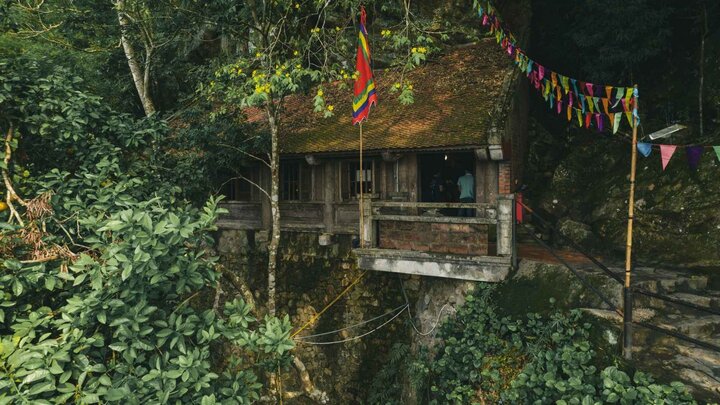
Quietly nestled on the eastern slope of Yen Tu Mountain, in Uong Bi, Quang Ninh province, Chua Mot Mai Yen Tu is about 500 m from Chua Hoa Yen. This location makes the pagoda an interesting stopover on the journey to the summit of Yen Tu. The blend of architectural imprints and pristine natural scenery makes Chua Mot Mai stand out amidst the sacred relic site.
Observed from afar, the pagoda appears as an extension of the cliff face, with a single sloping roof skillfully leaning against the solid mountain base. The air around the pagoda is often imbued with mist and clouds, creating a feeling of stepping into a fairyland.
1.2. History of Formation and Names Through Different Periods
Chua Mot Mai Yen Tu originated during the Tran dynasty, closely associated with the establishment of the Truc Lam Yen Tu Zen school by Buddhist King Tran Nhan Tong in 1299. At the time Tran Nhan Tong abdicated the throne to practice Buddhism, taking the Dharma name Huong Van Dai Dau Da and later changing it to Truc Lam Dai Si, this place witnessed the initial steps of the Vietnamese Zen lineage.
Through different periods, the pagoda bore various names, each carrying its own meaning. The name "Ly Tran" reflects the spirit of leaving the secular world and hướnging towards peace. "Chua Bo Da" is associated with the image of the Bodhi tree, a place for practice and enlightenment. "Chua Ban Thien" reflects its special location, with part of the pagoda embedded in the mountain cliff and the rest seemingly reaching towards the sky. Finally, the name "Chua Mot Mai" (One-Roofed Pagoda) stems from the unique architectural feature of a single sloping roof.
1.3. Outstanding Values That Make Chua Mot Mai Yen Tu Special
Amidst the Yen Tu pagoda complex, Chua Mot Mai stands out due to its unusual architecture and special location. The pagoda is situated on a small mountainside, not far east of Chua Hoa Yen, at a mid-mountain altitude. It nestles into the cliff face, with one part of the space deep within a mountain cave and the other opening outwards, revealing only a single roof, creating a mystical yet impressive appearance, true to its familiar name today.
According to historical records, during the Le dynasty, the pagoda was named Bo Da, serving as a place to worship Buddha and Bodhisattvas. Due to its special structure, half inside a cave and half outdoors, the pagoda was also called Ban Thien Tu or Chua Ban Mai. Additionally, as it is located in a cave within the Thanh Long mountain range, east of Chua Hoa Yen, local people also referred to it as Thanh Long Dong.
In its early days, the pagoda was just a small hermitage named Ly Tran. Legend has it that King Tran Nhan Tong often visited this place to read books and compose scriptures. After his passing, the Ly Tran hermitage was expanded and renovated into Chua Bo Da. With its architectural characteristic of half natural rock vault and half exposed roof, the pagoda gradually became known by folk names such as Ban Mai, Ban Thien, and later became widely known as Chua Mot Mai.
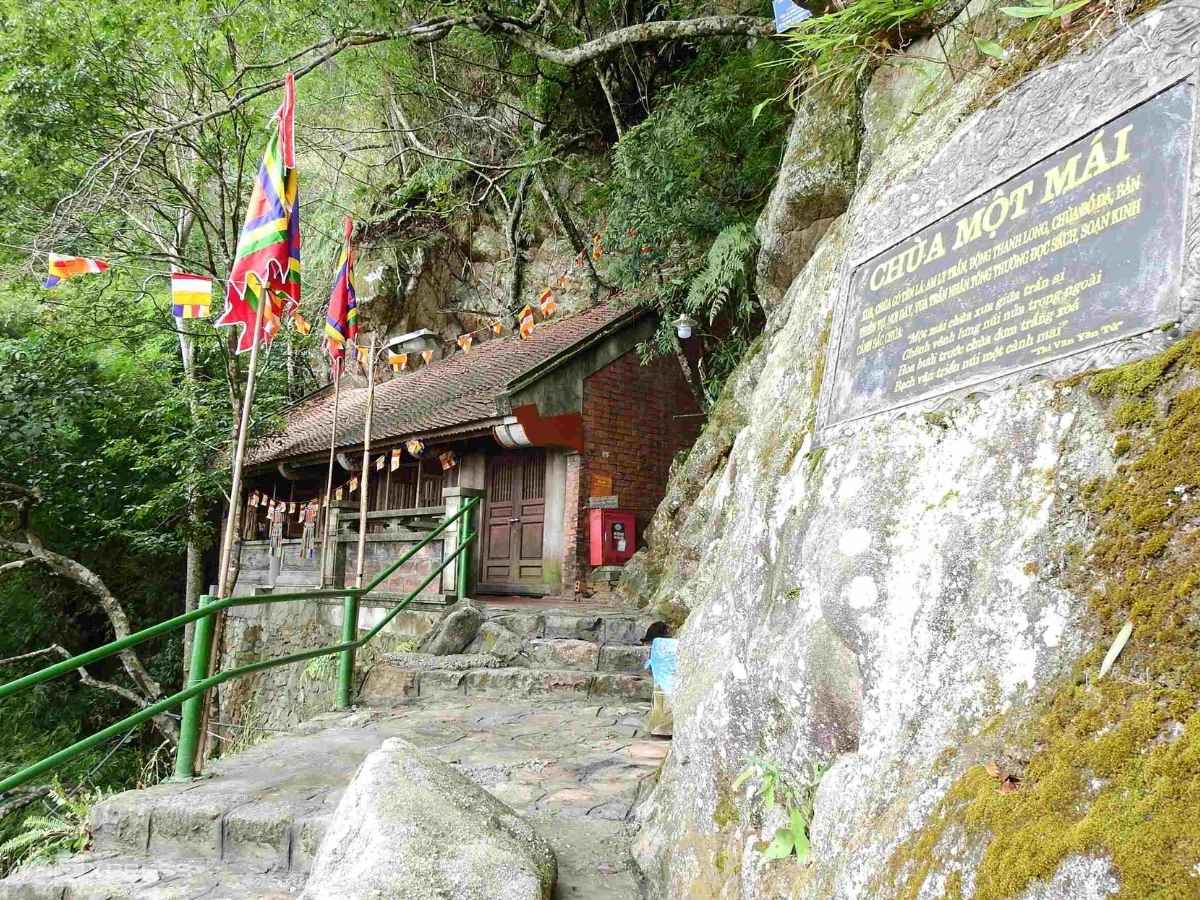
Amidst the Yen Tu pagoda complex, Mot Mai Pagoda stands out with its unusual architecture and special location. (Source: Collected)
2. Getting to Mot Mai Pagoda Yen Tu
2.1. From Hanoi or surrounding areas to Yen Tu
From Hanoi to Yen Tu, the travel time by private car is about 2.5 hours, following the Hanoi - Hai Phong expressway, then turning onto National Highway 18A, passing Chi Linh, Song Lo to Uong Bi. Alternatively, tourists can choose a bus departing from My Dinh or Gia Lam bus stations with prices ranging from 120,000 - 150,000 VND per person, with a total travel time of about 3 hours.
If departing from Ho Chi Minh City, tourists can choose to fly to Van Don Airport and then travel by car for about 1.5 hours, or fly to Noi Bai and follow the route from Hanoi. The cost of travel from other provinces usually ranges from 500,000 to 1,500,000 VND depending on the mode of transport and departure location.
2.2. Moving within Yen Tu and the road to Mot Mai Pagoda
Once you reach the foot of Yen Tu mountain, you can choose between two options to go up to Mot Mai Pagoda Yen Tu. The modern cable car route will take you from the lower station to the transfer station, then continue walking or take another cable car section up to near the summit.
For those who love physical activity, the walking trail with stone steps will lead through Hoa Yen Pagoda, across the famous Ban Tay bridge before reaching Mot Mai Pagoda. This route takes about 45 minutes to 1 hour, depending on individual fitness, offering a sense of accomplishment and the opportunity to admire the beautiful natural scenery along the way.
2.3. Suggested tourist facilities in Yen Tu
Yen Tu relic site is fully equipped with tourist support services. Yen Tu vegetarian restaurant serves a rich menu, with prices from 150,000 to 300,000 VND per meal, suitable for the spiritual atmosphere. Yen Tu Legacy resort offers comfortable rooms priced from 1,200,000 to 2,500,000 VND per night, providing a relaxing experience amidst nature.
Professional tour guide services help tourists gain deeper insights into cultural and historical values with a fee of 300,000 to 500,000 VND per day. Additionally, souvenir shops offer many characteristic products such as Buddha statues, prayer beads, books on Truc Lam Zen Buddhism... with prices ranging from 50,000 to 500,000 VND.
3. Unique architecture of Mot Mai Pagoda Yen Tu
3.1. Impressive space of Mot Mai Pagoda
Mot Mai Pagoda impresses with its unique architecture, true to its name. With half of its space nestled deep within a cave, and the other half opening outwards, it blends nature and human craftsmanship. The pagoda is not large in scale, with a length of about 9.6m, a depth of 1.7m; from the floor to the beam it is 1.55m high, the highest point of the ridge reaches 2.3m, and the half-roof section is about 0.9m wide.
Inside, the pagoda is arranged into four separate compartments, with the front enclosed by a system of tightly fitted wooden planks. The special feature is that the entire structure and architectural details use wood, contributing to the rustic, ancient beauty and rare uniqueness of the pagoda amidst the sacred Yen Tu mountains.
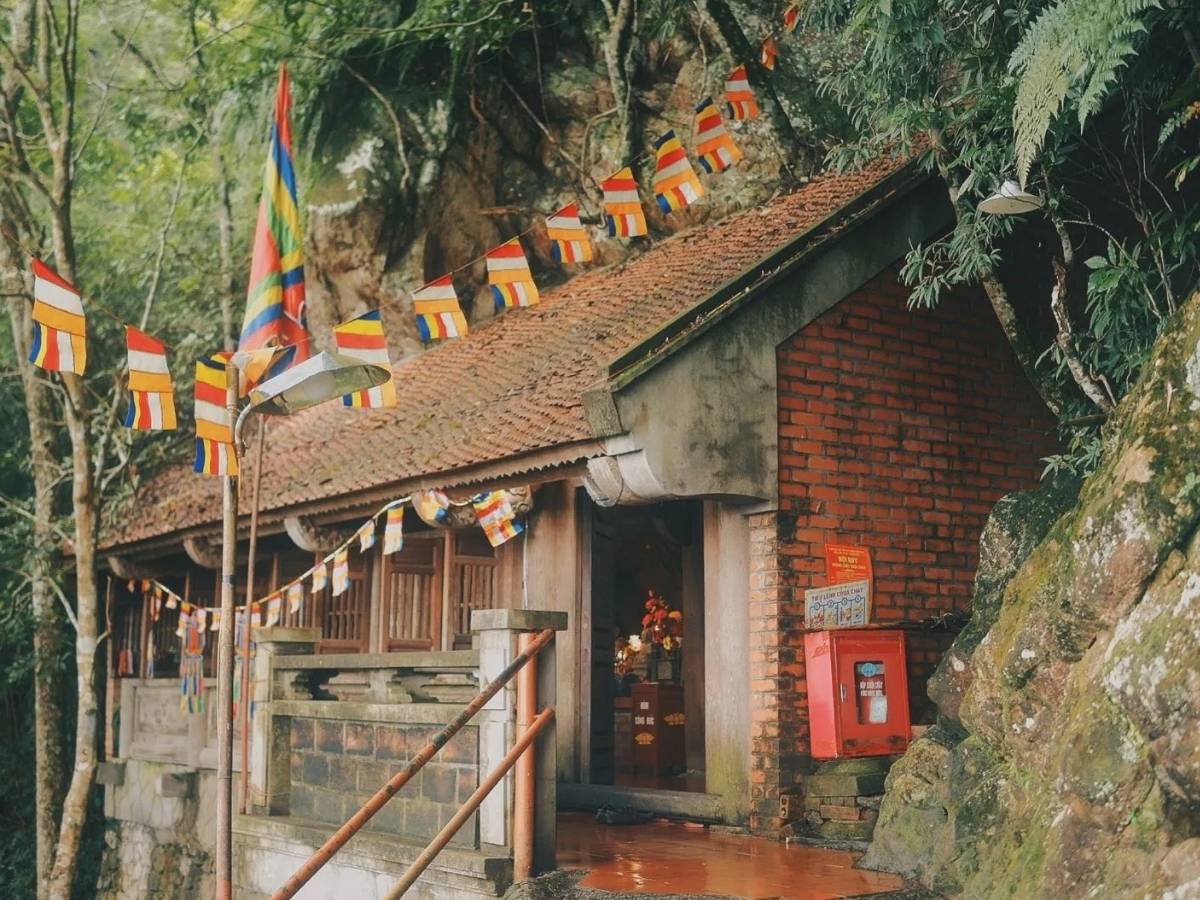
The One Roof Pagoda impresses with its unique architecture, true to its name. (Source: Collected)
3.2. The solemn design of the One Roof Pagoda
Despite its modest scale, the One Roof Pagoda Yen Tu exudes a solemn and intimate aura, in line with the pure spirit of Buddhism. The main components are made of precious wood, harmonizing with the traditional yin-yang tiled roof, creating a sturdy structure suitable for the mountain climate.
The temple gate is designed low, requiring everyone to bow their head upon entering. This is both an architectural feature and carries a profound meaning: reminding people to maintain humility and reverence in sacred places. The panels are carved with ancient patterns, bringing a solemn and ancient feel to the space.
3.3. White stone statues and worship items
Inside the One Roof Pagoda Yen Tu, the statues and worship items are harmoniously arranged, exuding a characteristic purity. The statues, altars, and accessories are crafted from durable materials, well-adapted to the mountain climate. The main altar is placed in the center, facing the temple gate to receive natural light.
The layout is refined, creating a worship space that is both solemn and intimate. Every detail is meticulously cared for, reflecting the cultural beauty of Vietnamese Buddhism as well as the spirit of the Truc Lam Zen sect.
4. Profound historical – cultural – spiritual values at the One Roof Pagoda
4.1. Role with the Truc Lam Zen sect and Emperor Tran Nhan Tong
The One Roof Pagoda Yen Tu is closely associated with the development of the Truc Lam Yen Tu Zen sect, a uniquely Vietnamese Zen lineage founded by Emperor Tran Nhan Tong (1258-1308). This site was chosen as a place for meditation, teaching, and writing by Tran Nhan Tong, contributing to the spread of Vietnamese Buddhism.
The tranquil atmosphere of the pagoda provides favorable conditions for meditation, contemplation, and the study of Buddhist doctrines. Tran Nhan Tong once stayed here during his practice, while also commemorating the contributions of the patriarchs. The engaged Buddhism spirit of the Truc Lam Zen sect, "Dharma not separate from life," is also reflected in the pagoda's location – neither completely isolated nor detached from daily life.
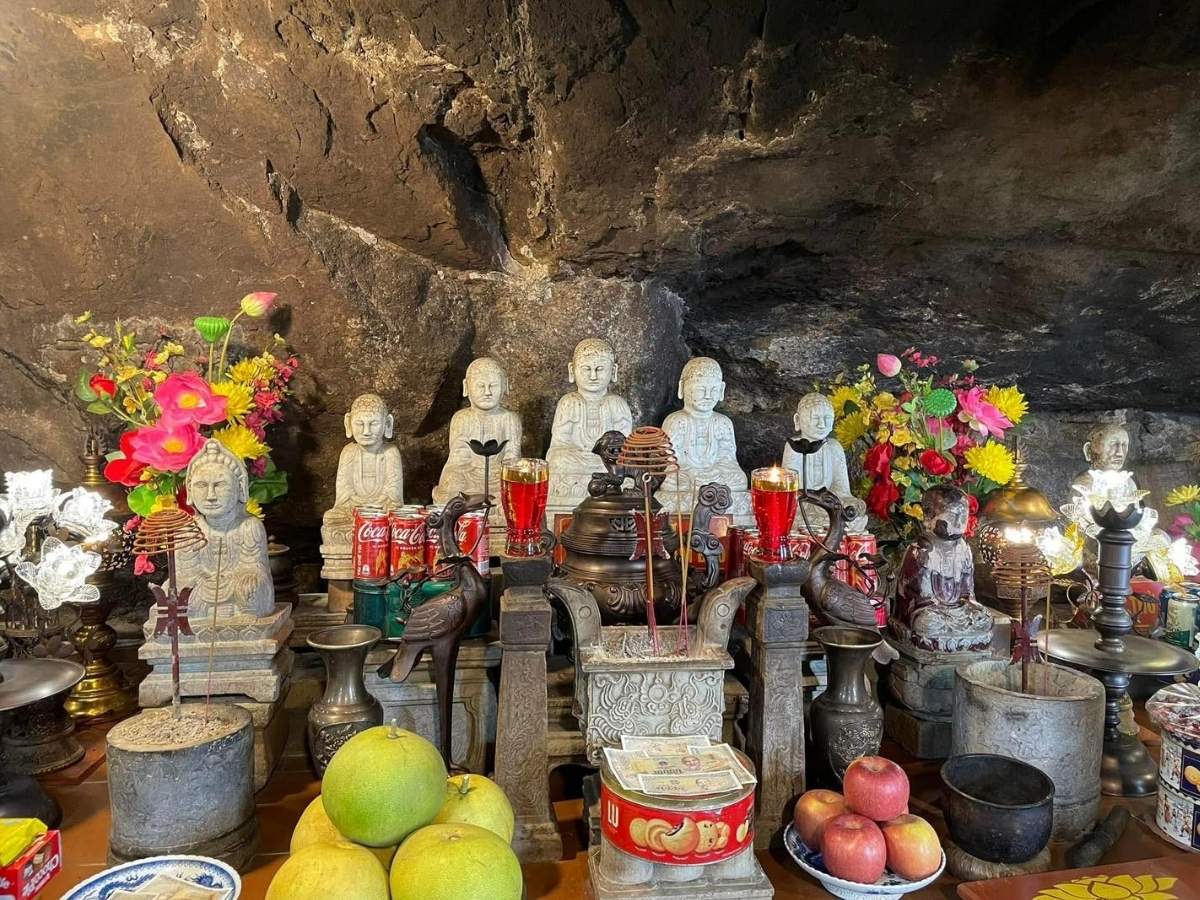
The tranquil space of the pagoda is conducive to meditation, contemplation, and studying Buddhist doctrines. (Source: Collected)
4.2. Significance of Buddhist rituals held at Mot Mai Pagoda
Traditional rituals at Mot Mai Yen Tu Pagoda are maintained in accordance with the Truc Lam Zen tradition. On the full moon and the first day of the lunar month, the pagoda holds ceremonies and chanting in a solemn atmosphere. Particularly, during the Buddha's Birthday and the anniversaries of Tran Nhan Tong, the site welcomes many Buddhists and pilgrims.
Regular meditation sessions are organized, helping people experience the unique practice methods of the Truc Lam Zen tradition. These activities not only preserve traditions but also provide an opportunity for younger generations to learn about the nation's spiritual cultural values.
4.3. Stories and historical imprints over 700 years
After more than 700 years of existence, Mot Mai Yen Tu Pagoda has witnessed many historical periods and has been preserved and restored through various eras. During the Tran-Le dynasties, it was an important center of the Truc Lam Zen tradition, a place for training monks and nuns and propagating Buddhist teachings. Many stories about the virtuous deeds of Tran Nhan Tong and subsequent Zen masters are still passed down today.
During times when the country faced foreign invasions, the pagoda also served as a gathering place for monks and local people to pray for national peace and prosperity. In recent years, this relic has always been prioritized for preservation, maintaining its traditional architectural style and ensuring safety for visitors. Every stone, every detail, holds a story of perseverance and effort in preserving Vietnamese cultural values.
5. Natural landscape and outstanding experiences around Mot Mai Yen Tu Pagoda
5.1. Bamboo forest, ancient apricot trees, and a "sacred well" with groundwater
The area around Mot Mai Yen Tu Pagoda is blessed by nature with a rich ecosystem. Lush green bamboo forests form a natural windbreak, bringing tranquility to the pagoda. The sound of wind rustling through bamboo leaves is like a melodious tune amidst the mountains.
A prominent highlight is the cluster of ancient apricot trees hundreds of years old. Every spring, apricot blossoms bloom vibrantly, dyeing the space yellow and creating a poetic scene. The clear, cool spring water, flowing year-round, is considered "sacred water" by locals, bringing good luck and health. Many pilgrims often drink this water or take it home due to its special spiritual significance.
5.2. The beauty of the four seasons around the pagoda
With each passing season, Mot Mai Yen Tu Pagoda takes on a unique character. In spring, the scenery is filled with yellow apricot blossoms and red azaleas, creating a warm, fresh atmosphere, perfect for romantic souvenir photos.
In summer, mist often covers the mountaintop, creating a surreal, ethereal feeling, with consistently cool and pleasant temperatures. In autumn, fallen yellow leaves cover the paths, the air becomes crisp, making it ideal for meditation. In winter, thick fog and occasional snow on the mountaintop create a mystical, legendary beauty.
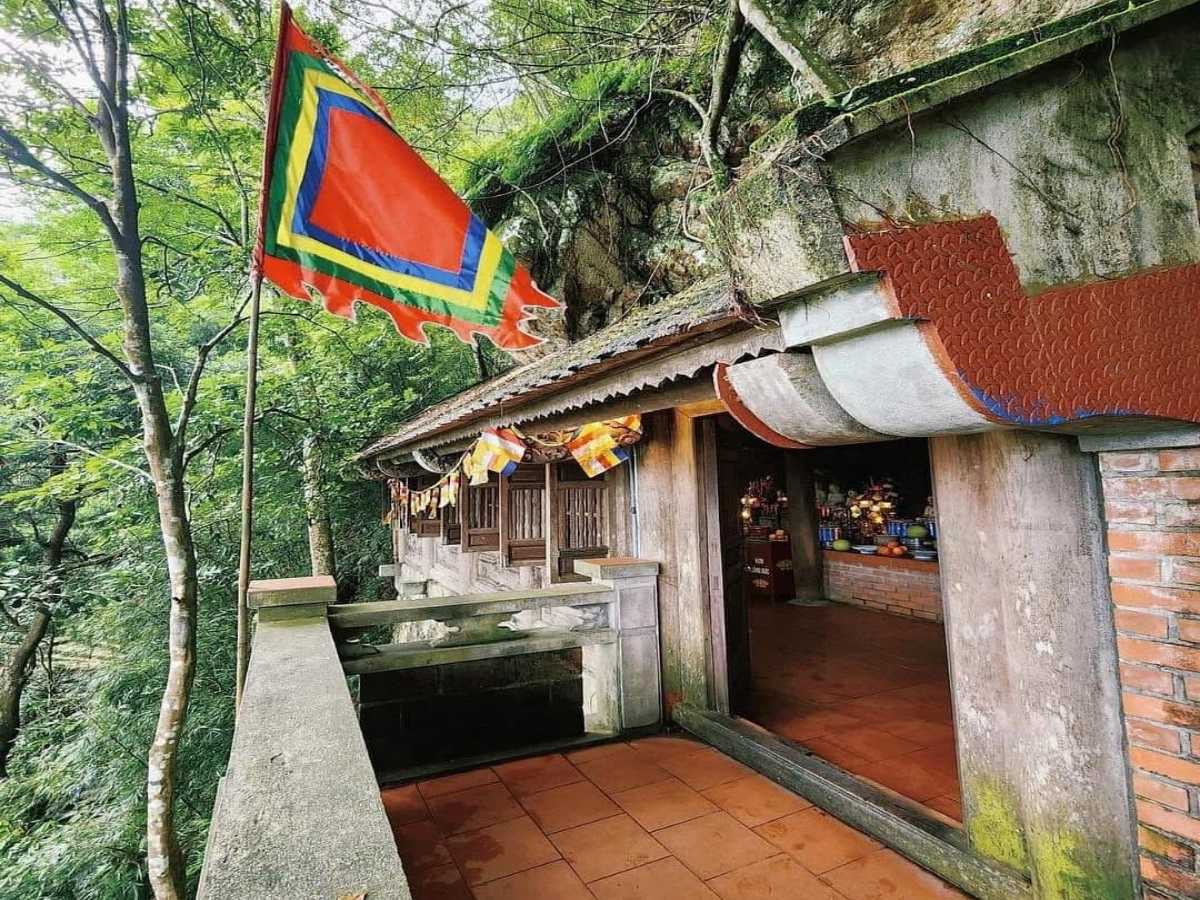
As each season passes, the One Roof Temple in Yen Tu takes on its own distinct character. (Source: Compilation)
5.3. Combined Trekking, Mountain Climbing, and Pilgrimage Experience
Visiting the One Roof Temple in Yen Tu, visitors can combine various activities in one trip. Trekking from the foot of the mountain to the temple offers a health challenge and opens up opportunities to admire the magnificent mountain and forest scenery. Photography enthusiasts will find many unique shooting angles from the Hand Bridge, Hoa Yen Pagoda to the One Roof Temple area.
This pilgrimage combined with cultural exploration is suitable for many subjects, from the elderly to young people. Visitors can attend peace-praying ceremonies, learn about the history of the Truc Lam Zen sect, and enjoy the fresh atmosphere of the mountains and forests. Support services such as trekking pole rentals, raincoats, and snacks are readily available to facilitate the exploration process.
6. Pilgrimage Experience and Notes for Visiting the One Roof Temple in Yen Tu
6.1. Suggested Attire and Essential Items for the Journey
For a smooth trip to the One Roof Temple in Yen Tu, preparing suitable attire is very important. Sports shoes with good grip will help you move safely on slippery stone steps. A light jacket or windbreaker should be brought as the temperature in this area is usually 5 to 10 degrees Celsius lower than the plains, especially in the early morning and late afternoon.
Attire should be modest and respectful, suitable for a spiritual space. Prepare drinking water, some light snacks, and personal medications for use when needed. An umbrella or raincoat is essential due to the rapidly changing weather in mountainous areas. If staying overnight, don't forget to bring extra warm clothes as mountain nights are often much colder than days.
6.2. Cultural and Etiquette Notes for Visiting the One Roof Temple
When entering the One Roof Temple in Yen Tu, visitors should pay attention to observing traditional etiquette rules to show respect in this sacred place. Before entering the temple, wash your hands and feet thoroughly and maintain a serious attitude. When performing rituals, follow the sequence: light candles, burn incense, pray silently, and then place the incense in the censer.
Within the temple grounds, maintain silence or speak softly, avoiding disturbances. Before taking photos, ask for permission from monks or temple staff, and avoid using flash when in the worship area. All waste should be collected in designated areas to preserve the sanctity of the relic. If you wish to make a donation, prepare suitable items such as fruits, clean water, or monetary contributions.
6.3. Tips for Taking Photos and Capturing Memorable Moments at the One Roof Temple in Yen Tu
The One Roof Temple in Yen Tu is an ideal destination for photography lovers with many unique shooting angles. The best times for photography are early morning from 6:00 to 8:00 or late afternoon from 16:00 to 18:00 when the light is soft and mist creates a magical effect. Shooting from below the temple looking up will highlight its unique sloping roof leaning against the mountainside.
To get impressive photos, take advantage of the natural surroundings of the temple. The nearby Hand Bridge is also an ideal spot for panoramic shots. When shooting, you can use HDR mode to balance the light between the sky and shaded areas. Cloudy or misty days will produce mystical frames that are easily impressive on social media.
7. Suggested Itinerary for Visiting Yen Tu Relics
7.1. 1-Day Itinerary
If combining a visit to Yen Tu and Sun World Ha Long , visitors should plan a 2-day, 1-night trip for a comfortable journey. On the first day, depart from Hanoi at 6:00 AM, arriving at the Yen Tu relic site around 8:30 AM. Visitors can choose to take the cable car or hike up to Hoa Yen Pagoda, visit and take photos for about 30 minutes, then continue across the Hand Bridge to reach the One Roof Temple by 10:00 AM, spending about 1.5 hours praying and experiencing the sacred atmosphere.
From 11:30 AM to 1:00 PM, stop for lunch at a vegetarian restaurant within the relic site. In the afternoon, continue visiting Bao Sai Pagoda, Dong Pagoda, and descend to the cable car station by 3:30 PM.
At 4:00 PM, the group leaves Yen Tu and travels to Ha Long city, checks into the hotel and rests. In the evening, enjoy seafood and stroll along Bai Chay beach. On the second day, after breakfast, visitors will spend the entire morning and early afternoon playing at Sun World Ha Long with prominent areas such as the Queen Cable Car, Sun Wheel, Dragon Park, or Typhoon Water Park. Around 3:30 PM, the group will board the bus back to Hanoi and conclude the trip around 6:30 PM – 7:00 PM.
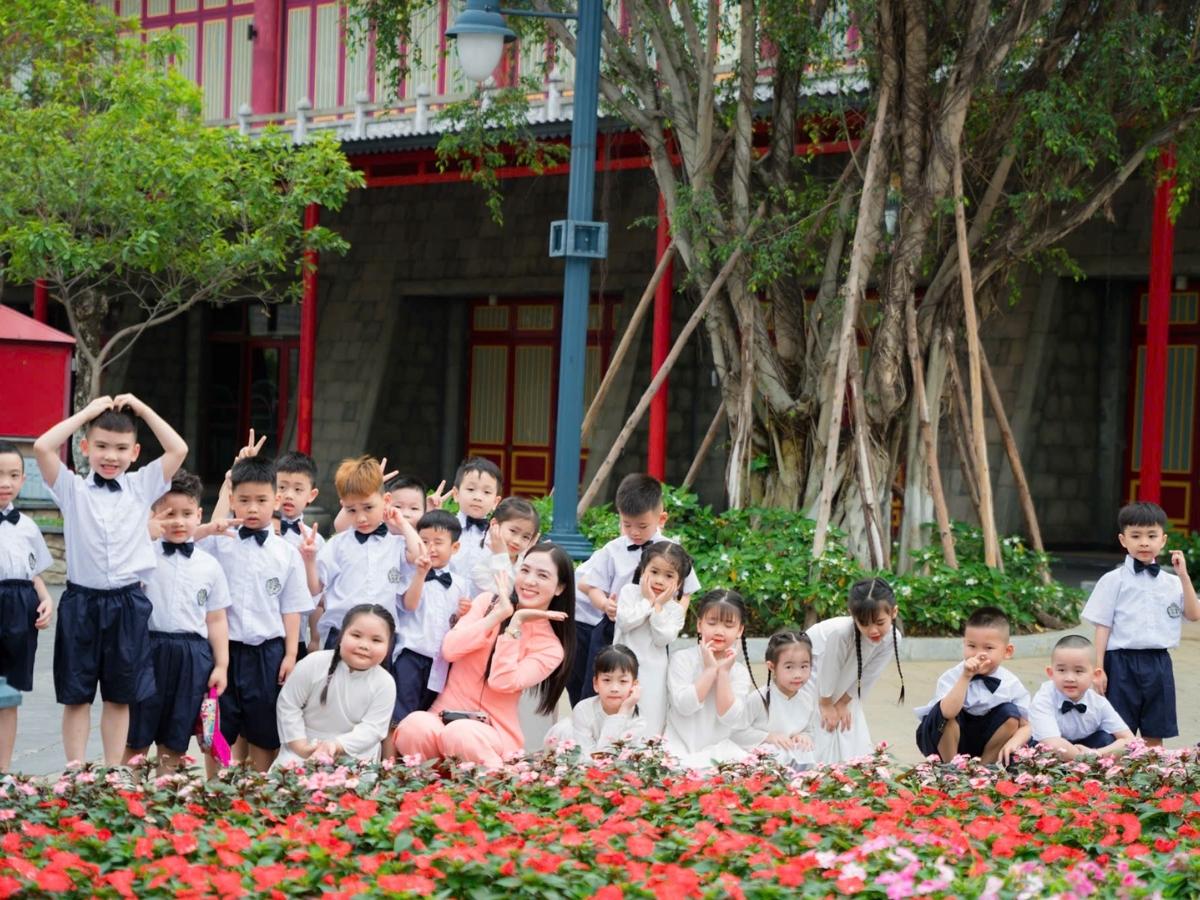
On the second day after breakfast, visitors spend the entire morning and early afternoon playing at Sun World Ha Long. (Source: Collected)
7.2. Dining, Accommodation, and Services around Yen Tu
The area around Mot Mai Pagoda Yen Tu has a fully developed system of dining and accommodation, serving diverse tourist needs. Yen Tu vegetarian restaurant is notable for dishes such as Com Am Phu, vegetarian fish cake, vegetarian sour soup, with prices ranging from 200,000 to 350,000 VND per serving; the close-to-nature space makes the meal more poetic.
Yen Tu Eco Park Resort offers high-quality resort services with 120 rooms, from villas to standard rooms, priced from 1,800,000 to 4,500,000 VND per night. The resort has a spa area, an outdoor swimming pool, and a restaurant with both vegetarian and non-vegetarian menus. Traditional massage services and relaxation therapies here are highly rated by many, with prices ranging from 800,000 to 1,500,000 VND per session.
Mot Mai Pagoda Yen Tu is not only a place preserving spiritual values but also a symbol of harmony between architecture and natural landscape, between tradition and modern life. Over 700 years of history and unique architecture have contributed to making this place a memorable stop on the pilgrimage to the Buddhist land of Yen Tu. Plan your pilgrimage to feel the purity and sacredness that Mot Mai Pagoda brings, while also contributing to preserving the precious spiritual cultural values of the nation.