
















1. General introduction about Tra Co Communal House
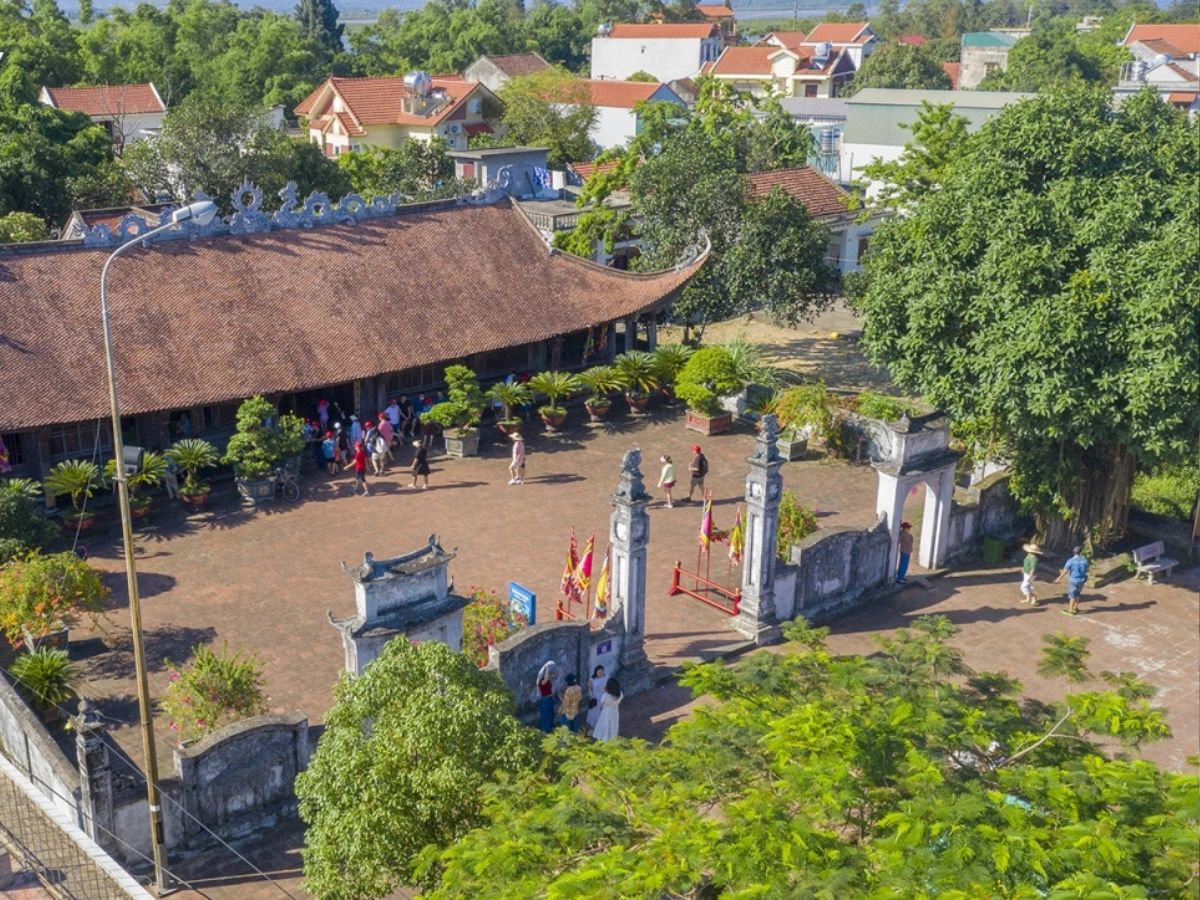
Tra Co Communal House carries the ancient charm of the Northeast coastal region. (Source: Collected)
Tra Co Communal House is one of the most typical and ancient religious structures in the Northeast region, closely associated with the history of formation and development of the coastal community of Mong Cai. Not only does it possess unique architectural value, but the communal house is also a sacred cultural and spiritual symbol of Vietnamese people at the headland of the Fatherland.
1.1. Location and history of formation
Tra Co Communal House is located in the Nam Tho area, Tra Co ward, Mong Cai city (Quang Ninh), about 10 km northeast of the city center. The communal house is situated next to the famous Tra Co beach, where the ancient village atmosphere blends with the salty sea breeze and the pure scent of incense, creating a rare scene that is both sacred and peaceful.
The history of formation of Tra Co Communal House is associated with the familiar folk legend named “The People of Tra Co – Ancestors of Do Son”. According to historical records and community memory, in 1461, during the reign of King Le Thanh Tong, 12 clans from the Do Son region set sail for fishing, then encountered large waves and drifted to the present-day Tra Co sea area. Recognizing that the new land had a favorable terrain and fertile soil, they decided to stay, cultivate, establish a village, and build a common place of worship to commemorate their ancestors and consolidate the community.
Initially, the structure was just a small temple built during the early Le dynasty (15th century). Through many generations of residents' contributions and development, by around the 17th century, Tra Co Communal House was expanded, completing its architectural scale to what it is today, becoming an important center for religious and cultural activities of the coastal residents.
1.2. Tra Co Communal House - Special National Historical and Cultural Relic
With outstanding historical, architectural, and cultural values, Tra Co Communal House was ranked by the State as a National Historical and Architectural Art Relic in 1992. Notably, in 2015, the structure was further recognized as a Special National Relic, becoming the first relic of Mong Cai city to achieve this noble title.
The point that makes the unique value of Tra Co Communal House is its large-scale traditional wooden architecture, bearing the style of Northern Vietnamese village communal houses but still having unique features suitable for the life of coastal residents. It is not merely an ancient structure; Tra Co Communal House is also a cultural and spiritual symbol of the Vietnamese community at the headland of the Fatherland.
Having existed for over half a millennium, the communal house still holds a central role in religious life, serving as a place to preserve customs, traditions, and the spirit of solidarity of the Tra Co residents. The endurance of Tra Co Communal House not only reflects historical depth but also affirms the persistent vitality of the national culture in the Northeast border region.
2. Unique architecture and artistic value of Tra Co Communal House
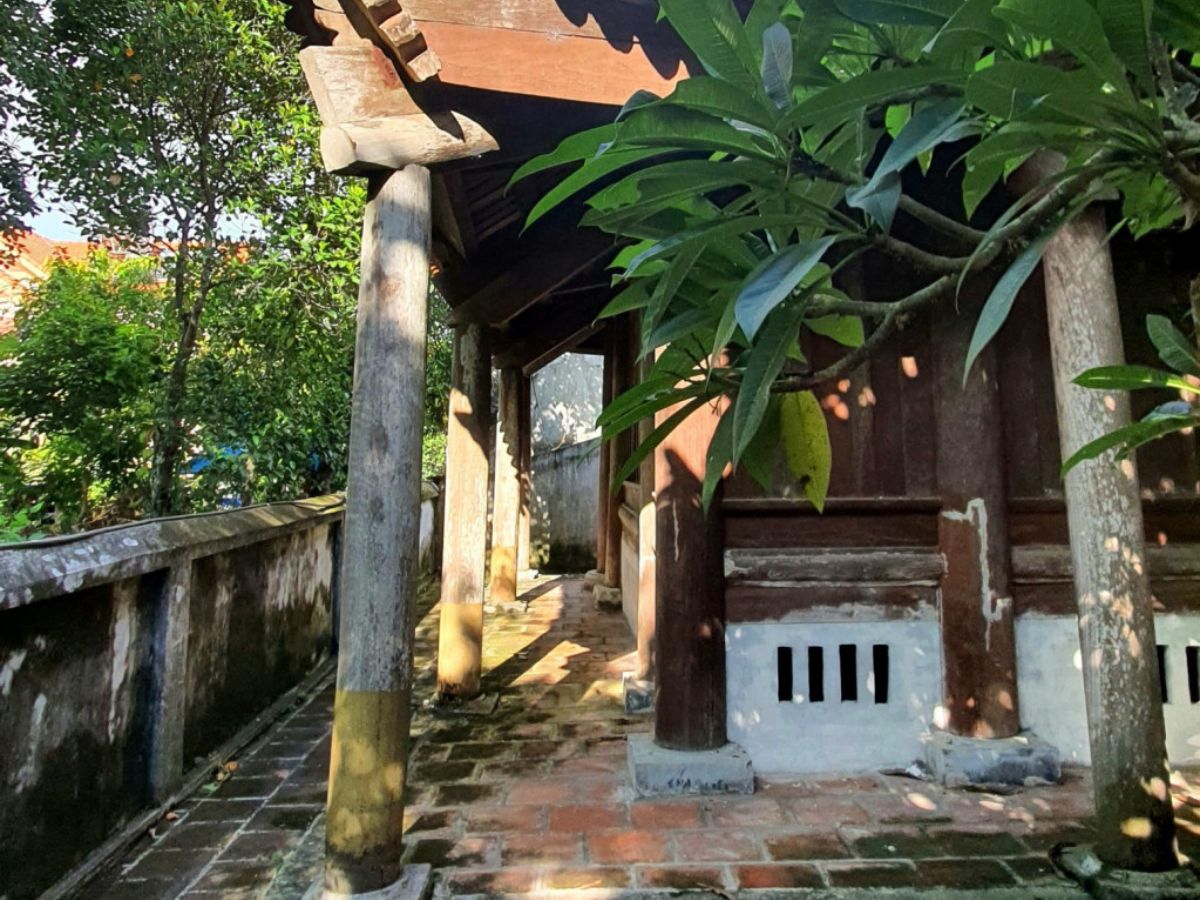
A religious structure closely associated with the history of Mong Cai residents. (Source: Collected)
The architecture of Tra Co dinh leaves a strong impression with its massive scale, sophisticated construction techniques, and timeless artistic value. Every line, component, and carved detail of the dinh clearly reflects the master craftsmanship and the characteristic cultural identity of the residents of the Tra Co coastal area.
2.1. Overall architecture of one of the largest ironwood structures in Vietnam
Upon arriving at Tra Co dinh, visitors can easily feel the grandeur and imposing presence of a rare ancient architectural work. The dinh has a usable area of over 1,000 m², built in the traditional Dinh (丁) shape, with its main orientation facing South – a direction considered auspicious in East Asian feng shui. The layout consists of 5 bays and 2 wings for the bái đường (worship hall) combined with 3 bays for the hậu cung (sanctuary), creating a space that is both solemn and balanced.
The entire structural frame of the dinh is made from solid ironwood, a precious material renowned for its high durability, good load-bearing capacity, and beautiful natural wood grain. The roof system is covered with fish-scale tiles with soft, undulating curves at the eaves, roof ridges, and roof edges, making the overall structure both majestic and elegantly ancient. Thanks to its large scale and near-original state of preservation, Tra Co dinh is considered one of the earliest and largest ironwood village dinh structures in Vietnam.
2.2. Interior spatial layout of Tra Co dinh
The architectural space of Tra Co dinh is organized along a traditional axis, creating a harmonious connection from outside to inside. The dinh gate is built in an ancient style, resembling imperial architecture, both majestic and solemn. Passing through the gate is a spacious courtyard shaded by old, long-standing trees, contributing to a serene and refreshing atmosphere.
The main hall (bái đường) area, consisting of 5 bays and 2 wings, is where ceremonies, meetings, and community activities take place on important occasions. Behind it is the sanctuary (hậu cung) with 3 bays, where altars for the village tutelary deities are placed, showing reverence for ancestors. The left and right wing structures (tả vu – hữu vu) combined with the dinh courtyard form a closed architectural complex, convenient for outdoor ceremonies. Notably, the dinh's location near the sea has created a unique characteristic, clearly reflecting the cultural identity of the coastal residents.
2.3. Carving art and traditional technical value
One of the highlights that contribute to the artistic value of Tra Co dinh is the exquisite wood carving system, demonstrating the master level of ancient artisans. On components such as columns, rafters, beams, and braces, familiar patterns in traditional art appear, such as dragons, phoenixes, flowers, leaves, and mythical creatures, elaborately carved in relief and rich in symbolism.
Notably, the entire wooden frame of the dinh is joined using traditional mortise and tenon techniques, without the use of metal nails, ensuring the structure's high durability over hundreds of years. Although it has undergone several restorations, including the most recent major renovation in 2012, Tra Co dinh has retained its technical value and ancient Northern Vietnamese architectural style. Each carved detail not only reflects the exquisite craftsmanship of ancient artisans but also serves as vivid evidence of the local community's persistent efforts to preserve heritage.
3. Historical and cultural value associated with the community
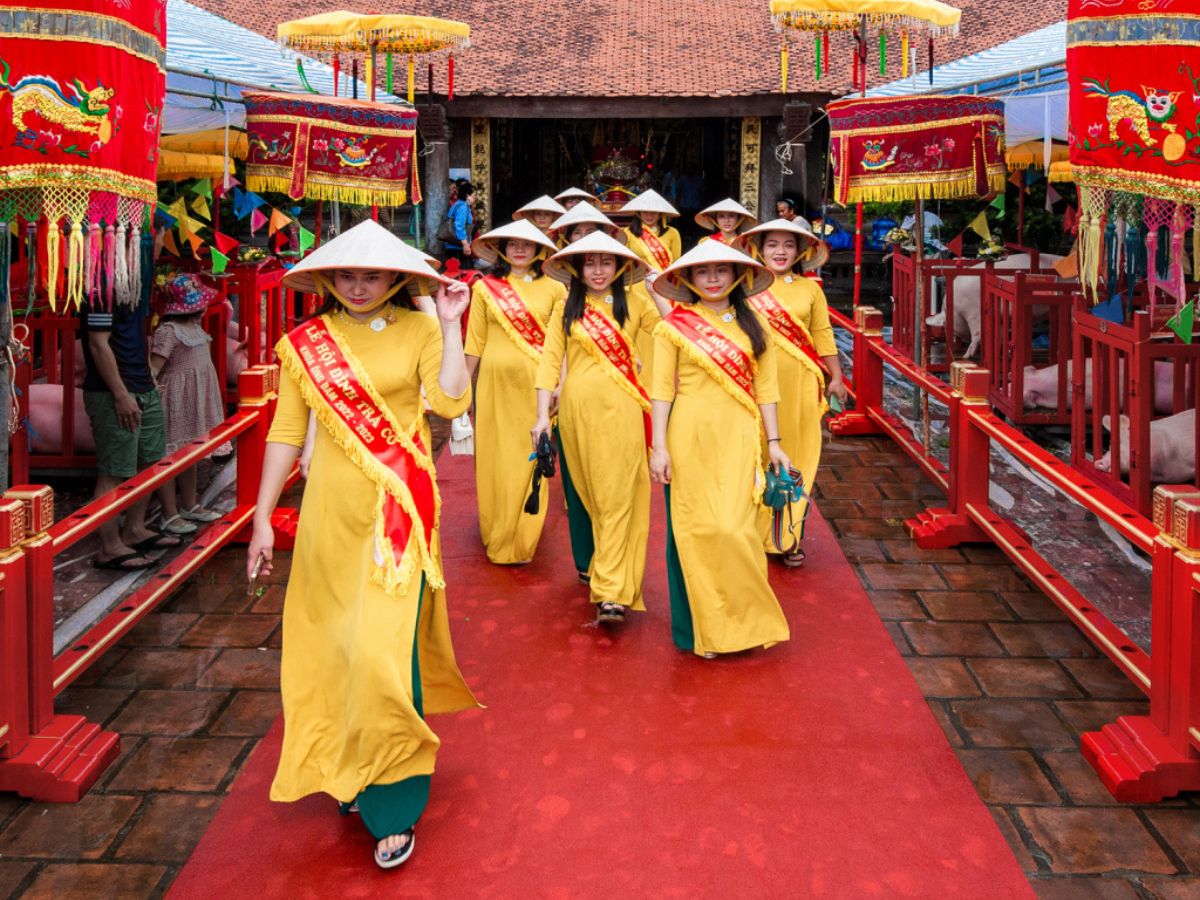
A place preserving traditional coastal cultural values. (Source: Collected)
Not just an ancient architectural work, Tra Co Communal House also contains historical and cultural depth closely associated with the life of the border community. Over centuries, the communal house has become a place preserving the memories, beliefs, and solidarity of Vietnamese people in the northeastern frontier of the homeland.
3.1. Tra Co Communal House - A spiritual sanctuary for Vietnamese people in the border region
From its very inception, Tra Co Communal House has played a crucial role as a spiritual center in the spiritual life of the residents in the country's frontier. This is where the village tutelary deities are worshipped – the ancestors who pioneered, developed the land, and laid the foundation for the Tra Co community. Through traditional rituals, people express their faith and wishes for a peaceful life, favorable weather, and prosperity for future generations.
Beyond its spiritual significance, Tra Co Communal House also serves as the community center for the village. Meetings, discussions of common affairs, festivals, and cultural activities all take place here, contributing to strengthening the bonds between families and local residents. Over generations, the communal house has become a symbol of the cultural identity of the northeastern coastal villages, where traditions are preserved and continuously passed down through time.
3.2. Historical events and incidents preserved at Tra Co Communal House
Throughout its over 500 years of existence, Tra Co Communal House has witnessed and accompanied many ups and downs of the nation's history. The communal house underwent significant restoration periods in the 17th century, the 19th century under the Nguyen Dynasty, and most recently in 2012, to preserve its architectural and traditional cultural values intact. Each restoration reflects the community's respect for this precious heritage.
Tra Co Communal House is intimately connected with the formation and development of the Tra Co land, from its establishment as a coastal village to its incorporation as a ward of Mong Cai city in 2008. Despite the changes over time, the communal house remains a center for preserving local historical memory and cultural identity. Today, in addition to its religious value, Tra Co Communal House is also an attractive cultural and spiritual destination, drawing many visitors to worship, learn about history, and explore the cultural depth of Vietnam's northeastern border region.
4. Tra Co Communal House Festival: Essence of Tradition and Experience 2026
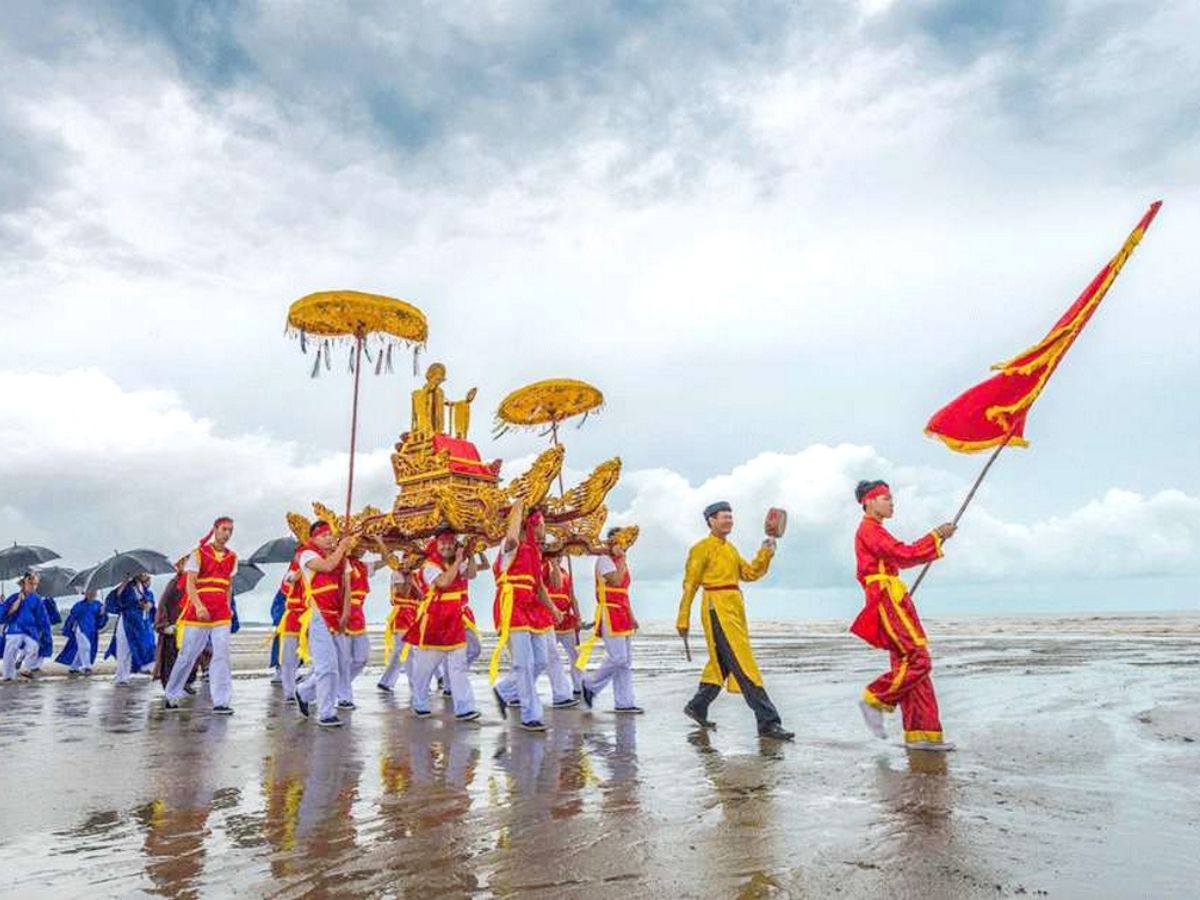
The Tra Co Communal House Festival is rich in the identity of the coastal village at the frontier. (Source: Collected)
The Festival of Tra Co Communal House is a harmonious crystallization of folk beliefs, the history of the coastal village, and community cultural life at the nation's frontier. Not only rich in traditional values, the festival also offers unique experiences, helping visitors in 2026 fully experience the unique traditional festival atmosphere of Quang Ninh.
4.1. Tra Co Communal House Festival - A Distinctive Cultural Feature of Quang Ninh
Each year, from the 30th day of the 5th lunar month to the 3rd day of the 6th lunar month, Tra Co Communal House becomes the focal point of cultural and spiritual activities for local people and visitors from all directions. In leap years, festival preparations usually start earlier from the 29th day of the 5th lunar month to ensure all rituals are performed completely. The festival is organized at the city level and has been inscribed by the Ministry of Culture, Sports and Tourism into the list of National Intangible Cultural Heritage.
The Tra Co Communal House Festival carries the distinct characteristics of the coastal communal house culture of the Northeast, creating a clear difference compared to many traditional festivals in the delta or midland regions. The rituals are associated with the sea, notably the sea procession of the deity, reflecting the close relationship between the Tra Co residents and their living environment. Through the festival, the community expresses gratitude to their ancestors, while also conveying wishes for a peaceful new year, favorable weather, and a prosperous, sustainable life.
4.2. The Ritual of Selecting "Ong Voi" and Special Experiences
The most distinctive highlight of the Tra Co Communal House Festival is the "Ong Voi" competition ritual, a rare custom that only exists in this land. Traditionally, the 12 healthiest pigs will be selected, by 12 Ong Dam – representing the clans who founded the village – directly cared for and raised for many months before the festival.
The ritual begins on the 30th day of the 5th lunar month with a series of important ceremonies such as the Moc Duc Ceremony, fruit tray procession, sacred lamp tree procession, and the invitation of "Ong Voi" to the communal house. This is followed by subsequent rituals including Thinh Sinh, An Vi, reviewing the green-covered book, and storing the cay cai dam, all performed in a solemn and respectful atmosphere. The "Ong Voi" ritual not only signifies prayers for abundant harvests and prosperous lives but also expresses the principle of "drinking water, remembering its source" (gratitude), honoring the ancestors who pioneered the land of Tra Co. This unique cultural feature has created its own appeal, attracting tourists who love exploring traditional folk festivals.
4.3. Traditional Activities, Folk Games, and Festival Atmosphere
Besides the solemn ceremony part, the festival part of the Tra Co Communal House Festival takes place vibrantly with many activities rich in folk character. The ritual of parading the deity's palanquin on the sea always leaves a strong impression thanks to the harmonious combination of beliefs and the coastal natural scenery. Visitors can also enjoy lion dances, traditional art performances, along with many familiar folk games such as tug-of-war, stilt walking, sack jumping, blindfolded drum beating, drawing, and calligraphy requests…
The festival atmosphere spreads throughout the communal house grounds, creating a natural connection between local people and visitors. In 2026, the Tra Co Communal House Festival promises to continue offering vibrant, distinctive cultural experiences. This is not only an occasion to admire the ancient beauty of the over 500-year-old communal house, but also an opportunity to immerse oneself in the characteristic traditional festival life at the northeastern frontier of the homeland.
5. Attractions and Tourist Spots Near Tra Co Communal House
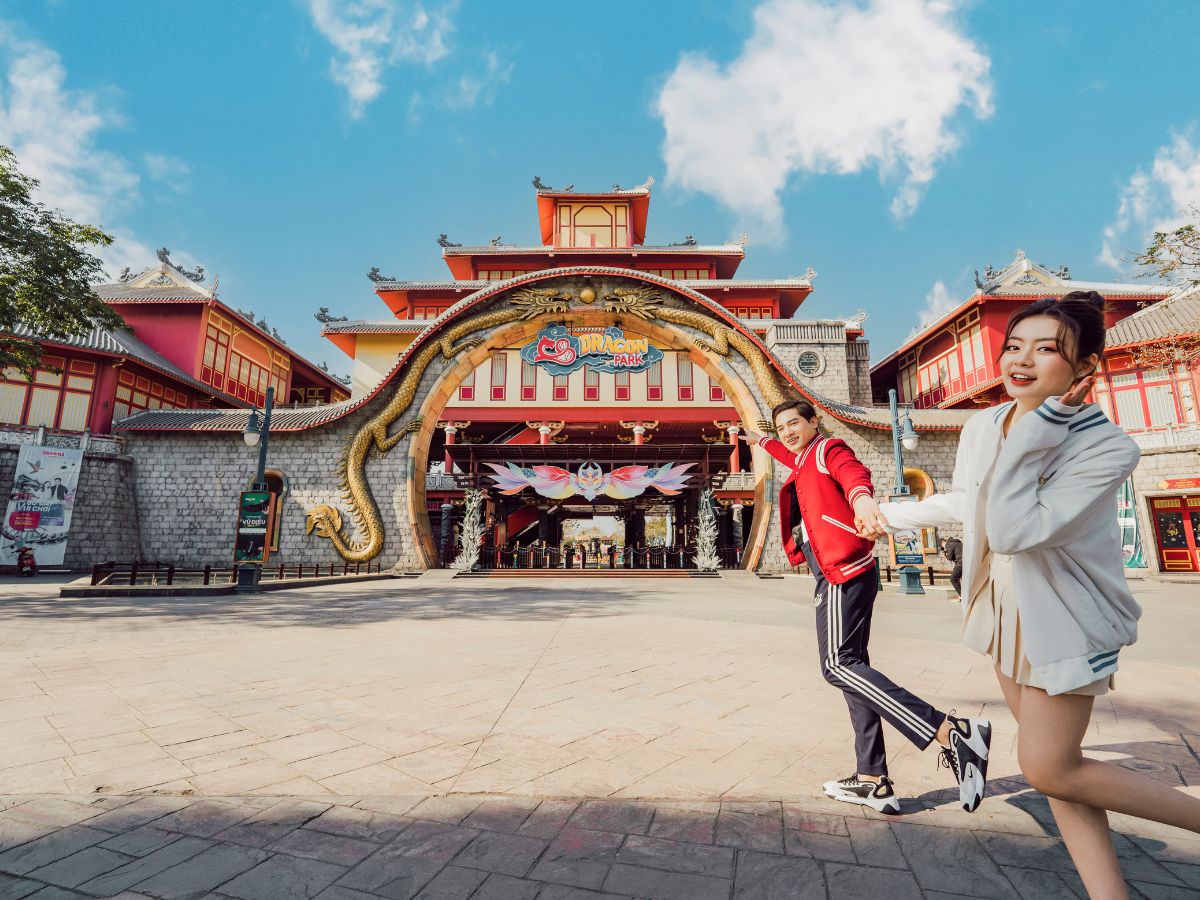
Colorful entertainment experience at Sun World Ha Long.
(Source: Collection)
Not only a typical spiritual - historical destination, the area around Tra Co Communal House also converges many attractive tourist attractions, creating favorable conditions for tourists to combine sightseeing and relaxation. From the peaceful sea and sky scenery to check-in spots with sacred meaning, the journey to explore Tra Co therefore becomes more complete and rich in experience.
Tra Co Beach: Located right next to the relic site of Tra Co Communal House, the beach is famous for its long coastline, fine white sand, and peaceful atmosphere. This is an ideal spot for tourists to rest and relax after visiting the ancient communal house.
Sa Vi Cape: Not far from Tra Co Communal House, Sa Vi Cape is where the geographical marker designating the northeasternmost point of the Fatherland is located. A destination with sacred meaning, often chosen by tourists as a check-in point when visiting Mong Cai.
Tra Co Church: An ancient religious work with characteristic European architecture, harmonizing with the sea space. The church is an interesting stop for those who love architecture and want to explore the cultural intersection in Tra Co.
Tra Co Fishing Village and coastal ecological tourist areas: The area around the communal house still preserves many traditional fishing villages, along with ecological tourist spots close to nature, helping tourists understand more about the local cultural life.
Sun World Ha Long: Also located in Quang Ninh province, Sun World Ha Long is a large-scale entertainment complex, nổi bật with the Queen Cable Car, the Sun Wheel, and many modern games. This is a suitable destination to combine in the Tra Co – Mong Cai – Ha Long tourist journey, offering diverse experiences from culture, spirituality to entertainment.
6. Must-know experiences when visiting Tra Co Communal House
To ensure a smooth and complete visit to Tra Co Communal House, tourists should prepare some necessary experiences beforehand when visiting this ancient spiritual space. These small but important notes will help you show respect for the relic and have a more comfortable and meaningful sightseeing experience.
When visiting Tra Co Communal House, tourists should prioritize modest, discreet attire such as long-sleeved shirts and long pants to show respect for the spiritual space.
During the visit, maintain a solemn attitude, speak softly, avoid noise or gathering in large groups in the worship areas. A suitable sightseeing route usually starts from the courtyard, then the main hall, and finally the inner sanctuary, following the traditional order.
Early morning or late morning are considered the most ideal times for check-in photos at Tra Co Communal House, as the natural sunlight enhances the ancient beauty of the fish-scale tiled roof and the three-door gate. When entering the inner sanctuary, tourists should limit the use of flash to protect valuable ancient artifacts and relics.
If you visit during a festival, don't miss the opportunity to immerse yourself in unique folk activities and enjoy local cuisine. Additionally, proactively booking a hotel in Mong Cai in advance will make your trip to the Tra Co Communal House festival smoother and more complete.
Tra Co Communal House is not only an architectural relic but also a vibrant cultural symbol of the border region. Over 500 years of history have created a unique structure with exquisite ironwood architecture, special traditional festivals, and a sustainable community spirit. Your trip to Quang Ninh in 2026 will not be complete without a stop at Tra Co Communal House to experience timeless cultural values!