















1. General introduction about Xuan Lan Pagoda
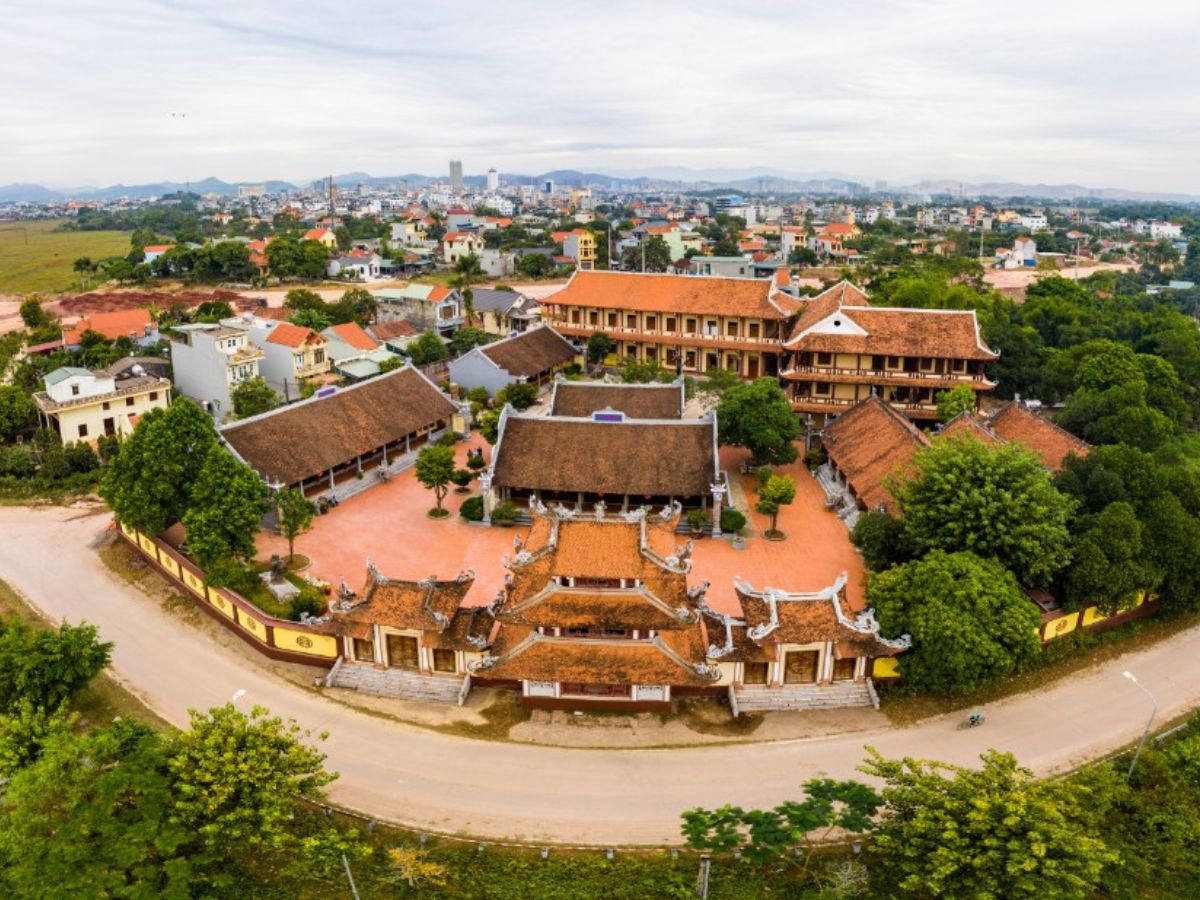
Xuan Lan Pagoda is a quiet space amidst the rhythm of daily life. (Source: Compilation)
Xuan Lan Pagoda is one of the typical ancient pagodas of the Mong Cai border region, carrying a deep historical depth and enduring spiritual value through centuries. Not only a sacred pilgrimage destination, the pagoda also clearly reflects the characteristic cultural-religious intersection at the northeastern tip of the Fatherland.
1.1. Geographical location and feng shui of Xuan Lan Pagoda
Xuan Lan Pagoda is located in Trung village, Hai Xuan commune, Mong Cai city, Quang Ninh province – the northeasternmost area of the Fatherland. From the pagoda, it takes only about 3 km to reach the Vietnam-China border and nearly 2 km to move into the center of Mong Cai city. This special location has created a unique cultural-religious intersection, bearing the imprint of the border region.
The total area of the pagoda grounds is about 1,500 m², of which architectural structures occupy over 470 m². The pagoda is built on a high mound, with its facade facing South – a direction considered auspicious in traditional feng shui, symbolizing light, vitality, and prosperity.
Not only outstanding in its geographical location, Xuan Lan Pagoda is also highly regarded for its feng shui land. In front of the pagoda is a calm crescent-shaped lake, and in the distance is the Ka Long River winding its way to the sea at Mui Ngoc. According to folk legend, the pagoda is located on the "dragon's forehead", and the lake in front of the main gate symbolizes the "dragon's eye", creating a sacred place for water and energy convergence. The Ka Long River originates from China, flows past the pagoda, then follows the border of Vietnam, and is considered a place where the spiritual energy of the border region converges.
1.2. History of formation and the name Linh Quang ancient pagoda
Xuan Lan Pagoda was formed in the late Le dynasty, early Tay Son period, around the 18th century. To date, the pagoda has existed for over 300 years along with the history of the Mong Cai land. The pagoda's Chinese character name is Linh Quang Co Tu, meaning "ancient pagoda radiating sacred light", reflecting its role in guiding the spirit and beliefs for the community through many generations.
Although the exact construction date has not been determined, research documents show that the pagoda was built during a period of strong Buddhist development in the northern border region. This was a time when Buddhism not only played a religious role but also served as an important spiritual support for agricultural residents in the border areas.
In folk belief, Xuan Lan Pagoda is also known by the familiar name "Stone Pagoda", because most of its architectural structures are built from natural stone blocks. The green stone used to build the pagoda was quarried from To Chim mountain (now To Son mountain), located about 8 km northeast of the pagoda. Initially serving the religious needs of the local people, over time, the pagoda gradually became an important cultural and spiritual center for the entire region.
1.3. Cultural value and national relic
After more than three centuries of ups and downs, Xuan Lan Pagoda still plays a special role in the spiritual life of the people of Hai Xuan commune in particular and Mong Cai city in general. Currently, the pagoda is a regular place of worship for over 100 Buddhists, and also attracts a large number of tourists and pilgrims from all directions.
Not only a place for practice, Xuan Lan Pagoda is also a space where many cultural and religious activities with community significance take place, contributing to preserving and spreading the long-standing traditional values of the northeastern border region.
In 1999, Xuan Lan Pagoda was officially recognized as a National Artistic Relic by Decision No. 02/1999/QD-BVHTT. The outstanding value of the relic is reflected in its architectural style bearing the imprint of the Le-Nguyen period, a rich collection of ancient artifacts, and unique, elaborate stone construction techniques. When placed in conjunction with Tra Co Communal House, Nam Tho Pagoda, Van Ninh archaeological site, and Guoc Well, Xuan Lan Pagoda contributes to creating a distinctive historical and cultural complex of the northeastern border region of Vietnam.
2. Directions to Xuan Lan Pagoda
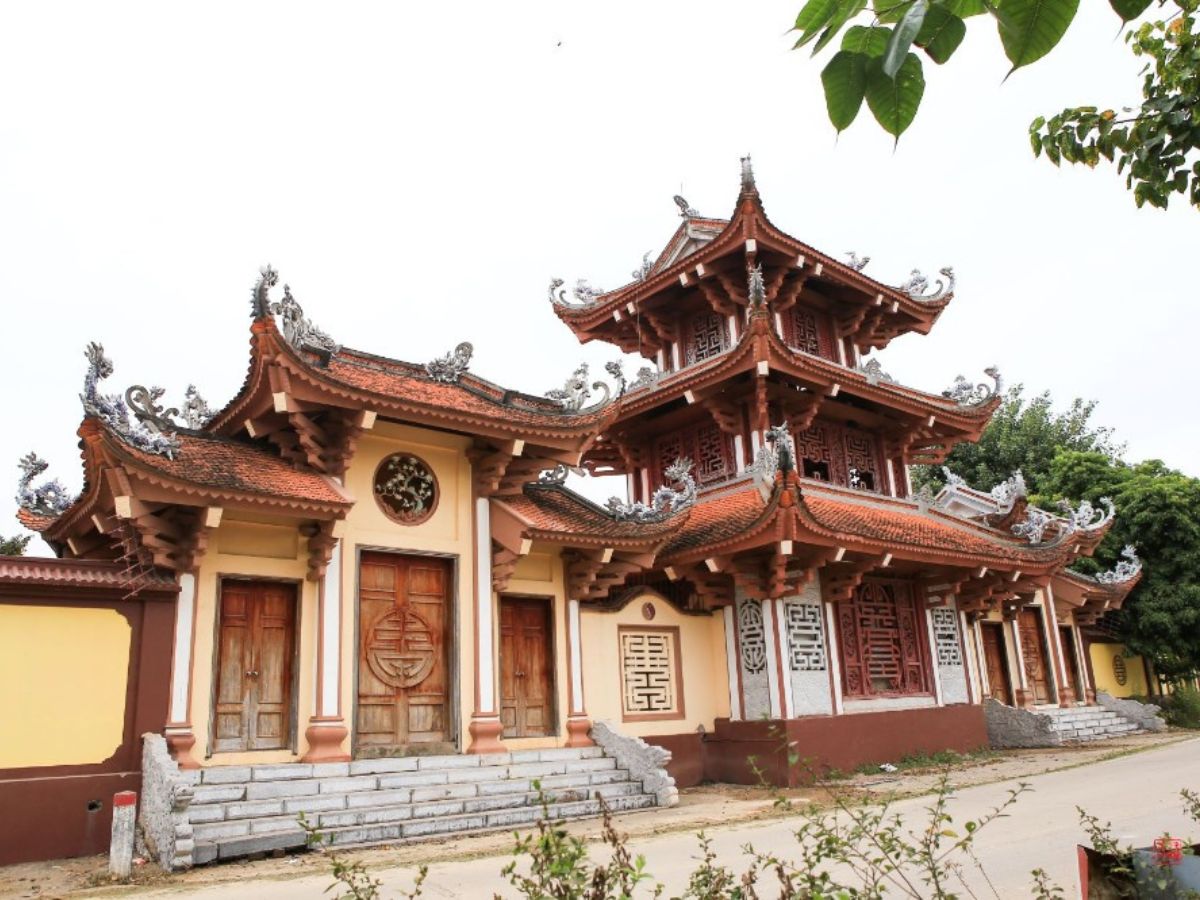
A serene space that brings a sense of peace. (Source: Collected)
To ensure a smooth and complete pilgrimage to Xuan Lan Pagoda, understanding the travel route is an important factor that cannot be overlooked. Thanks to the increasingly improved transportation system, tourists from many provinces can now easily access this sacred ancient pagoda.
2.1. Directions from Hanoi, Hai Phong, and Northern Provinces
Starting from Hanoi, tourists can choose various means of transport to reach Xuan Lan Pagoda, with the most convenient being by car via the Hanoi – Hai Phong – Quang Ninh expressway, then continuing towards Mong Cai city. The total distance is about 340 km, with an average travel time of 4 – 5 hours, depending on traffic conditions.
Besides personal vehicles, Hanoi – Mong Cai route buses operate frequently throughout the day, with prices ranging from 250,000 – 350,000 VND/trip, suitable for solo travelers or small pilgrimage groups.
For tourists departing from Hai Phong, the coastal road through Quang Ninh, approximately 180 km long, is an ideal choice. Not only does it shorten travel time, but this route also offers scenic views of the sea, limestone mountains, and the characteristic landscape of Ha Long Bay. Northeastern provinces like Lang Son and Cao Bang can also easily connect to Mong Cai via the border transport network, convenient for combining visits to various cultural sites along the journey.
2.2. Intra-provincial travel in Mong Cai
From the center of Mong Cai city, reaching Xuan Lan Pagoda is quite convenient due to the short distance of only about 2 km. Tourists can opt for taxis or ride-hailing apps, with an average cost of 30,000 – 50,000 VND/trip.
If you want to save costs, intra-city buses are also a suitable option, as some routes have stops near the Hai Xuan commune area. For tourists driving their own motorbikes or cars, the clear signage system makes finding the way to the pagoda simple. The pagoda grounds have a spacious parking lot, well-equipped to accommodate large pilgrimage groups.
To fully experience the serene atmosphere, visitors should plan their visit for early morning or late afternoon. This is when the weather is cooler, less crowded, and suitable for worship and sightseeing.
3. Discover the unique ancient architecture of Xuan Lan Pagoda
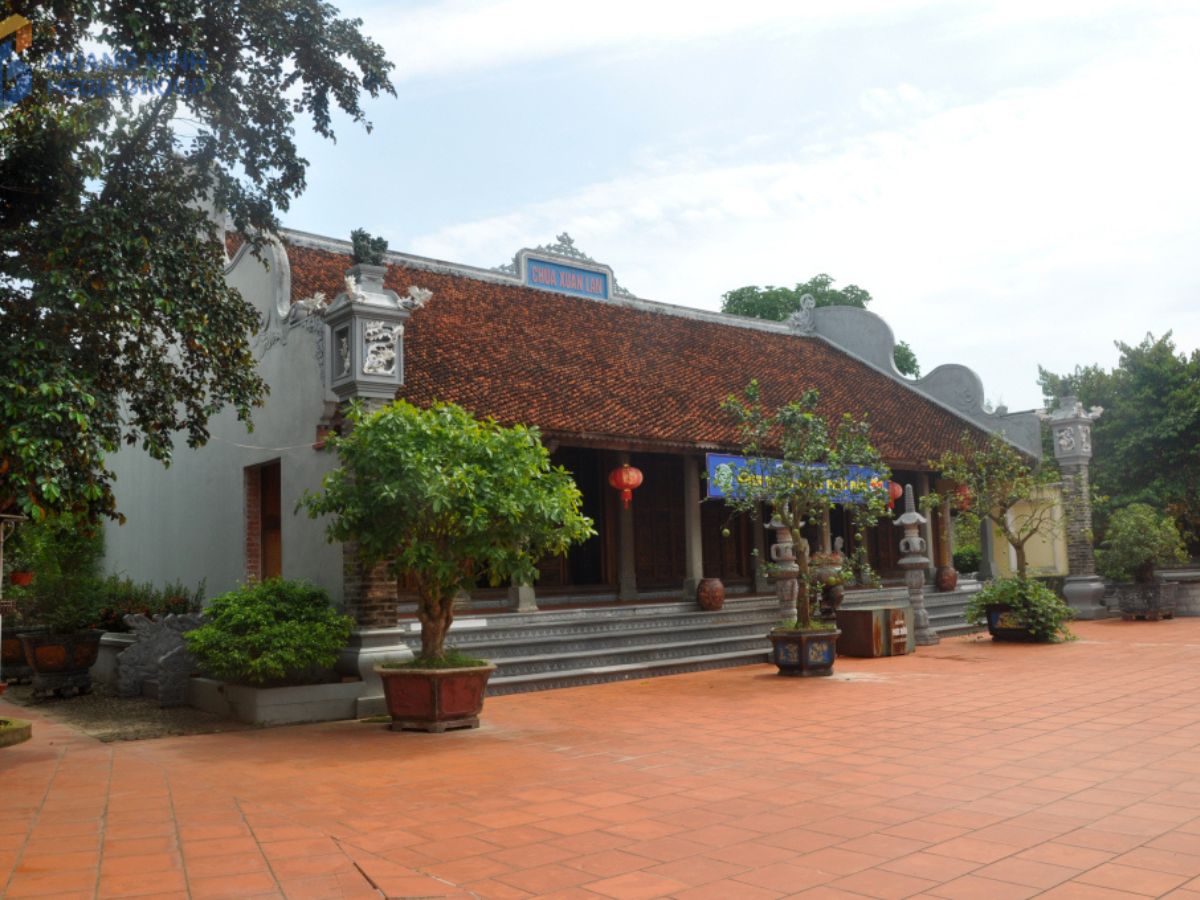
Architecture harmonizes with the natural landscape. (Source: Collected)
More than just a sacred place of worship, Xuan Lan Pagoda also impresses with its unique ancient architectural system, clearly reflecting the artistic imprint of Buddhism through centuries. Each construction item here holds historical, artistic, and spiritual depth, creating a harmonious and timeless whole.
3.1. Overall Layout and Main Structures
Xuan Lan Pagoda is built with a Dinh (丁) shaped floor plan – a common architectural style in ancient Vietnamese pagodas, also evoking the image of a blooming lotus, symbolizing purity and enlightenment in Buddhism. The entire pagoda space faces south, receiving natural sunlight, creating a harmonious, warm, and solemn atmosphere for the place of worship.
Architectural items are arranged harmoniously on a campus of about 1,500 m², with a construction area of over 470 m². The front hall is the central structure with a 5-bay layout connected to the rear sanctuary, a spacious area for major ceremonies. Behind it is the rear sanctuary designed with 3 bays and 2 wings, creating a sacred depth for the main worship area.
Two auxiliary structures, the Ancestor's House and the Mother's House, are symmetrically arranged in front, combined with a spacious pagoda courtyard, bringing a harmonious overall, convenient for the religious activities and pilgrimages of Buddhists.
3.2. Rare Stone and Wood Sculptural Materials and Art
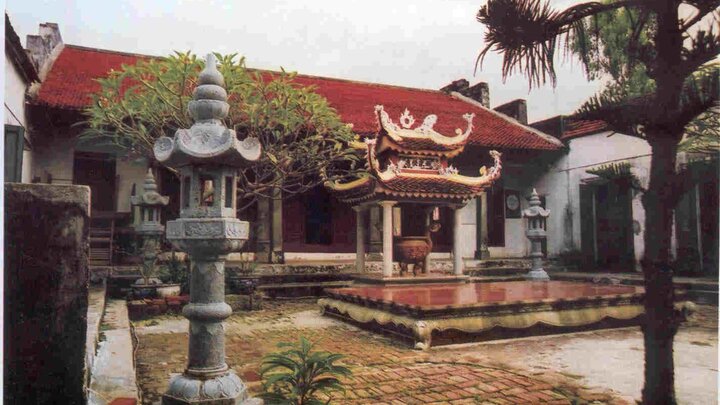
One of the outstanding features of Xuan Lan Pagoda is the use of solid bluestone and traditional wood throughout its architectural structure. The system of stone columns, crossbeams, and steps are all crafted from stone quarried at To Son Mountain, about 8 km from the pagoda. Large stone blocks are meticulously carved, demonstrating the technical skill and effort of ancient artisans. To this day, the To Son Mountain area still bears traces of stone quarrying, testifying to the scale of construction at that time.
In addition, the bricks used for building the pagoda are traditional handmade fired bricks, made from riverbank soil and subjected to a meticulous firing process to create a characteristic green hue. Uniform brick sizes ensure that the walls are strong and harmonize over time.
Wood carving art is clearly present in components such as roof trusses, decorative beam ends, and purlins. Intricate carvings of dragons, unicorns, turtles, and phoenixes, with soft lines, not only possess high aesthetic value but also represent symbolic thinking in ancient Buddhist architecture.
3.3. Rare Artifacts and Spiritual Significance
Xuan Lan Pagoda currently houses many artifacts of special historical and artistic value. Notably, there is an ancient Buddha statue system comprising 5 statues dating from the Le Dynasty and 15 statues from the Tay Son period. Each statue carries its own distinct sculptural style, clearly reflecting the artistic trends of each period of Vietnamese Buddhist history.
Additionally, the pagoda possesses unique artifacts such as ancient bronze candle holders shaped like deer – symbols of fortune and longevity in Eastern philosophy. A rare stone statue carved by an artisan from the Nghe-Thanh region also testifies to the exquisite stone carving skills of ancient times.
Mortise and tenon joints, both stone and wood, are tightly connected, requiring almost no modern materials, creating a durable structure for the entire complex. It is this harmonious combination of construction techniques, artistic value, and spiritual depth that has allowed Xuan Lan Pagoda to endure for centuries, becoming an unmissable destination when exploring the Buddhist heritage of the nation's northern frontier.
4. Historical, Revolutionary, and Community Cultural Values
Beyond its architectural and spiritual value, Xuan Lan Pagoda is also a witness to history, marking the heroic revolutionary periods of the nation and the local community's cultural life. Despite many historical upheavals, the pagoda continues to play an important role in connecting traditions, nurturing patriotism, and preserving the cultural identity of the border region.
4.1. Revolutionary Imprint and Preservation Through Eras
In the flow of national history, Xuan Lan Pagoda has not only been a place of worship but also associated with important revolutionary milestones. During the resistance wars, the pagoda served as a hiding place and protection for revolutionary cadres and was used as a garrison point for the Fourth Battalion of the Dong Trieu War Zone. Despite facing many pressures from the French colonialists and landlords in the 1940s, religious activities at the pagoda continued regularly.
Within the pagoda grounds, the red flag with a yellow star once flew, symbolizing strong patriotism. Many solemn ceremonies praying for national peace and the swift liberation of the country from foreign invaders were held, blending religious principles with national spirit.
During the resistance war against the US, Xuan Lan Pagoda continued to be a departure point for many generations of local youth to join the fight to defend the Fatherland. Having gone through three wars and numerous historical upheavals, the ancient pagoda has been carefully preserved and restored to maintain its historical and cultural values, recognized by the State as a national relic.
4.2. Center for Local Spiritual and Cultural Activities
Stemming from the spiritual needs of the agricultural community, Xuan Lan Pagoda gradually became the center of cultural and spiritual activities for the village. Today, it gathers over 100 regular Buddhists who participate in worship, practice, and community activities, fostering a close-knit and strong religious life.
Traditional customs such as erecting the New Year's tree, organizing New Year's ceremonies, and peace prayers are maintained through generations, contributing to the preservation of the folk cultural identity of the border region. The pagoda is not only a sacred space for worship but also a place that connects the community, nurturing solidarity and sharing.
Throughout its more than three hundred years of existence, Xuan Lan Pagoda has always received respect and joint efforts for preservation from the local people. Contributing labor and resources to renovate the pagoda demonstrates community responsibility and a sense of heritage preservation. Thus, the pagoda has become a spiritual anchor and a place for passing down traditional cultural values to future generations.
4.3. Link with "Border Cultural Landmark"
Xuan Lan Pagoda holds an important position within the complex of historical and cultural relics in Mong Cai, alongside Tra Co Communal House, Nam Tho Pagoda, Van Ninh archaeological site, Guoc Well, Tra Co Church, and the famous Tra Co Beach. This connection creates a rich heritage system, clearly reflecting the cultural, religious, and historical exchange in the northeastern region of the country.
Located only about 3 km from the Vietnam-China border, Xuan Lan Pagoda is not merely of religious significance but also a cultural and spiritual symbol affirming national sovereignty and identity at the frontier. The pagoda's enduring presence in the border area contributes to honoring the tradition of independence, self-reliance, and patriotism of the Vietnamese community over generations.
5. Traditional Festivals and Notable Spiritual Activities
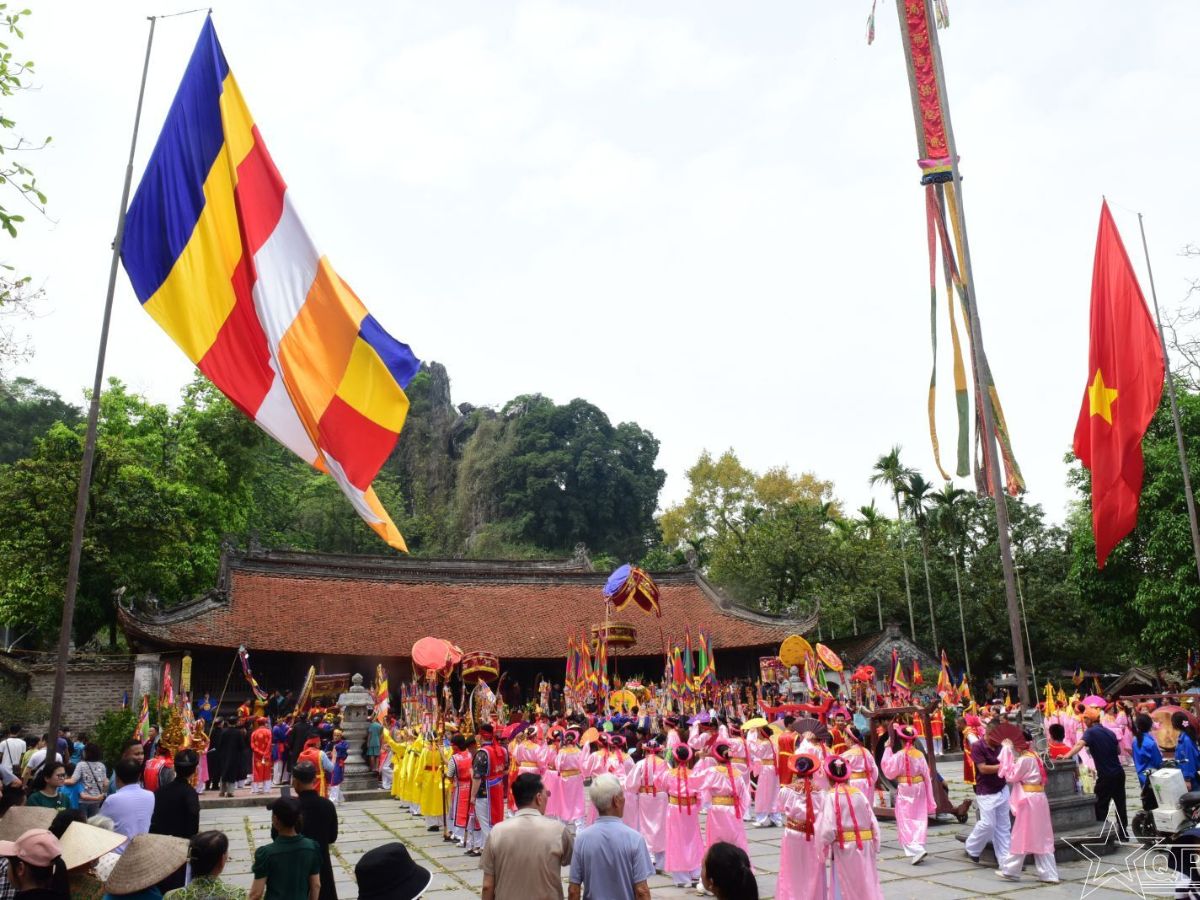
A gentle stopover for the spiritual journey. (Source: Collected)
Not only a pure place for practice, Xuan Lan Pagoda is also a cultural and spiritual center rich in local identity. Through traditional festivals and Buddhist rituals held year-round, the pagoda contributes to preserving spiritual life, spreading humanistic values, and connecting the border community.
5.1. Xuan Lan Pagoda Spring Festival
Each spring, Xuan Lan Pagoda becomes a vibrant cultural and spiritual gathering point for local people. The festival season usually begins on the 25th of the twelfth lunar month and lasts until the 28th of the first lunar month, bringing a joyful atmosphere to welcome the new year. The ritual of erecting and dismantling the Neu tree is solemnly organized, conveying wishes for a year of favorable rain and wind, peaceful families, and national prosperity.
During the festival days, crowds of people from all directions flock to the pagoda to worship Buddha and offer incense for blessings. Folk spiritual rituals, New Year's chanting, and peace-seeking ceremonies are conducted sacredly, creating an atmosphere that is both solemn and warm with community spirit. The Xuan Lan Pagoda festival not only preserves traditional beauty but also reflects the harmony between traditional spiritual life and the modern pace of life in the border region.
5.2. Buddhist Rituals for Peace and Remembrance
As an important Buddhist center in the locality, Xuan Lan Pagoda regularly holds spiritual rituals throughout the four seasons. Notably, the ritual for national peace and prosperity is organized with solemnity, gathering many monks, nuns, Buddhists, and people, expressing aspirations for peace, prosperity, and a peaceful life.
Besides, regular ceremonies for family and individual peace are held, providing a quiet space for people to reflect, cultivate good intentions, and seek tranquility in life. Especially, the remembrance ritual for national heroes, contributors to the country, and ancestors is performed solemnly, demonstrating the nation's tradition of "drinking water, remembering the source."
These spiritual activities not only hold religious value but also contribute to educating patriotism, gratitude, and the awareness of preserving cultural heritage for the younger generation, affirming the sustainable role of Xuan Lan Pagoda in the spiritual life of the community in the northeastern border region.
6. Suggested Itinerary for Móng Cái - Hạ Long Tour

A colorful entertainment and leisure experience at Sun World Ha Long.
(Source: Compiled)
Combining Mong Cai and Ha Long in a single itinerary is an ideal choice for those who wish to balance spiritual pilgrimage with modern exploration and entertainment. The suggested itinerary below helps visitors fully enjoy the cultural and spiritual beauty at the country's northern frontier, while also experiencing the vibrant atmosphere of a world natural wonder.
Day 1: The journey can begin with a pilgrimage to Xuan Lan Pagoda – an ancient pagoda over 300 years old, intrinsically linked to the history, culture, and spiritual life of the northern frontier region. The serene atmosphere of the pagoda helps visitors temporarily escape the hustle and bustle of life, finding inner peace. After visiting the pagoda, visitors can combine it with a visit to Tra Co Communal House, Tra Co Beach, or stroll around Mong Cai city center to explore the vibrant border life and unique local cuisine.
Day 2: On the following day, visitors travel to the Ha Long area to visit Sun World Ha Long – the leading entertainment complex in the North. Here, you can experience the Queen Cable Car, Dragon Park, water park, and admire the panoramic view of Ha Long Bay from above. The harmonious contrast between the ancient spiritual space of Xuan Lan Pagoda and the modern, vibrant life at Sun World Ha Long offers a complete travel experience, encompassing both spiritual fulfillment and entertainment.
Xuan Lan Pagoda is not only a religious destination but also a precious "quiet piece" in the Quang Ninh tourism picture for 2026. Visiting this place, visitors not only pay homage and seek peace but also have the opportunity to touch the historical and cultural depth of the border region, contributing to a meaningful exploration journey.