















1. Overview of Giai Oan Yen Tu Pagoda
Giai Oan Pagoda is one of the typical destinations within the Yen Tu relic and scenic complex, associated with Buddhist history and the spiritual journey of Emperor Tran Nhan Tong. Due to its location at the foot of the mountain, the pagoda is often chosen by many visitors as the first stop when starting their pilgrimage journey at Yen Tu.
Besides its spiritual significance, Giai Oan Pagoda is also a place where visitors can stop to visit, offer incense, and take a few moments of peace before continuing to higher points within the relic site.
1.1. Geographical location of Giai Oan Pagoda
Giai Oan Pagoda is located at the foot of Yen Tu mountain, in Uong Bi city, Quang Ninh province. This is the gateway area of the Yen Tu relic site, welcoming a large number of visitors before they begin their sightseeing journey up the mountain.
Thanks to its convenient stopping point, Giai Oan Pagoda is often considered the first stop on the Yen Tu pilgrimage route. The pagoda is located near Giai Oan stream and the Giai Oan bridge area, creating a harmonious landscape between the mountains and the stream. The terrain in the area is relatively easy to access, suitable for visitors to visit and worship before continuing their journey.
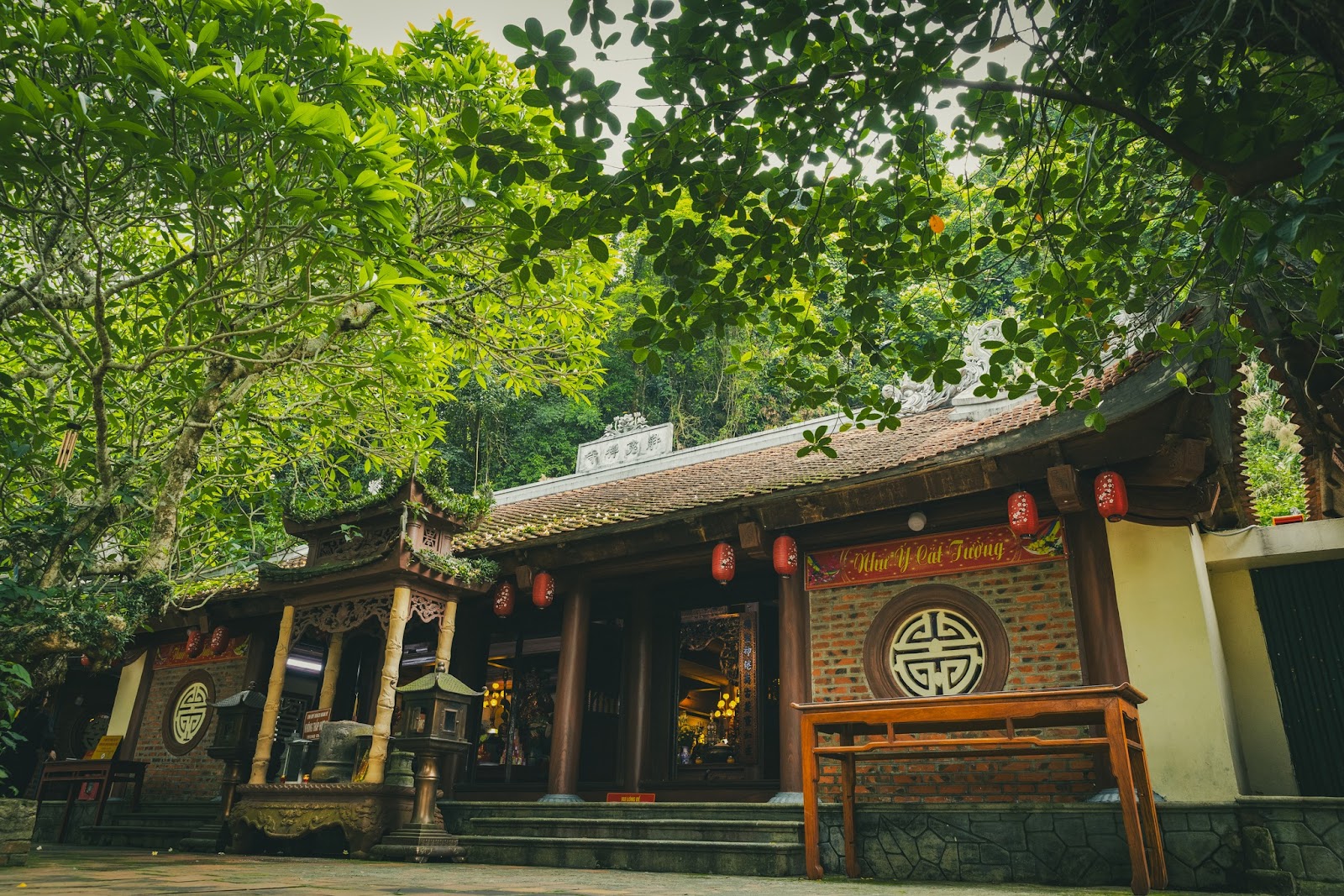
Giai Oan Pagoda is located at the foot of Yen Tu Mountain, making it easy for tourists to visit and pay homage (Source: Collected)
1.2. The role of Giai Oan Pagoda in the Yen Tu relic complex
Within the overall Yen Tu historical relic complex, Giai Oan Pagoda is an important destination, contributing to the connection for the spiritual journey. Many Buddhists and tourists choose to visit the pagoda to offer incense, pray for peace, and prepare their mindset before continuing to places like Hoa Yen and Chua Dong Pagoda.
Giai Oan Pagoda is also associated with the Truc Lam Zen school and the imprint of King Tran Nhan Tong in Yen Tu. During the visit, this stop is often seen as an introductory step that helps tourists better feel the spiritual atmosphere and the cultural-historical value of the Yen Tu region.
2. Legends and historical value of Giai Oan Pagoda
2.1. Legend of the Giai Oan stream in the Tran Dynasty
In the spiritual space of Yen Tu, the Giai Oan stream is associated with a story widely circulated among the people since the Tran Dynasty. Legend has it that when King Tran Nhan Tong left the royal palace to practice asceticism in Yen Tu, some concubines, out of longing, came to persuade him to change his mind. When they could not alter the king's determination, they were filled with sorrow, and folk tales recount that some chose to throw themselves into the stream at the foot of the mountain.
From this legend, people call this place Giai Oan stream, meaning "resolve grievances," understood as the dissolution of inner suffering, resentments, and life's entanglements. On the Yen Tu pilgrimage route, stopping at the stream and Giai Oan Pagoda area is therefore often considered a moment of quiet reflection before continuing the journey up the mountain.
From a cultural-religious perspective, the story of Giai Oan stream evokes humanitarian values and the spirit of compassion in Buddhism, guiding people towards empathy, letting go, and living virtuously.
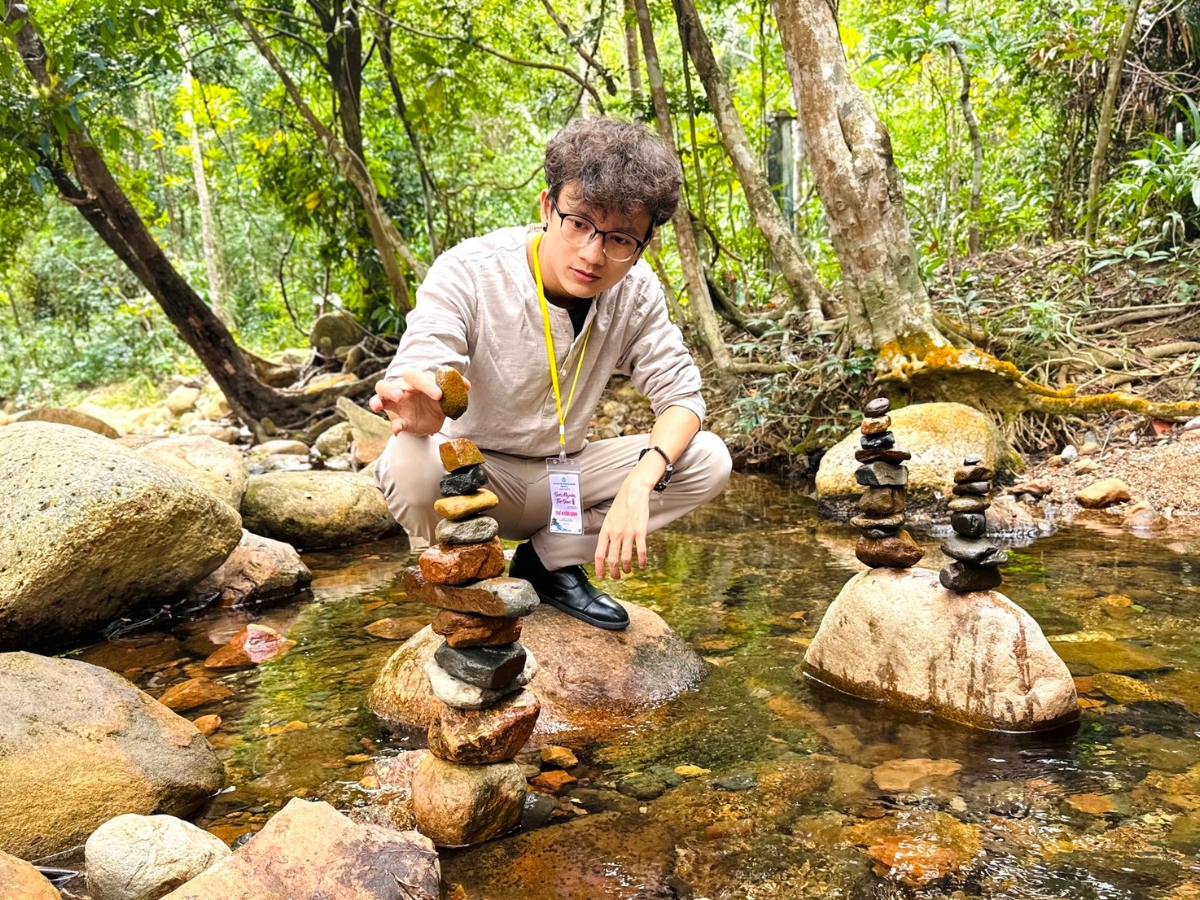
Giai Oan Stream is associated with a widely circulated folk tale from the Tran dynasty (Source: Collected)
2.2. Giai Oan Pagoda in the historical flow of Yen Tu
In the historical flow of Yen Tu, Giai Oan Pagoda is an important spiritual stop associated with folk beliefs and the imprint of the Truc Lam Zen sect. Although located at the foot of the mountain, the pagoda plays a guiding role for the pilgrimage journey, as it is where many visitors choose to offer incense and find peace before ascending to higher points.
Along with the spread of Truc Lam Buddhism in Yen Tu, Giai Oan Pagoda has gradually become a familiar place of worship for Buddhists and visitors through many periods. The presence of the pagoda also reflects the process of harmonizing folk beliefs with indigenous Buddhism, contributing to the spiritual cultural identity of Yen Tu.
2.3. Renovation and preservation phase today
Over time and due to natural impacts, Giai Oan Pagoda has been renovated and restored in stages to maintain its landscape and ensure conditions for religious activities. Renovation efforts are often aimed at preserving the worship space, protecting the structure, and minimizing impact on the natural landscape of the Giai Oan stream area.
In the context of Yen Tu being an important spiritual destination in Quang Ninh, the preservation of Giai Oan Pagoda is approached with the requirement to harmonize the conservation of historical values with serving the needs of tourism and worship. As a result, the pagoda serves both as a spiritual stop on the pilgrimage route and contributes to the preservation of cultural and historical values associated with the sacred Yen Tu mountain.
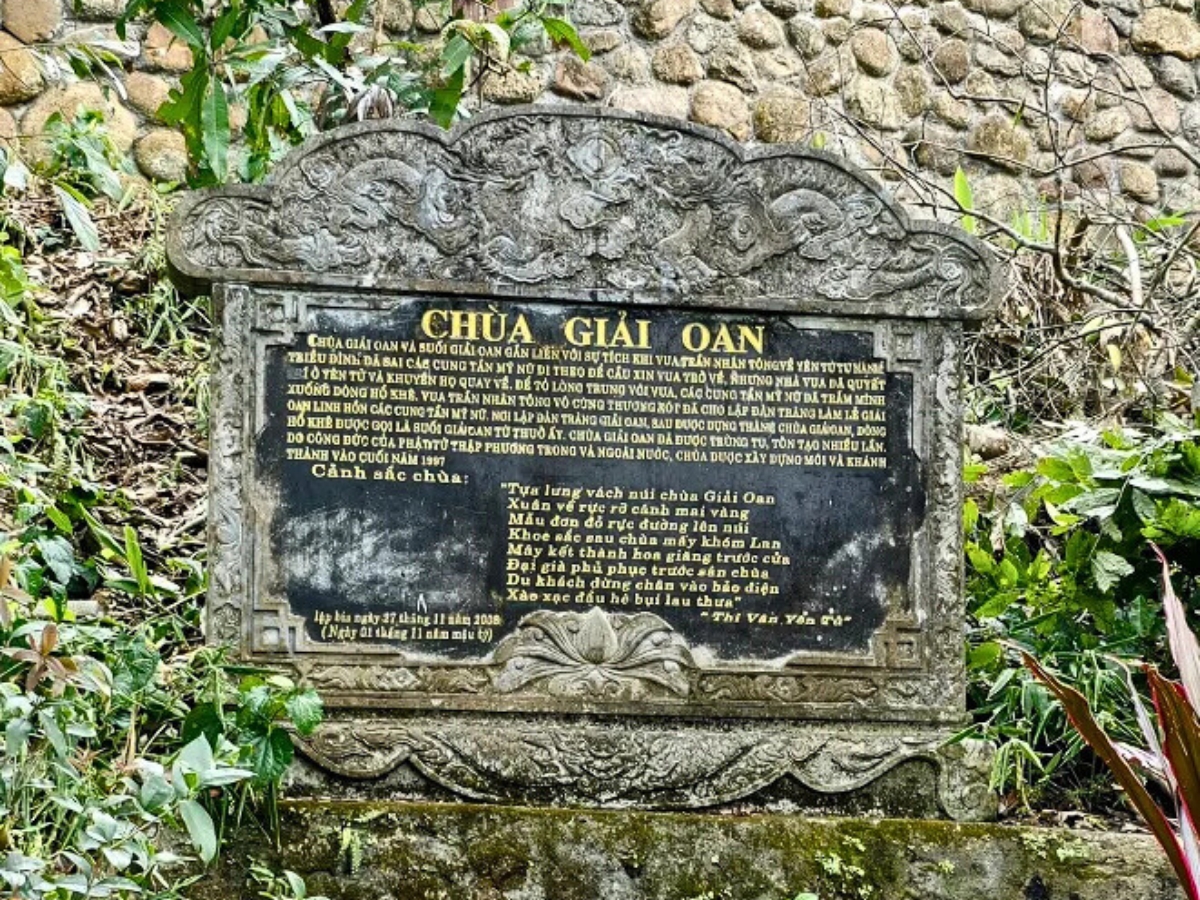
The legend passed down about Giai Oan Pagoda (Source: Collected)
3. Architecture and Landscape of Giai Oan Pagoda
3.1. Overall Architecture of Giai Oan Pagoda
Giai Oan Pagoda features architectural lines common to Northern Vietnamese Buddhist pagodas, with a neat, balanced layout and an emphasis on solemnity in the worship space. The structures are arranged harmoniously, fitting the terrain at the foot of Yen Tu mountain.
The pagoda's scale is moderate, relatively harmonious with the surrounding mountain forest landscape. The architectural style leans towards simplicity, with limited ornate decorative details, contributing to its coherence with the natural space of Yen Tu. Consequently, Giai Oan Pagoda is often chosen by many visitors as their first stop before continuing their journey higher up.
3.2. Typical Structures
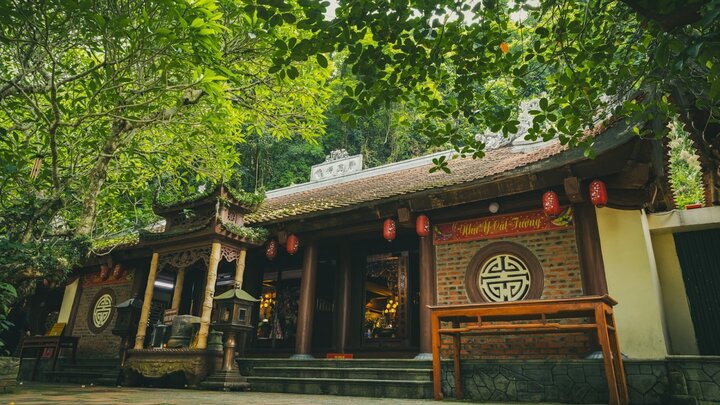
The Main Hall is the central space of Giai Oan Pagoda, housing the Buddha altar and arranged in a traditional manner. This is where Buddhist followers and visitors offer incense, pay homage to Buddha, and pray during their pilgrimage to Yen Tu.
Within the pagoda grounds, there is also a system of statues of court ladies associated with the legend of the Giai Oan stream. These statues often attract visitors' attention during their tour, adding a focal point for learning about the folk tale connected to the Giai Oan landmark.
Besides the architectural structures, the Giai Oan Bridge and Giai Oan Stream are characteristic features of the pagoda area. The stream flows through the foothills, combined with greenery and natural terrain, providing a place for visitors to stop, admire the scenery, and pay homage in a relatively quiet atmosphere.
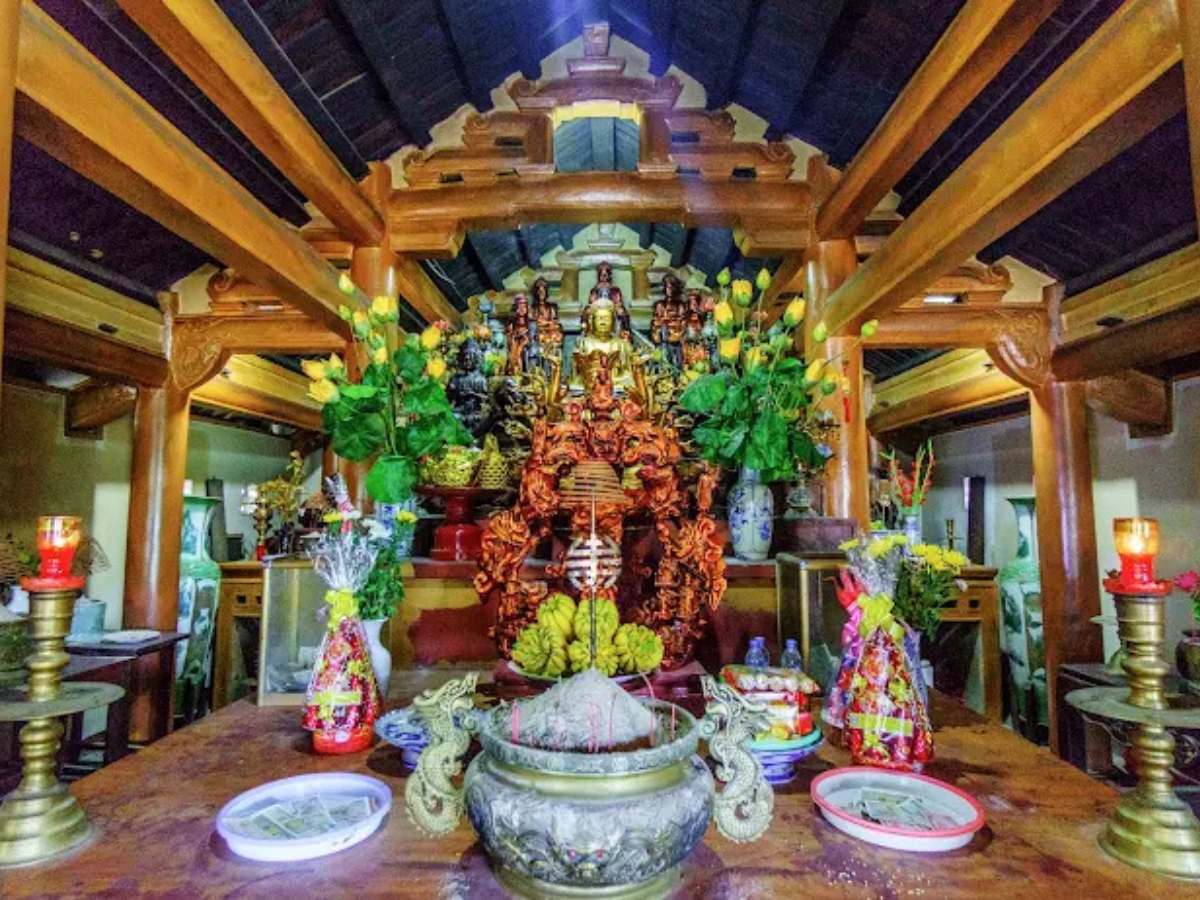
The Main Hall is the central space of Giai Oan Pagoda, where the Buddha altar is placed and is decorated traditionally (Source: Collected)
3.3. Landscape space and sightseeing experience
The Giai Oan Pagoda area is surrounded by green forests and a gently flowing stream, creating a fresh and cool space. The babbling sound of the stream and the mountainous landscape contribute to a serene atmosphere, suitable for a spiritual experience.
With these characteristics, Giai Oan Pagoda is a place many visitors choose to find peace, pray, and sightsee before continuing their journey to the higher points of Yen Tu. Walking slowly around the stream area, stopping by the Giai Oan Bridge, or visiting the main hall often brings a sense of lightness, in the true spirit of a pilgrimage.
4. How to get to Giai Oan Pagoda, Yen Tu
4.1. Traveling to Yen Tu scenic area
Giai Oan Pagoda is located within the Yen Tu scenic area, in Uong Bi city, Quang Ninh province. Therefore, the sightseeing itinerary usually begins by traveling to the Yen Tu area before proceeding to the pagoda.
From Hanoi, visitors can choose private cars, motorbikes, or buses. With personal vehicles, the expressways and national roads connecting Hanoi with Quang Ninh make travel quite convenient. The average travel time is about 2.5–3.5 hours, depending on traffic conditions. Buses to Uong Bi or the Yen Tu area are also a popular option for many tourists who do not drive themselves.
If starting from Hai Phong, the distance to Yen Tu is shorter. Travel time usually ranges from about 1.5–2.5 hours, suitable for day trips. The connecting routes between Hai Phong and Quang Ninh are relatively convenient for both cars and motorbikes.
From Ha Long, visitors travel along provincial routes to Uong Bi city, then continue to the Yen Tu scenic area. The average travel time is about 1.5–2 hours, depending on the starting point and chosen route.
Regarding costs, the expenditure for transportation is indicative and depends on the mode of transport and travel time. Buses are usually reasonably priced, while private cars are suitable for tourists who want to be flexible with their time and combine visits to multiple sites in Quang Ninh in 2025.
4.2. Traveling from Yen Tu entrance to Giai Oan Pagoda
After arriving at the entrance of the Yen Tu scenic area, visitors continue to Giai Oan Pagoda along the traditional pilgrimage route. The pagoda is located at the foot of the mountain, near the Giai Oan stream, so the distance from the entrance is not too long.
Visitors often choose to walk along the planned path, crossing the Giai Oan Bridge area to reach the pagoda. The travel time is about 10–15 minutes, which is suitable for most visitors.
For the elderly or families with young children, traveling to Giai Oan Pagoda is generally quite convenient due to the non-steep terrain. However, on rainy days or during peak tourist seasons, visitors should walk slowly, wear appropriate footwear, and plan their time accordingly to ensure a safe and comfortable journey.
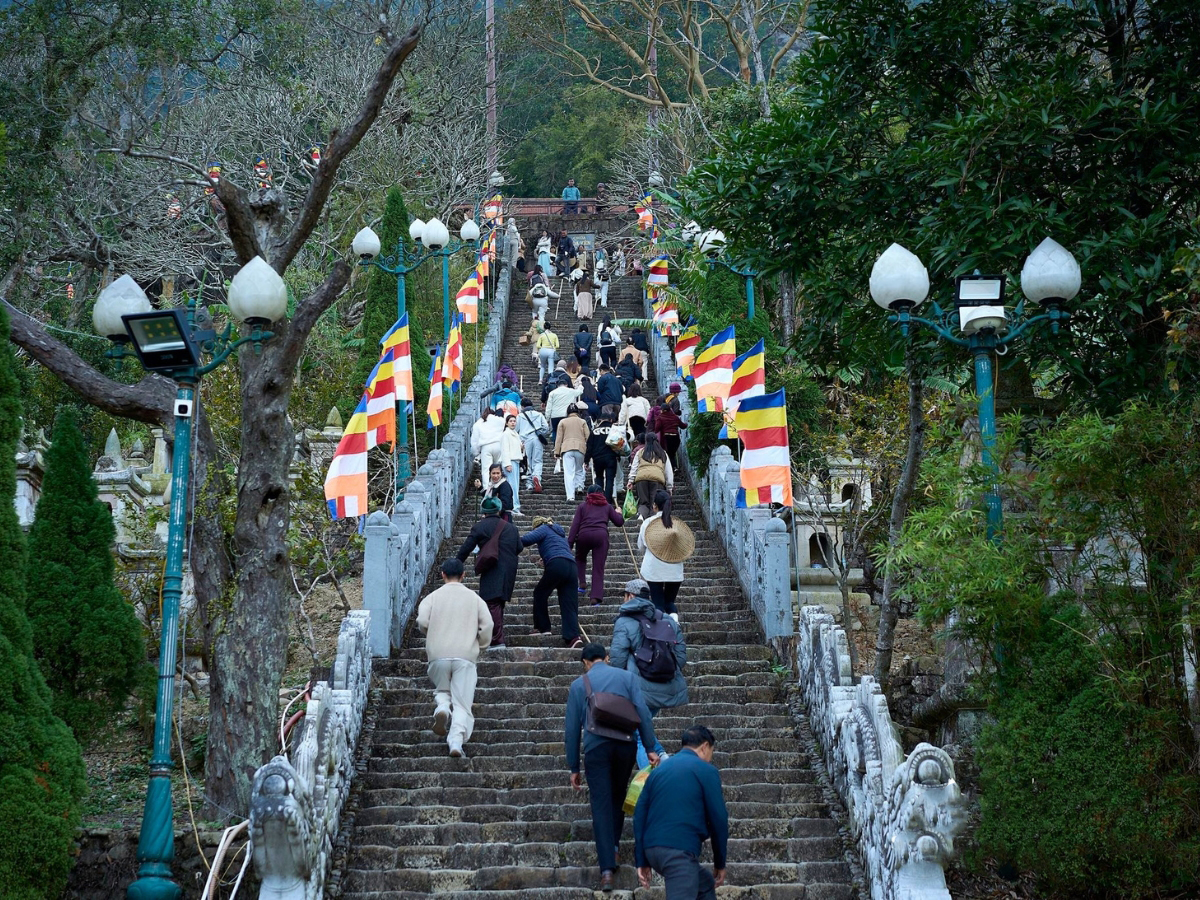
Path to Giai Oan Pagoda (Source: Collection)
5. Spiritual Experience at Giai Oan Pagoda
5.1. Rituals and Pilgrimage Activities
Giai Oan Pagoda is a familiar stop for Buddhists and tourists on their journey to visit Yen Tu. Upon arriving at the pagoda, many people perform basic rituals such as worshipping Buddha, offering incense, and praying for peace for themselves and their families.
Additionally, some tourists visit the pagoda with the desire to find peace of mind and resolve spiritual difficulties. These worship activities reflect common spiritual needs, taking place in a solemn and simple atmosphere, in line with the Buddhist way of life in Yen Tu.
Stopping to worship at Giai Oan Pagoda before continuing the journey up the mountain is often chosen by many as a gentle break. The pagoda's space, combined with the scenery of Giai Oan stream and the surrounding mountains and forests, creates an environment for visitors to calm their minds and better feel the spiritual atmosphere of Yen Tu.
5.2. Yen Tu Festival and the Role of Giai Oan Pagoda
Every year, the Yen Tu Festival usually takes place at the beginning of spring, attracting many Buddhists and tourists for worship. During this time, Giai Oan Pagoda is one of the important stops on the pilgrimage route, where visitors stop to offer incense and pray before continuing to higher points within the Yen Tu complex.
During the festival journey, Giai Oan Pagoda contributes to creating a traditional cultural-religious experience, linked to the Buddhist way of life and folk beliefs of Vietnamese people. Worship activities take place in a solemn space, helping visitors better feel the cultural-spiritual values of the Yen Tu festival as well as the role of Giai Oan Pagoda in the overall spiritual journey.
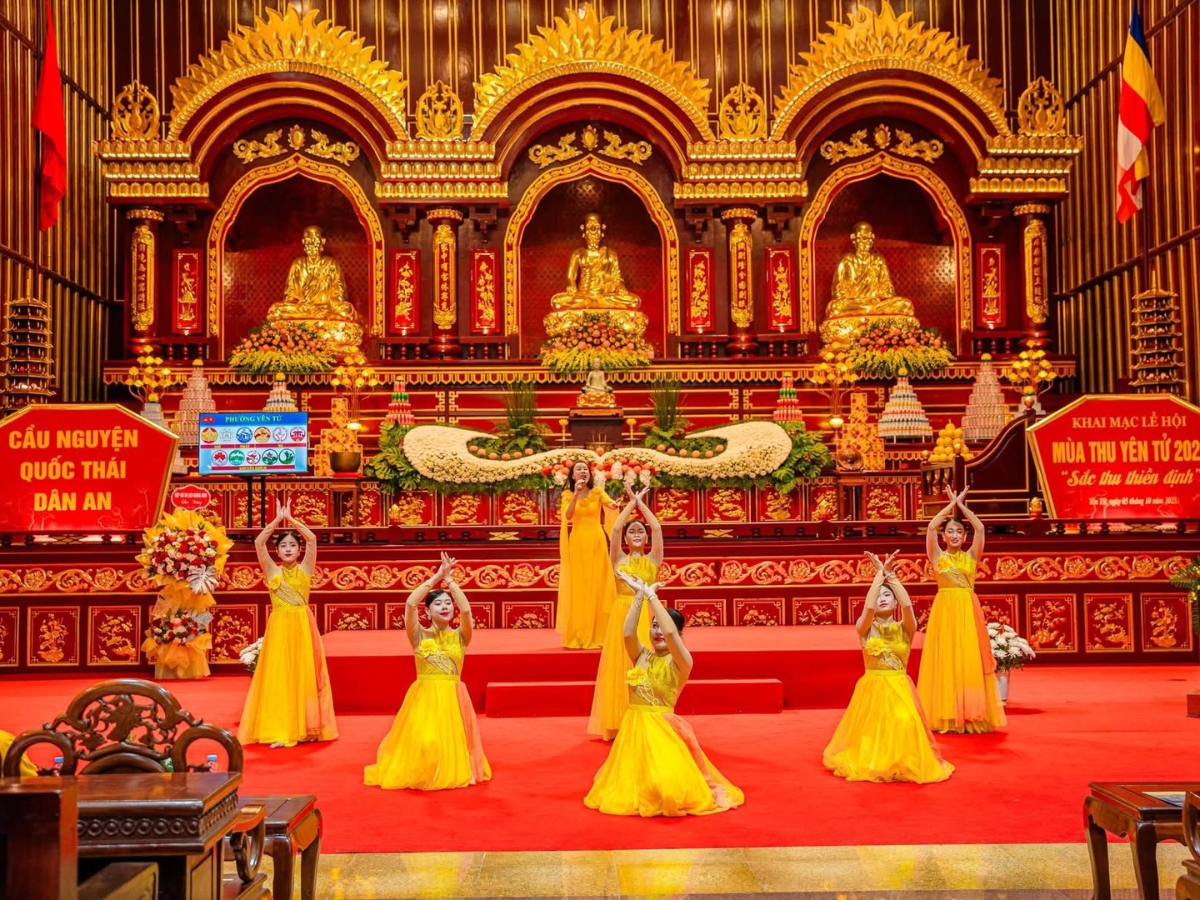
Annually, the Yen Tu festival usually takes place at the beginning of spring, attracting many Buddhists and tourists for worship (Source: Collected)
6. Tips and notes when visiting Giai Oan Pagoda
When visiting Giai Oan Pagoda during the Yen Tu pilgrimage journey, visitors can prepare a few basic things to make the trip more convenient, while maintaining the solemnity of the sacred space.
Regarding attire, visitors should prioritize polite, neat, and modest clothing. Comfortable clothing, gentle colors are usually suitable for visiting pagodas and when combined with walking along the pilgrimage route.
During the visit, visitors can pay attention to maintaining order by speaking softly, moving slowly, and limiting the use of noisy audio devices in the pagoda area as well as along the path near Giai Oan stream. When offering incense and worshipping Buddha, visitors should follow the general instructions at the pagoda to ensure the solemnity of the worship space.
Regarding the time of visit during the day, if you want a relaxed experience, you can choose early morning or less crowded hours. During the festival season and early spring, the number of people coming to Yen Tu usually increases, so proactively managing your time will make the journey smoother.
In addition, visitors should pay attention to safety when moving along the stream and mountain paths. Some sections of the path near the stream can be wet and slippery, especially after rain. Wearing shoes with good grip, walking slowly, and observing carefully will be more suitable, especially for the elderly and families with young children.
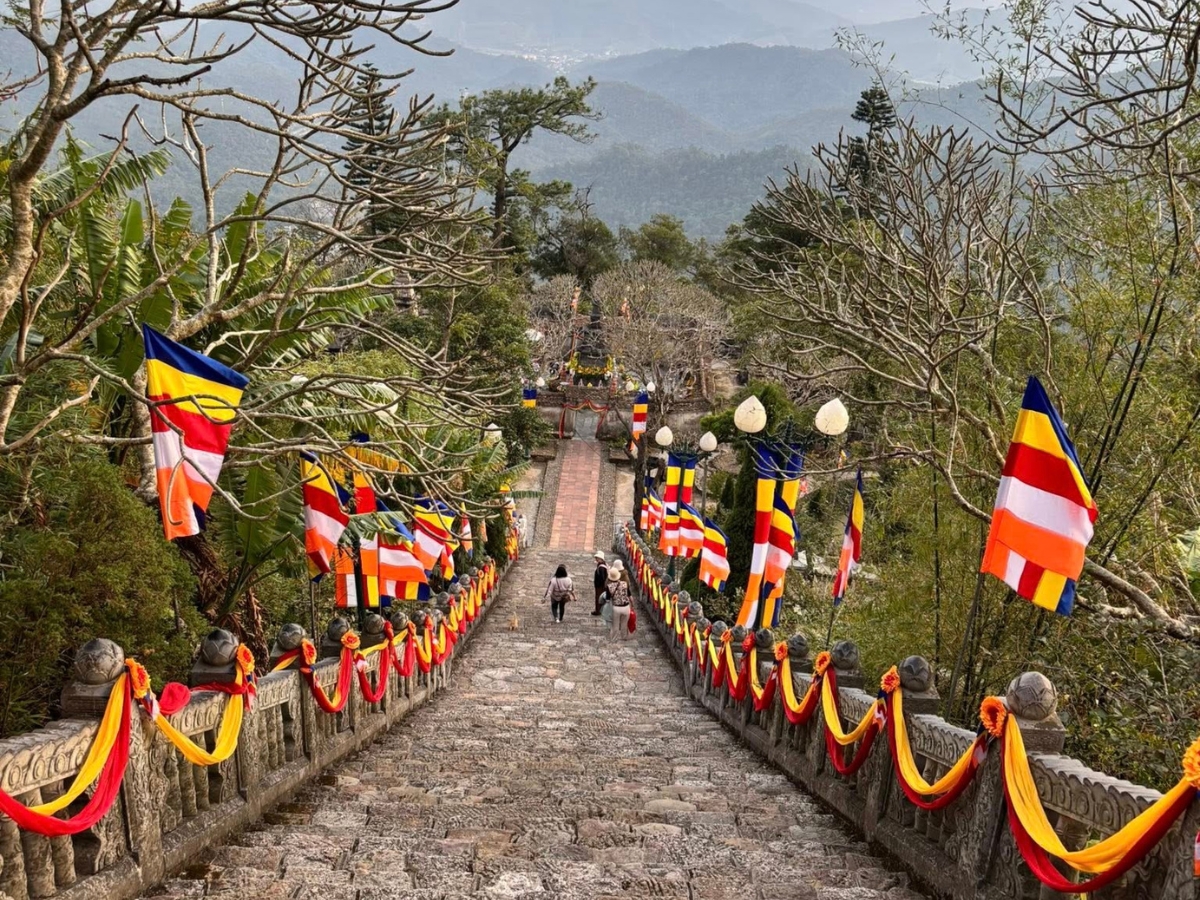
Visitors should pay attention to safety when moving along streams and mountain paths when visiting Giai Oan Pagoda (Source: Collected)
7. Suggested itinerary combining Yen Tu pilgrimage
7.1. 1-day itinerary for Yen Tu pilgrimage
With a one-day timeframe, visitors can choose the traditional Yen Tu pilgrimage itinerary, combining visits to typical spiritual sites. In this journey, Giai Oan Pagoda is often the first stop, where visitors offer incense, pay homage to Buddha, and spend time in contemplation before starting to move to higher points.
From Giai Oan Pagoda, the journey continues towards Hoa Yen Pagoda, one of the important Buddhist centers of Yen Tu, associated with the Truc Lam Zen school. Visitors can choose to walk along the pilgrimage route to feel the mountain forest atmosphere, or combine using the Yen Tu cable car to save time and be more suitable for personal physical condition.
After visiting Hoa Yen Pagoda, if time and health permit, visitors can continue the journey to Dong Pagoda. This is the highest point in the Yen Tu complex, often considered the end point of the one-day pilgrimage before descending back to the foot of the mountain.
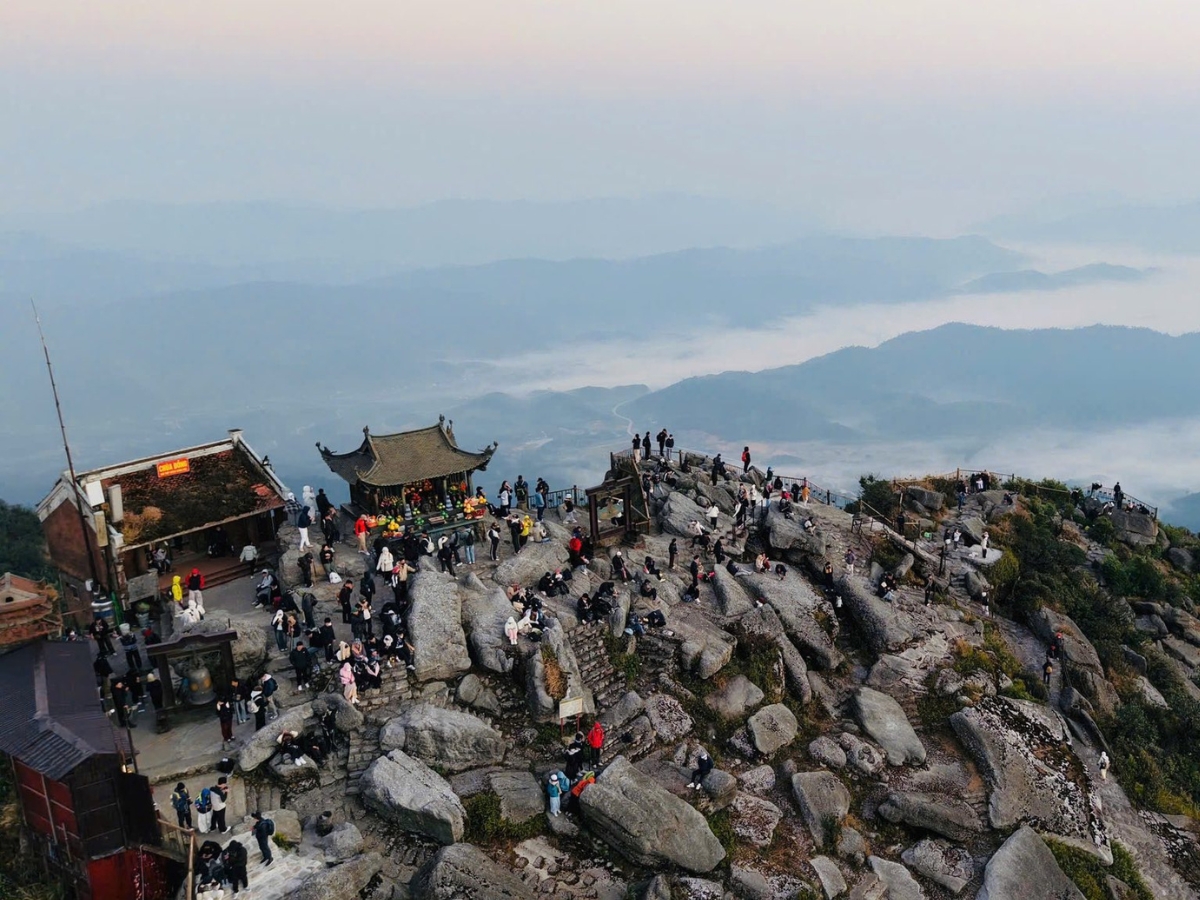
After visiting Giai Oan Pagoda (Absolution Pagoda), visitors can continue their journey to Chua Dong (Copper Pagoda) (Source: Collected)
7.2. Service Experience within the Sun Group Ecosystem
During the tour and pilgrimage to Yen Tu, visitors can utilize the supporting services invested in the scenic area to facilitate movement and rest. The Yen Tu cable car system plays a role in shortening travel distances between attractions, while also helping to reduce the physical exertion for the elderly and families with young children.
Besides the cable car, services catering to visitors in the Yen Tu area, such as rest stops, dining areas, and accompanying amenities, help meet basic needs after walking and worshiping. After completing the pilgrimage, visitors can take time to rest and have a meal at the foot of the mountain or in the vicinity before continuing their sightseeing itinerary or returning.
Giai Oan Pagoda (Absolution Pagoda) in Yen Tu not only holds historical value associated with Truc Lam Buddhism but is also a spiritually significant space where visitors entrust their wishes and find peace before their journey to the sacred mountain. As an indispensable stop on the Yen Tu pilgrimage route, the pagoda helps make each step more contemplative and complete. If you have the chance to visit, take time to feel and share your unique experiences in this sacred place.